
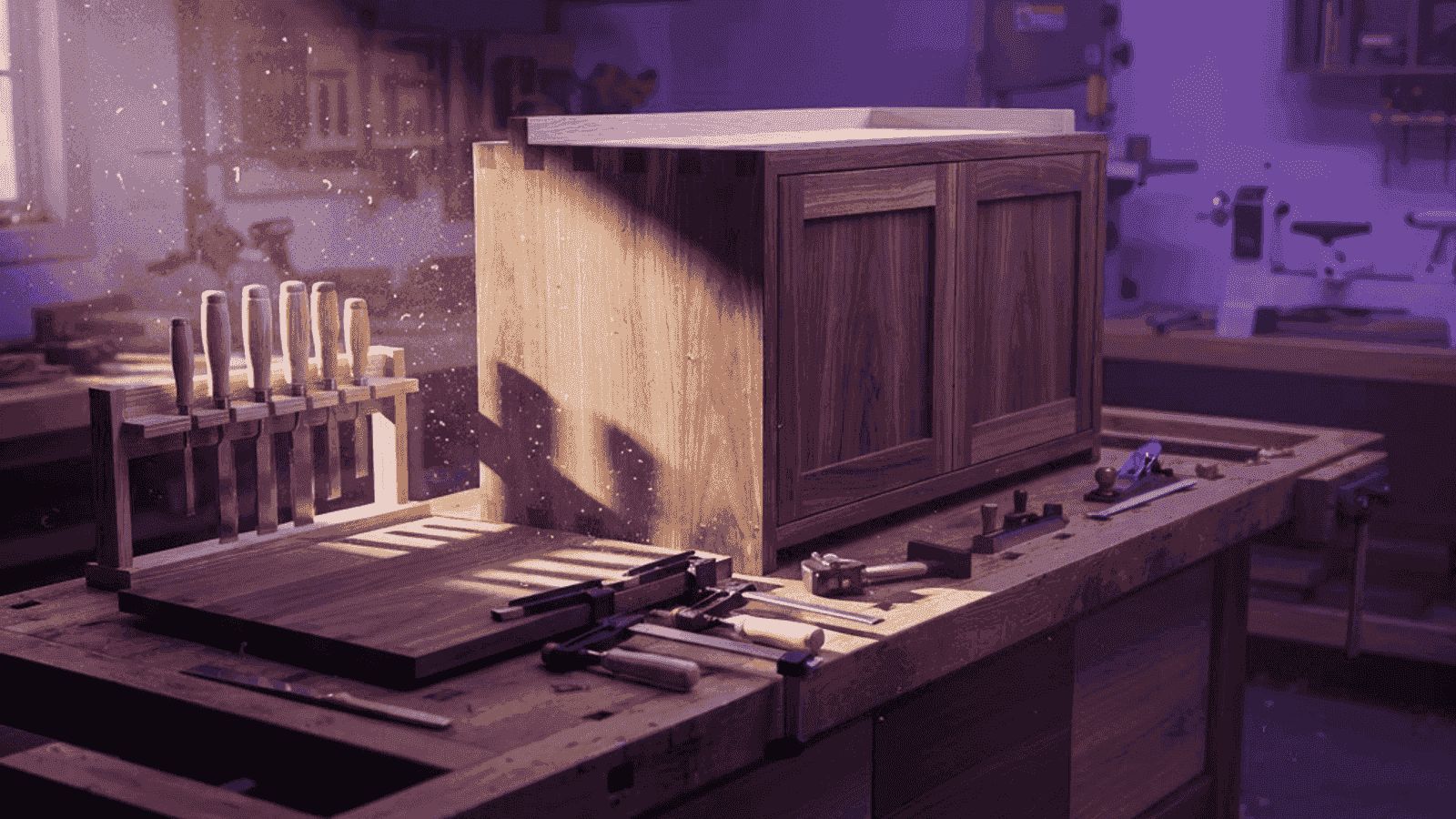
Why Carpentry Defines the Feel of a Space
Most people cannot identify the brand of insulation in their walls, but everyone notices a cabinet door that sits slightly proud of its neighbor or a baseboard mitre that has opened up. Carpentry is the trade whose results are examined at close range, in daylight, every day. In Irvine, where a large share of housing was built to consistent standards and buyers are attentive to finish quality, carpentry has an outsized influence on how a property is perceived.
The trade divides broadly into rough carpentry and finish carpentry. Rough carpentry covers framing, structural modification, sheathing, and blocking. Finish carpentry includes cabinetry, trim, doors, stairs, paneling, and built-in furniture. Some Irvine firms handle both, while others specialize deeply in one. Understanding which category a project falls into is the first step toward hiring well.
Selection Approach
These carpentry services were evaluated on portfolio quality, joinery standards, material knowledge, measurement and templating practice, licensing and insurance where applicable, and reliability of scheduling. Attention was also paid to whether each firm designs and fabricates or primarily installs manufactured products.
1. Coastline Joinery
Coastline Joinery operates a fabrication shop and produces custom cabinetry, wall paneling, and built-in seating. Because components are built to measured dimensions and finished before delivery, on-site time is short and the finish quality is more consistent than field-applied alternatives. The firm works comfortably in painted hardwood, rift-sawn oak, and walnut, and it is known for careful grain matching across adjacent doors and drawer fronts.
2. Woodbridge Custom Carpentry
Woodbridge Custom Carpentry focuses on residential remodels in Irvine's established villages, where existing conditions are rarely square or plumb. Its carpenters excel at scribing and shimming so new work reads as intentional rather than fighting an old structure. Common projects include kitchen cabinetry, closet systems, media walls, and stair rebuilds.
3. Spectrum Millwork Group
Spectrum Millwork Group serves commercial clients with reception desks, conference casework, retail fixtures, and specialty wall treatments. Commercial millwork involves fire-rated substrates, durable laminates and veneers, and accessibility clearances, and the company's submittal packages typically include shop drawings that allow architects and tenants to review details before fabrication.
4. Northwood Finish Carpentry
Northwood Finish Carpentry concentrates on trim and door work: crown molding, casing, wainscoting, coffered ceilings, and interior door replacement. Its reputation rests on tight joinery, disciplined nail placement, and preparation that makes painting straightforward. For homeowners upgrading builder-grade interiors, this kind of work delivers a visible improvement at moderate cost.
5. Pacific Frame Builders
Pacific Frame Builders handles rough carpentry and structural modification, including wall removal with engineered beams, floor system repair, additions, and patio structures. Structural work requires coordination with engineering and inspection, and the company is experienced at temporary shoring and sequencing that keeps a home habitable during construction.
6. Great Park Cabinet Works
Great Park Cabinet Works serves newer neighborhoods where owners frequently upgrade original cabinetry or add storage in garages, laundry rooms, and home offices. The firm offers both full custom fabrication and semi-custom modification, and it is candid about when refacing existing boxes is a better value than complete replacement.
7. Heritage Stair and Rail
Heritage Stair and Rail specializes in staircases, handrails, and guard systems. Stairs are the most geometrically demanding element in residential carpentry, with code-driven limits on rise, run, and opening dimensions, and the company's work spans traditional turned balusters to modern steel and glass assemblies. It also handles tread replacement over existing carpeted stairs, a popular upgrade.
8. Verdant Woodcraft Studio
Verdant Woodcraft Studio emphasizes responsibly sourced material and low-emission finishes. It works with certified hardwoods, formaldehyde-free plywood cores, and water-based or hardwax oil finishes. For households sensitive to indoor air quality, or for clients pursuing green building targets, that material discipline is a meaningful differentiator rather than a marketing line.
9. Alton Exterior Carpentry
Alton Exterior Carpentry addresses outdoor woodwork exposed to Southern California sun and marine air: pergolas, shade structures, fencing, gates, deck framing, and fascia repair. Material selection matters enormously outdoors, and the firm typically recommends naturally durable species, treated framing, and stainless or coated fasteners to avoid staining and premature failure.
10. Meridian Built-In Solutions
Meridian Built-In Solutions designs storage-focused carpentry, including home office systems, library walls, mudroom benches, garage organization, and under-stair storage. Its process begins with an inventory of what needs to be stored, which produces more usable results than starting from an aesthetic concept alone. Integrated lighting and cable management are handled as part of the design.
Trends in Local Carpentry Work
Several patterns stand out. Painted cabinetry remains dominant, but natural wood tones have returned strongly, particularly white oak with light finishes. Integrated appliance panels and handleless door profiles have grown in popularity, requiring tighter tolerances than traditional overlay cabinetry. Fluted and slatted wall panels have moved from commercial interiors into homes as an acoustic and textural feature. Digital measurement and computer-controlled fabrication have improved accuracy and shortened lead times. Finally, demand for accessory dwelling units and multigenerational living has increased both structural carpentry and clever small-space joinery.
How to Hire a Carpenter Successfully
Begin by reviewing physical examples of completed work rather than photographs alone, because photographs conceal the details that matter, such as joint tightness and finish uniformity. Ask whether the firm fabricates in a shop or builds on site, and confirm who performs final finishing. Clarify material specifications, including plywood versus particleboard cores, hinge and slide hardware brands, and finish systems. Establish how templating and measurement will be handled, especially when countertops or appliances interact with cabinetry. For structural work, verify licensing, insurance, engineering involvement, and permitting. Finally, agree on a punch-list process, since carpentry almost always requires a final round of adjustment after installation.
Final Thoughts
Good carpentry is quiet. It reveals itself in doors that close consistently, drawers that align, and trim that appears to have grown out of the wall. The Irvine firms described here have built their reputations on that kind of restraint and precision, and matching their particular specialization to the project at hand is the most direct route to a result that still looks intentional years later.