
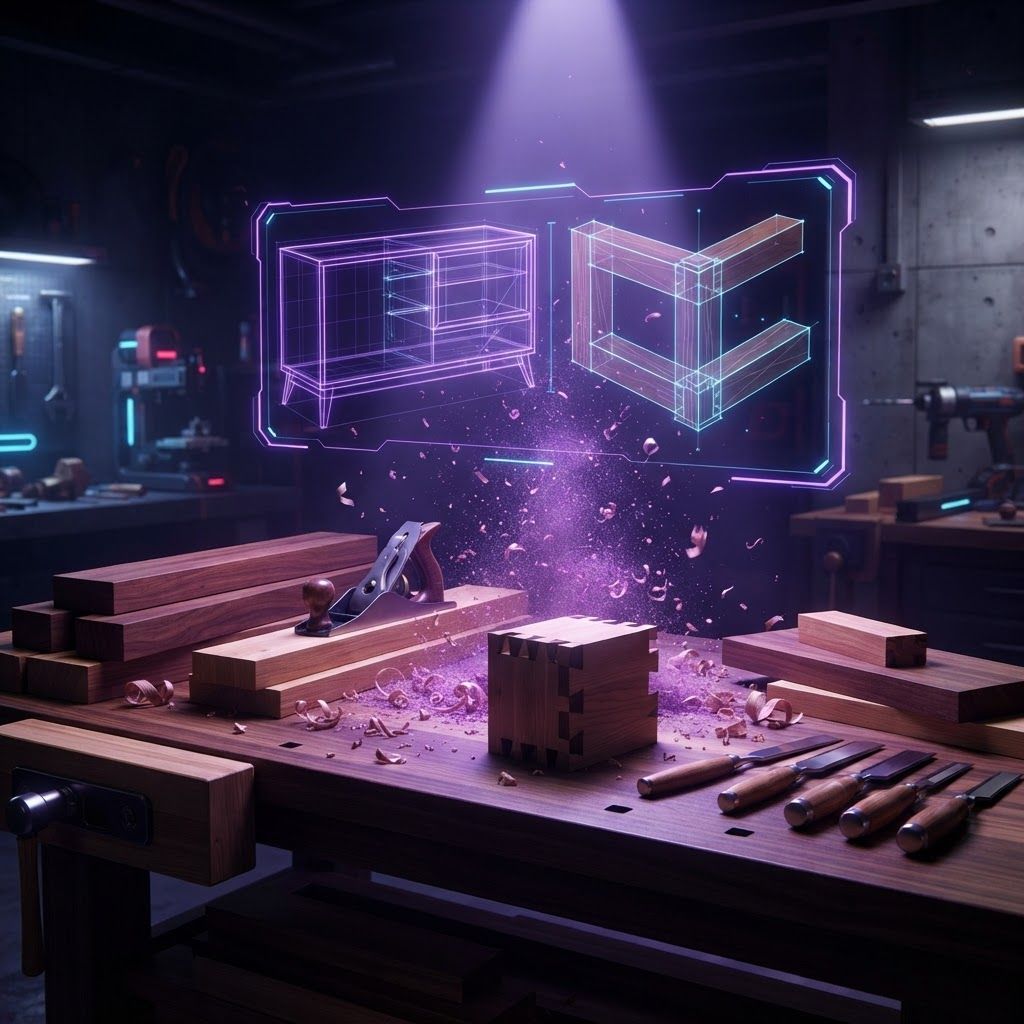
Carpentry in the City That Furniture Built
Grand Rapids earned the nickname Furniture City for good reason. For decades the region produced some of the finest furniture in the country, and the industry created a labor tradition centered on wood: joinery, finishing, pattern making, and machine work. That tradition never fully disappeared. Today it shows up in custom cabinet shops, architectural millwork producers, timber frame builders, and finish carpenters whose standards exceed what many markets consider normal.
The local climate also shapes the craft. Wide seasonal swings in humidity cause wood movement, and carpenters here design joints, panels, and installations that accommodate expansion and contraction rather than fighting it. Understanding that behavior separates work that stays tight from work that opens up after the first heating season.
The Ten Carpentry Specialties in Grand Rapids
1. Rough Framing Carpenters
Framing crews build the structural skeleton: floor systems, walls, roof structures, and sheathing. Precision here determines everything downstream, because out-of-plumb walls and uneven floors create problems for drywall, cabinetry, and trim. Experienced framers in Michigan also detail for insulation continuity and air sealing rather than treating those as someone else's job.
2. Finish Carpentry and Trim Specialists
Finish carpenters install baseboards, casings, crown molding, wainscoting, coffered ceilings, and stair trim. This is highly visible work where scribe fits, tight miters, and consistent reveals distinguish craftsmanship from installation. In historic Grand Rapids homes, finish carpenters often replicate original profiles that are no longer commercially available.
3. Custom Cabinetmakers
Cabinet shops build kitchens, bathrooms, built-in shelving, entertainment centers, mudroom lockers, and office casework tailored to exact dimensions. Custom work uses better materials and joinery than stock products and eliminates filler panels and awkward gaps. Local shops frequently offer species and finish options that big-box programs cannot.
4. Architectural Millwork Producers
Millwork shops fabricate doors, windows, moldings, paneling, reception desks, and commercial fixtures. Their capability lies in machinery and pattern knowledge that can reproduce historic profiles or execute contemporary designs at scale, and they typically serve both residential and commercial fitout markets.
5. Deck and Outdoor Structure Builders
Outdoor living remains popular despite the short season. Builders construct decks, pergolas, screened porches, and three-season rooms using pressure-treated lumber, cedar, or composite systems. Michigan frost depth requires proper footing design, and flashing at the ledger board is the most critical detail for preventing structural rot.
6. Stair and Railing Craftsmen
Stair building is among the most technically demanding carpentry disciplines, combining precise rise and run calculation, code compliance, and joinery. Specialists build straight, curved, and floating stairs, and fabricate railings in wood, metal, and cable systems.
7. Timber Frame and Post-and-Beam Builders
Timber framing has a strong following in West Michigan for homes, barns, pavilions, and commercial accent structures. Traditional mortise and tenon joinery with wooden pegs produces structures that are both beautiful and extremely durable, and modern timber frames are typically paired with high-performance enclosure panels.
8. Door and Window Installation Carpenters
Proper installation determines whether a window performs as designed. Carpenters in this specialty handle rough opening preparation, sill pan flashing, shimming, air sealing, and exterior trim integration. Given driving rain and snow off Lake Michigan, water management detail is essential.
9. Historic Woodwork Restoration Specialists
Older Grand Rapids homes contain quartersawn oak trim, built-in buffets, pocket doors, and original wood windows worth restoring. Restoration carpenters repair rather than replace, matching species and grain, rebuilding sash, reviving pocket door hardware, and refinishing without destroying patina.
10. Commercial and Institutional Carpentry Contractors
Commercial carpenters install doors and hardware, acoustic ceilings, wall systems, casework, and specialty fixtures in offices, schools, and healthcare facilities. The work demands schedule discipline, code knowledge, and coordination with other trades in tightly sequenced fitout projects.
Choosing the Right Carpenter
Match the specialty to the project. A skilled framer is not necessarily a skilled finish carpenter, and a cabinetmaker may not be the right choice for deck construction. Ask to see work of the same type, ideally several years old, so you can evaluate how joints and finishes have aged.
Discuss materials openly. Species selection, moisture content, and finish system all affect longevity in Michigan's humidity swings. A carpenter who explains why a particular material suits your application is demonstrating exactly the knowledge you are paying for.
Confirm insurance, get a written scope, and understand lead times. Custom cabinetry and millwork frequently require weeks of shop time, and ordering late is the most common cause of delay on renovation projects.
Trends in Local Carpentry
Several patterns are visible across West Michigan projects. Built-in storage has surged as homeowners maximize older homes with limited closet space. Mixed-material detailing pairing wood with blackened steel or glass is common in both residential and commercial work. Reclaimed lumber from regional barns and former factories remains popular for its character and its connection to local history. And there is renewed appreciation for repairing original woodwork rather than replacing it with modern substitutes.
Final Thoughts
Carpentry in Grand Rapids benefits from a genuine craft heritage and a trade base that still values joinery and finish quality. Whether you need structural framing, a custom kitchen, a timber frame pavilion, or restoration of century-old trim, choose specialists whose portfolio matches your project and who can speak knowledgeably about wood movement in this climate. That combination produces work that looks right on day one and stays right for decades.