
Why Car Washing Matters More in Tulsa
Oklahoma is unusually hard on vehicle finishes. Spring brings pollen, red dust, and hail-laden storms. Summer delivers relentless ultraviolet exposure that oxidizes clear coat. Winter introduces road salt, brine, and sand that accelerate corrosion in wheel wells, rocker panels, and undercarriages. Tulsa also sits in a region where construction dust and highway grime settle quickly. Washing is not cosmetic maintenance here; it is corrosion prevention and resale value protection.
That reality has produced a sophisticated local market. Over the past several years the Tulsa metro has seen rapid growth in express exterior tunnels with unlimited monthly memberships, alongside a parallel rise in high-end ceramic coating and paint correction studios. Between those poles sit full-service operations, self-serve bays, and mobile detailers who come to the customer.
How to Judge a Car Wash
Quality comes down to four variables: water chemistry, contact material, drying method, and process discipline. Soft-cloth and closed-cell foam applicators are safe when kept clean and properly lubricated; neglected equipment is what causes swirl marks. Spot-free rinse using reverse-osmosis water prevents mineral etching, which matters greatly in areas with hard water. Finally, touchless drying with filtered air beats towels that have been dragged across dozens of vehicles.
1. Express Tunnel Chains with Unlimited Memberships
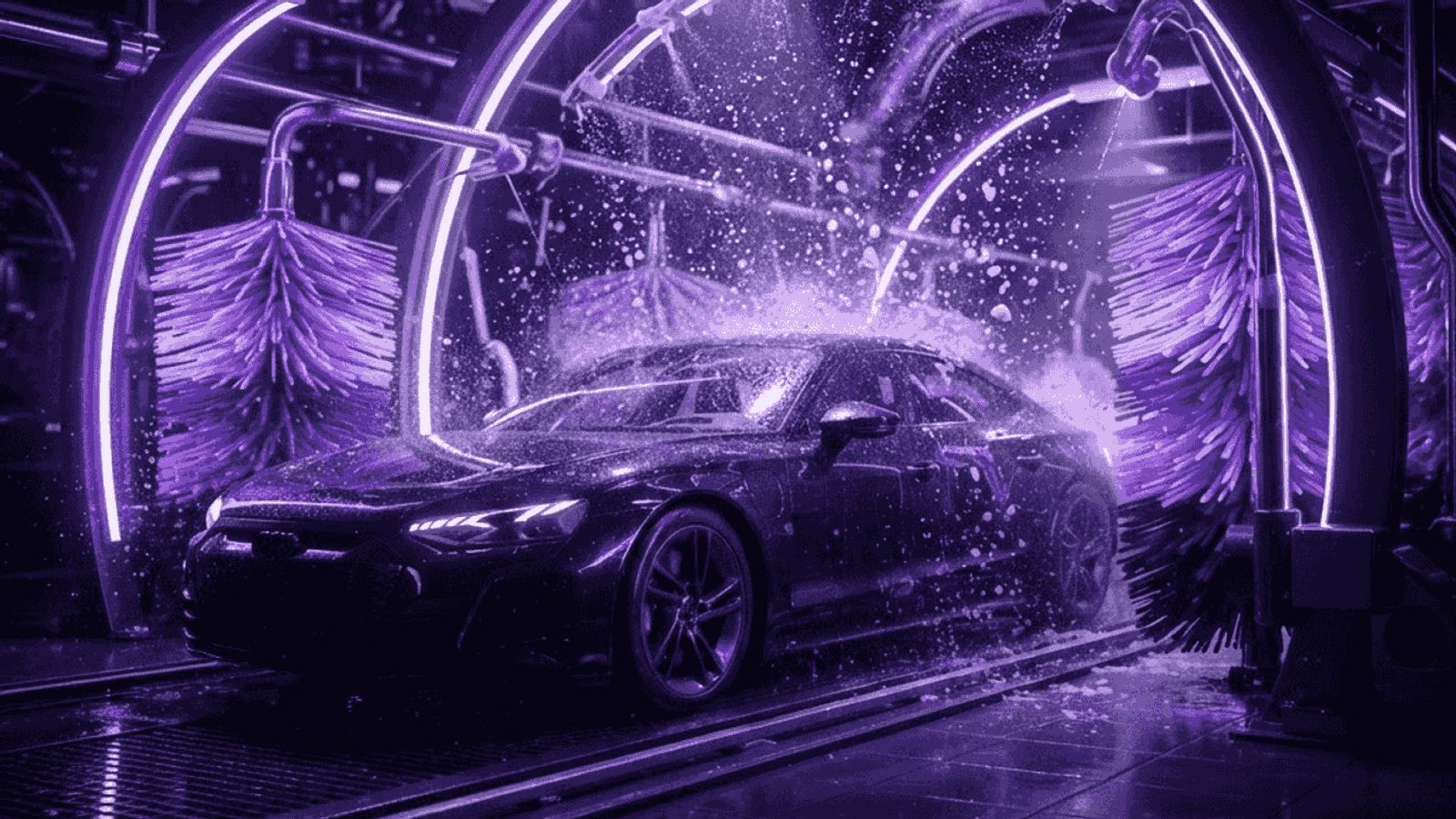
The dominant model in Tulsa today is the express exterior tunnel: pay a flat monthly fee, drive through as often as you like, then use free vacuums and mat cleaners. For commuters covering long distances on the Creek Turnpike or Highway 169, the value proposition is compelling because frequent light washing prevents contaminants from bonding to paint. Look for tunnels that advertise fresh-water rinse cycles and regularly replaced cloth.
2. Full-Service Wash and Interior Cleaning Centers
Full-service operations combine an exterior wash with interior vacuuming, window cleaning, dash wipe-down, and door jamb attention. These are the right choice before selling a vehicle, after a road trip, or for families whose back seats see daily use. The differentiator is labor: staff-to-vehicle ratio determines whether the interior work is thorough or superficial, so visit during off-peak hours when possible.
3. Hand Wash Studios
Hand washing with the two-bucket method, grit guards, and dedicated wheel tools remains the gold standard for paint safety. Tulsa supports several studios that work this way, typically serving luxury vehicles, dark-colored finishes that show defects readily, and classic cars. Expect longer appointment times and higher pricing, justified by the elimination of mechanical contact risk.
4. Ceramic Coating and Paint Protection Specialists
Professional ceramic coating has become one of the fastest-growing services in the metro. A properly applied coating adds a semi-permanent hydrophobic layer that resists ultraviolet degradation, bird droppings, tree sap, and light chemical etching. Quality shops perform full decontamination and multi-stage paint correction first, then apply coating in a controlled environment. In a climate with intense summer sun, coatings meaningfully slow clear coat failure.
5. Paint Correction and Detailing Studios
Correction is restorative rather than protective work: machine polishing to remove swirl marks, oxidation, water spot etching, and light scratches. Tulsa's better detail studios use paint depth gauges and inspection lighting rather than guesswork, which prevents over-polishing thin factory clear coat. This service pairs naturally with coating and is often the best money spent on an older vehicle with tired but original paint.
6. Mobile Detailing Services
Mobile detailers bring water tanks, power, and equipment to a home or workplace, which suits professionals downtown and residents in Midtown or south Tulsa neighborhoods. Convenience is the obvious benefit; the practical benefit is scheduling flexibility for multi-vehicle households. Verify that the operator captures or responsibly manages runoff and carries liability insurance.
7. Touchless Automatic Washes
Touchless systems rely on high-pressure water and stronger detergents rather than physical contact. They are the safest automated option for vehicles with delicate wraps, aftermarket paint, or existing clear coat damage. The trade-off is cleaning power: heavy road film and brake dust may survive a single pass, so touchless works best as frequent maintenance rather than deep cleaning.
8. Self-Serve Wash Bays
Coin and card-operated bays remain a Tulsa staple, particularly for truck owners, work vehicles, motorcycles, boats, and trailers. Their advantage is control: you decide how long to spend on wheel wells, undercarriage flushing after a winter storm, or bug removal after a drive across the Turner Turnpike. Bring your own mitt and drying towels to avoid the abrasive brushes provided on site.
9. Fleet and Commercial Wash Providers
Tulsa's construction, energy services, delivery, and municipal fleets require volume washing on schedule, often on site. Commercial providers offer route-based service, wash logs for compliance purposes, and equipment sized for box trucks, vans, and heavy machinery. Clean fleet vehicles function as mobile advertising, so many companies treat this as a marketing expense rather than maintenance.
10. Dealership Service Department Washes
Most franchise dealerships in the metro include a complimentary wash with service visits. It is convenient and free, though quality varies with staffing and volume. For owners of dark or coated vehicles, it is worth politely declining and washing by hand instead, since production-line washing under time pressure is where avoidable defects occur.
Trends Reshaping the Industry
Water reclamation is now standard in well-built Tulsa tunnels, with modern systems recycling a large share of process water and using substantially less fresh water per vehicle than a driveway wash. Subscription pricing has changed consumer behavior, shifting the average customer from occasional deep cleans to frequent light maintenance. Meanwhile, license plate recognition, app-based accounts, and automated gates have removed friction from the process. On the premium end, graphene-infused coatings and self-healing paint protection film continue to gain traction.
Practical Advice for Tulsa Drivers
Wash every one to two weeks in normal conditions and immediately after winter storms to flush salt and brine from the undercarriage. Avoid washing in direct midday summer sun, which causes water spotting as droplets evaporate before drying. Address bird droppings and tree sap within days, because both etch clear coat quickly in high heat. Choose contact-free or hand washing for dark and coated vehicles, and consider protection in spring so the coating carries the paint through the harshest months. Matching the service to the vehicle, the season, and the budget is what separates a maintained finish from a prematurely aged one.