
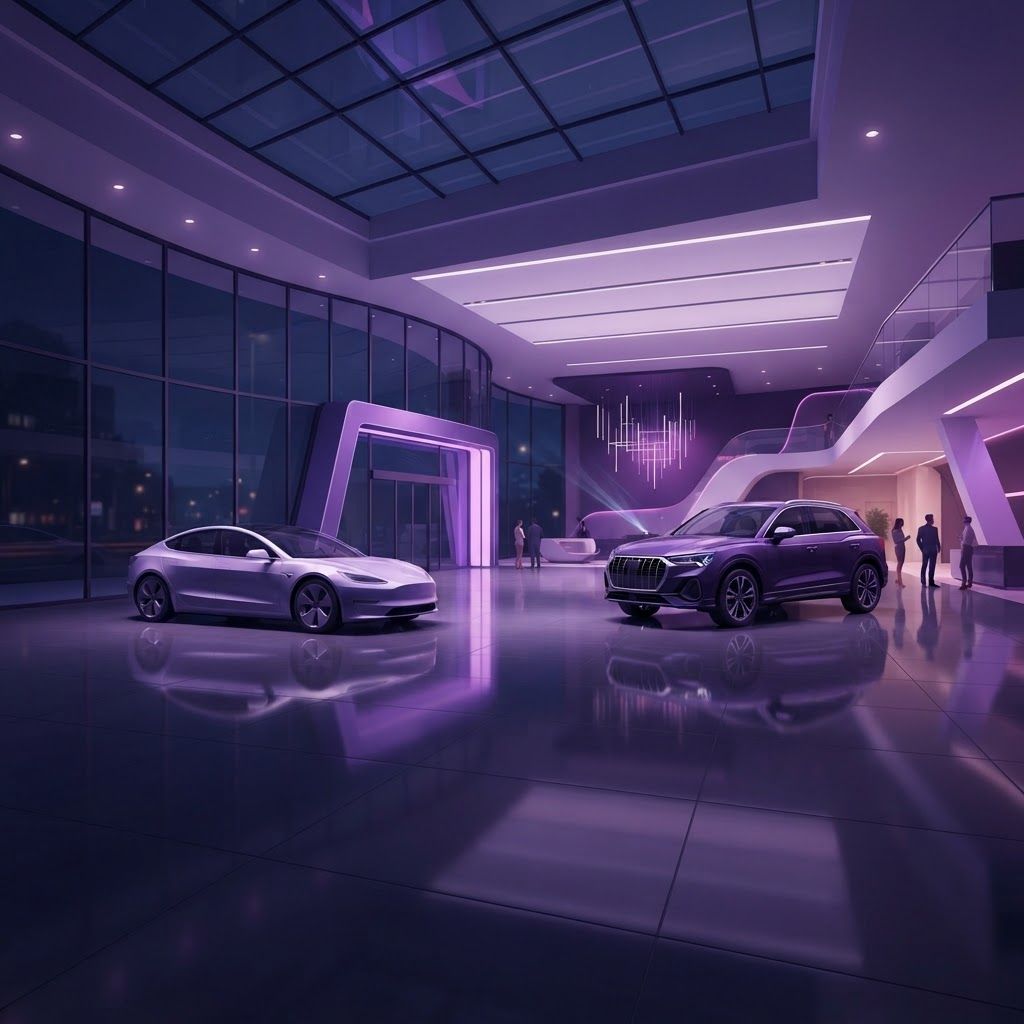
The Peoria Automotive Market
Peoria supports a dealership market that is larger than its population alone would predict, because it draws buyers from a wide surrounding rural area. That regional pull creates real competition, which benefits buyers who are willing to compare offers across multiple stores rather than shopping the nearest lot.
Vehicle preferences here follow Midwestern patterns. Trucks and SUVs dominate, driven by weather, towing needs, and the practical realities of rural driving. All-wheel drive commands a premium. Winter road salt makes undercarriage condition a genuine consideration on used vehicles, and buyers from outside the region often underestimate how much corrosion matters in the local used market.
The Top 10 Car Dealerships Serving Peoria
1. Uftring Automotive Group operates multiple franchise locations across the metro, representing several major brands. Its scale means broader inventory and the ability to locate specific configurations through dealer trades rather than forcing buyers to compromise on options.
2. Mike Murphy Ford is a long-established local dealership with deep truck inventory, which matters in a market where work trucks and towing capability drive a large share of purchases. Its service department handles commercial fleet work alongside retail customers.
3. Green Chevrolet covers the full Chevrolet lineup with a substantial certified pre-owned selection. Certified pre-owned programs add manufacturer-backed warranty coverage and multi-point inspection to a used purchase, which closes much of the risk gap between new and used.
4. Bob Lindsay Honda serves the import segment with reliability-focused inventory and a strong used vehicle operation. Honda's reputation for long-term durability makes this dealership a frequent stop for buyers prioritizing total cost of ownership over purchase price.
5. Peoria Toyota offers new Toyota vehicles alongside hybrid models, which have grown from a niche to a mainstream choice as fuel costs and reliability records have converged in their favor.
6. Sam Leman Automotive operates across several brands in the region, giving buyers cross-brand comparison within a single organization and a large combined used inventory.
7. Peoria Auto Auction and Independent Lots represent the value end of the market. Independent dealers typically price below franchise stores because they carry lower overhead, though buyers assume more inspection responsibility since manufacturer certification is unavailable.
8. Heartland Certified Pre-Owned specializes exclusively in late-model used vehicles with inspection documentation and extended warranty options, occupying the middle ground between franchise certified programs and unvetted independent lots.
9. Peoria Commercial Vehicle Center focuses on work trucks, vans, and fleet vehicles for regional businesses, including upfitting for specific trades and commercial financing structures.
10. Illinois Valley Electric Vehicle Dealers round out the list as the emerging segment. Electric vehicle sales in Central Illinois trail coastal markets, but charging infrastructure has improved enough that EVs are now practical for most local driving patterns, and dealerships have begun building genuine expertise rather than treating them as curiosities.
How to Negotiate Effectively
The single most useful principle is to negotiate one number at a time. Dealerships often bundle vehicle price, trade-in value, financing rate, and monthly payment into a single discussion, which makes it impossible to tell whether any individual element is fair. Settle the vehicle price first, in writing. Then discuss the trade-in as a separate transaction. Then address financing.
Monthly payment is the most misleading figure in the entire process. A payment can be lowered by extending the loan term, which increases total interest paid substantially. Buyers should negotiate total price and then evaluate financing, never the reverse.
Arrive with pre-approved financing from a credit union or bank. This establishes a benchmark rate and turns dealer financing into a competitive offer rather than the only option. Dealers can sometimes beat an outside rate through manufacturer incentives, and that is a genuine win, but only a buyer with an existing approval can tell the difference.
Research trade-in value independently before arriving, and consider selling privately if the gap is large. Trade-in convenience has real value, but buyers should know what they are paying for it.
Evaluating a Used Vehicle
Vehicle history reports are necessary but insufficient. They reveal reported accidents and title problems but miss unreported damage and deferred maintenance entirely. An independent pre-purchase inspection by a mechanic with no stake in the sale costs a modest amount and regularly identifies issues worth many times that.
In the Peoria market, pay specific attention to rust. Inspect frame rails, rocker panels, brake lines, and suspension mounting points. Road salt exposure over multiple winters causes corrosion that can render an otherwise sound vehicle unsafe or uneconomical to repair. A vehicle that spent its life in a southern state and recently arrived locally may be in considerably better structural condition than a local example with the same mileage.
Test drive on varied roads, including highway speeds and rough surfaces. Many faults, particularly in suspension, alignment, and transmission behavior, appear only under specific conditions that a short trip around the block will not reveal.
Financing, Warranties, and the Finance Office
The finance office is where dealership profit is often concentrated, through interest rate markup and add-on products. Extended warranties, paint protection, fabric treatment, and similar products carry high margins and are frequently priced negotiably despite being presented as fixed.
Extended warranties can be worthwhile on vehicles with expensive, failure-prone systems, and worthless on reliable models. Buyers should evaluate the specific coverage, deductible, and exclusions rather than accepting a general reassurance. Manufacturer-backed coverage is generally preferable to third-party plans.
Gap insurance genuinely matters for buyers making small down payments, since a new vehicle can be worth less than the loan balance for the first several years. It is usually cheaper through a personal auto insurer than through the dealership.
Trends Reshaping Car Buying
Online purchasing has become mainstream, with buyers completing much of the process digitally and visiting the dealership only for delivery. Transparent online pricing has compressed negotiation on some models while making comparison shopping dramatically easier.
Inventory dynamics have stabilized after several volatile years, restoring some buyer leverage that had disappeared during shortage periods. Incentives and dealer discounts have returned to many segments.
Electrification continues to advance in the region, with improving public charging availability and expanding model choice. For Central Illinois buyers with home charging capability and typical daily mileage, the practical objections have largely resolved, and the remaining question is straightforward total cost comparison rather than feasibility.