
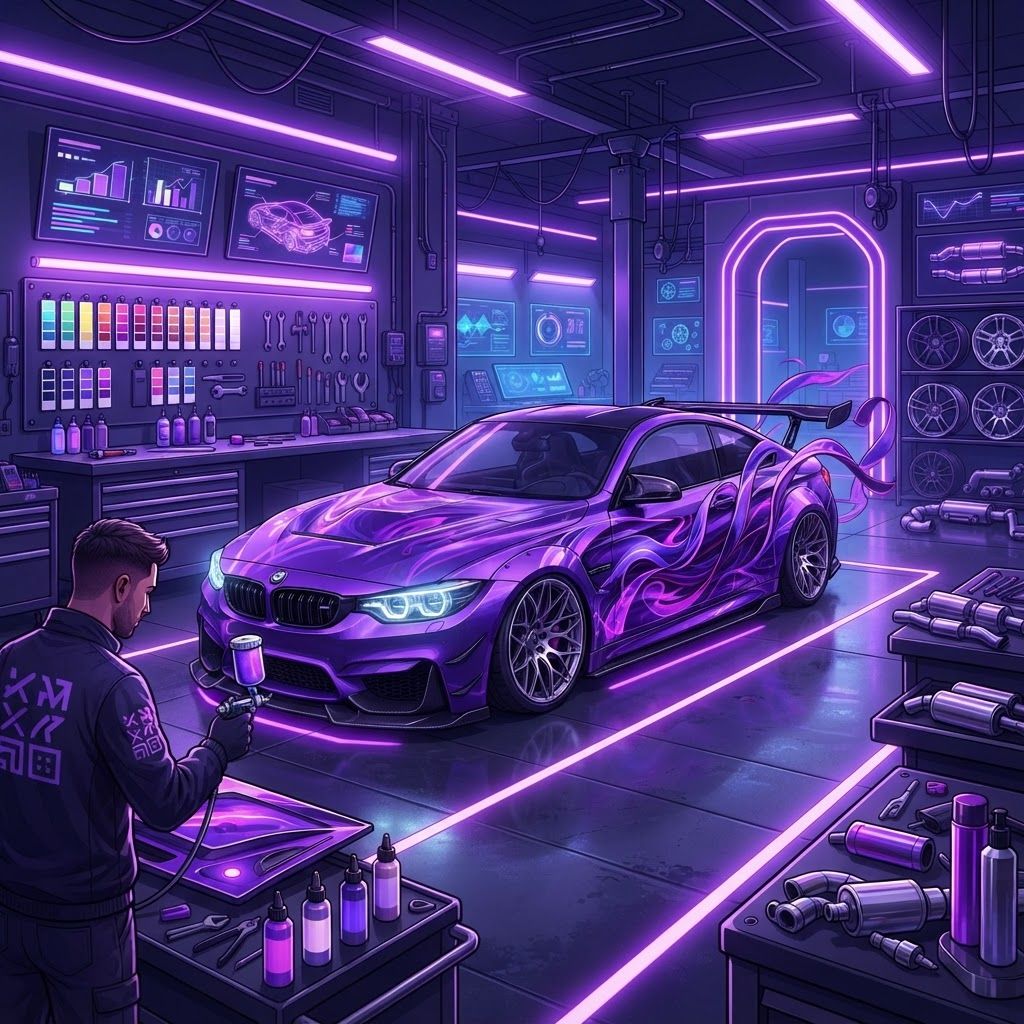
Customization Culture in North Texas
Vehicle personalization is deeply embedded in Texas car culture, and the Dallas-Fort Worth area supports an unusually broad customization industry. Truck accessorizing is close to universal, lifted and leveled pickups are everywhere, the import performance scene is active, classic and muscle car restoration has deep roots, and lowrider and custom paint traditions are strong across the region. Grand Prairie's location between Dallas and Fort Worth, combined with its industrial building stock along the Great Southwest corridor, has made it a practical home for shops needing warehouse space with commercial zoning.
Customization spans an enormous range, from a five-hundred-dollar window tint to a six-figure restoration. The specialties below represent the main categories, and understanding which shop type handles which work prevents the common mistake of asking a generalist to do specialist work.
1. Performance Tuning and Engine Shops
Performance shops handle engine modification, forced induction, exhaust systems, intake upgrades and electronic tuning. The critical capability is a dynamometer, which measures actual power output and allows calibration under load rather than by guesswork. Reputable shops build in a defined order: supporting modifications first, then power, then calibration, because adding boost without adequate fueling, cooling and drivetrain capacity produces failures rather than performance. Texas heat makes cooling capacity especially important, since a tune developed in mild conditions can cause detonation in August traffic.
2. Truck Accessory and Lift Kit Specialists
Given how many pickups operate in the region, truck specialty shops are the largest customization category. Work includes suspension lifts and levels, larger wheel and tire packages, bed liners and covers, running boards, bumpers, winches, lighting and towing equipment. Quality shops explain the consequences of a lift honestly: changed center of gravity, altered steering geometry, speedometer recalibration needs, accelerated wear on ball joints and driveshaft components, and the importance of matched components rather than mixed-brand assemblies. A properly engineered kit installed correctly drives well, while a cheap kit installed poorly is genuinely unsafe.
3. Vinyl Wrap and Paint Protection Installers
Vinyl wraps have largely displaced custom paint for color changes because they are reversible, protect the original finish, and cost less than a quality repaint. Wrap shops also install paint protection film on high-impact areas like the front bumper, hood and mirrors, which prevents rock chips from highway debris. Installation quality is everything: proper surface preparation, panel disassembly for edge tucking, and post-heating to set the material determine whether a wrap lasts years or peels within months. In Texas sun, material grade also matters substantially for fade resistance.
4. Window Tinting Shops
Window tint is arguably the highest-value modification available in this climate, reducing cabin heat, blocking ultraviolet radiation that damages interiors and skin, and cutting glare. Quality varies enormously between dyed films that fade purple within a couple of years and ceramic films that reject substantial infrared heat while remaining color stable. Texas law regulates tint darkness and reflectivity differently for front side windows, rear side windows and windshield strips, and medical exemptions exist. A reputable shop knows the current legal limits and will not install film that guarantees a citation.
5. Custom Wheel and Tire Shops
Wheel and tire specialists handle fitment, which is more technical than it appears. Offset, backspacing, bolt pattern, center bore, load rating and overall diameter all affect whether a wheel clears suspension and brake components, whether the tire rubs at full steering lock or suspension compression, and whether the assembly can carry the vehicle's weight. Changing overall diameter also alters effective gearing and speedometer accuracy. Good shops model fitment before ordering and are honest about when a desired look requires fender modification.
6. Car Audio and Electronics Installers
Audio and electronics shops install head units, amplifiers, subwoofers, component speakers, sound deadening, backup cameras, dash cameras, remote start systems and alarm hardware. Modern vehicles complicate this work, because factory audio is integrated with vehicle networks and simply replacing a head unit can disable steering wheel controls, chimes or driver assistance features. Skilled installers use integration modules and understand vehicle data networks. Sound deadening deserves specific mention as an underrated upgrade, since it reduces road noise and improves audio quality simultaneously.
7. Upholstery and Interior Customization
Interior shops handle seat reupholstering in leather or synthetic materials, custom stitching, headliner replacement, steering wheel wrapping, dashboard repair and custom console fabrication. This work is particularly relevant in Texas because sun exposure destroys interiors faster than exteriors, cracking dashboards and splitting seat surfaces. Reupholstery can transform a vehicle whose mechanicals are sound but whose interior looks two decades old, and it is often cheaper than the perceived value it restores.
8. Restoration and Classic Car Shops
Restoration is a distinct craft requiring metal fabrication, rust repair, panel alignment, period-correct paint work, mechanical rebuilding and interior recreation. North Texas supports a strong classic and muscle car community, and shops in the region handle everything from mechanical refresh to full frame-off restoration. These projects run long and expensive, so the practical advice is to define scope in writing, agree on a documented milestone and payment schedule, and choose a shop that provides regular photographic progress updates.
9. Custom Paint and Airbrush Studios
Despite the rise of wraps, custom paint remains the pinnacle for show vehicles and lowriders. Studios in this category execute multi-stage candy and pearl finishes, metal flake, murals, pinstriping and airbrush work. The craft depends on preparation invisible in the final product: stripping, bodywork, blocking and priming consume most of the labor hours. Quality paint work is expensive because it cannot be rushed, and any shop quoting a show-quality finish at a collision-repair price is not doing the preparation.
10. Lighting and Off-Road Equipment Shops
Lighting specialists install headlight and taillight upgrades, light bars, rock lights, underglow and accent lighting, along with off-road equipment such as winches, skid plates, recovery gear and roof racks. Legality is the key issue, since Texas regulates the color and use of certain lights on public roads, and improperly aimed auxiliary lighting endangers other drivers. Competent shops handle proper wiring with relays and fusing rather than tapping existing circuits, which prevents electrical faults that become expensive diagnostic problems later.
Planning a Build That Works
Define the purpose before spending anything. A daily commuter, a weekend show vehicle, a tow rig and a track car require different and sometimes contradictory choices, and the most common expensive mistake is building without deciding which one the vehicle is. Sequence modifications logically, addressing braking and suspension before adding power, and supporting systems before the headline part. Budget realistically by adding a contingency of at least twenty percent, because customization consistently reveals additional needs once components come apart. And consider resale honestly, since heavily modified vehicles appeal to a narrow buyer pool, which is why reversible modifications like wraps and bolt-on parts retain value better than permanent changes.
Legal and Practical Considerations
Certain modifications can cause an inspection failure, including excessive tint, non-functional required lighting and some exhaust configurations, and removing emissions equipment is a federal violation regardless of state inspection outcomes. Modifications may also affect insurance, since standard policies insure stock value and aftermarket equipment often needs a specific endorsement.
How to Choose a Shop
Ask to see completed work in person rather than only in photographs, and ask to speak with a customer whose build resembles yours. Confirm the shop carries garage keepers insurance covering your vehicle while in its possession. Get a written estimate itemizing parts and labor separately, and clarify how change orders are handled. Ask about warranty on both parts and installation labor. Pay attention to communication quality during the quoting process, because a shop that is vague and slow to respond before receiving money rarely improves afterward. And be wary of unusually low quotes, which typically indicate skipped preparation, economy parts or inexperienced labor.
Final Thoughts
Grand Prairie sits inside one of the strongest customization markets in the country, with genuine specialists in every discipline from engine tuning to show paint. The most successful builds come from owners who define the vehicle's purpose first, sequence modifications so supporting systems precede performance, respect inspection and emissions requirements, and select shops based on demonstrated work rather than price alone. Done deliberately, customization produces a vehicle that is more capable, more comfortable and genuinely personal.