
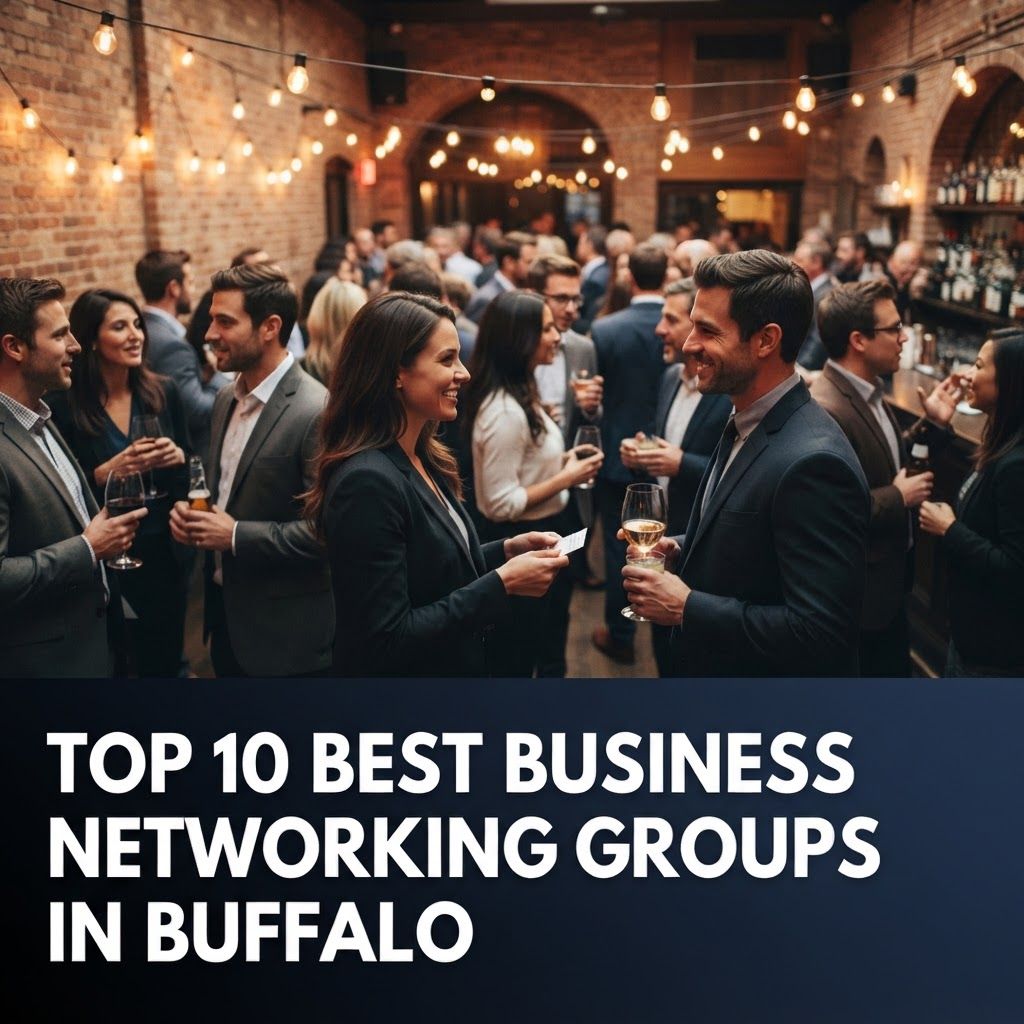
Why Networking Works Differently in Buffalo
Business people who relocate to Buffalo from larger metros consistently remark on the same thing: you can get a meeting with almost anyone. The region's business community is dense enough to be substantive and small enough that reputation travels quickly. A single introduction can reach a company president in a way that would require months of cultivation in New York City or Chicago. This accessibility makes networking groups genuinely productive here rather than merely social.
The flip side is accountability. In a market where everyone knows everyone, a reputation for unreliability or aggressive selling spreads fast and lasts long. Successful networkers in Buffalo tend to play a long game built on generosity and follow-through rather than transaction volume.
Chambers and Regional Business Organizations
The Buffalo Niagara Partnership serves as the regional chamber of commerce and the area's principal business advocacy organization. Its membership spans the largest employers in Western New York down to small businesses, and its programming combines policy advocacy, professional development, and substantial networking events. For companies seeking visibility with regional decision makers, it is typically the first membership considered.
Local chambers serve specific communities throughout the region, including the Amherst Chamber of Commerce, Ken-Ton Chamber, Hamburg Chamber, and chambers in Niagara Falls, Lockport, and surrounding towns. These organizations are often the most effective option for businesses whose customers are geographically concentrated, because relationships form among neighbors who refer naturally.
Identity-focused and mission-driven business organizations play important roles as well. The Buffalo Niagara Hispanic Chamber of Commerce, organizations supporting Black-owned businesses, and groups serving immigrant and refugee entrepreneurs including the Westminster Economic Development Initiative provide both networking and targeted business development support.
Structured Referral Groups
Referral organizations operate on a different model: exclusive membership by business category, mandatory attendance, and measured referral activity. BNI chapters operate throughout the Buffalo region, meeting weekly with structured formats where members deliver brief presentations and exchange qualified referrals. Le Tip and similar organizations follow comparable models.
These groups suit businesses with broadly applicable services and clear referral triggers — insurance agents, mortgage brokers, contractors, financial advisors, attorneys handling consumer matters, and residential service providers. They work far less well for businesses with narrow target markets or long enterprise sales cycles, because the referral base simply does not encounter your buyer.
The commitment is real. Weekly meetings, substitute requirements when you cannot attend, and expectations around referral generation mean these groups consume meaningful time. Members who treat them casually rarely see returns.
Peer Advisory and Executive Groups
Peer advisory groups gather business owners and executives from non-competing companies to work through strategic and leadership challenges under professional facilitation. Vistage operates in the Buffalo market, as do Entrepreneurs' Organization chapters and various independently facilitated CEO roundtables. Participants typically describe the value as having a board of directors made up of people who have faced similar problems.
These groups are not primarily for lead generation, and members who join expecting sales opportunities usually leave disappointed. Their value lies in decision quality, accountability, and reduced isolation among people carrying similar responsibility.
Leadership Buffalo runs cohort-based programs that immerse emerging and established leaders in regional civic and business issues while building durable relationships across sectors. Its alumni network is one of the more influential connective tissues in the region.
Industry and Professional Associations
Sector-specific groups deliver targeted value. Manufacturing organizations, construction industry associations including local chapters of national contractor groups, healthcare professional associations, technology meetups clustered around downtown and the Medical Campus, real estate organizations, legal and accounting professional societies, and marketing associations all maintain active Buffalo presence.
For professionals whose buyers are peers or specifiers within an industry, these associations typically outperform general networking groups because conversations start with shared technical context.
Young Professional and Sector Networks
Buffalo has invested heavily in retaining young talent, and the resulting organizations are unusually strong. Groups focused on young professionals provide social and professional programming, volunteer opportunities, and mentorship connections. These networks matter strategically because Buffalo's professional class is relatively stable — the twenty-eight-year-old you meet at an event today is plausibly a decision maker in the same market fifteen years from now.
Women's business organizations, including chapters of national groups and locally founded networks, provide both networking and advocacy, with programming often focused on leadership advancement and business ownership.
How to Choose Where to Invest Time
Start by identifying who actually buys from you and where those people spend time. A commercial insurance broker and a software company selling to hospital systems need entirely different rooms. Attend three meetings as a guest before joining anything, and pay attention to whether members resemble your customers or your referral sources.
Calculate real cost. Membership dues are the smaller expense; the larger one is time. A weekly referral group consumes roughly a hundred hours annually including preparation and follow-up. That investment should be justified by pipeline, and if it is not producing after twelve months of genuine participation, the group is probably wrong for you.
Limit commitments. Professionals who join six organizations typically contribute meaningfully to none. Two or three memberships with real engagement outperform broad shallow participation consistently.
Behaviors That Actually Build Business
The most effective networkers in Buffalo share recognizable habits. They ask questions and listen rather than pitching. They make introductions without expecting immediate reciprocity. They follow up within days with something specific and useful rather than a generic connection request. They show up consistently over years rather than appearing when they need something. And they are precise about who they help, because a clear, narrow description of your ideal client generates far more referrals than a broad one.
Final Perspective
Networking in Buffalo compounds. Relationships built through chambers, referral groups, peer forums, and industry associations tend to persist because people stay in the region and careers intersect repeatedly. Approached with patience and genuine contribution, participation in the right two or three organizations can become the most reliable business development channel a Western New York professional has.