
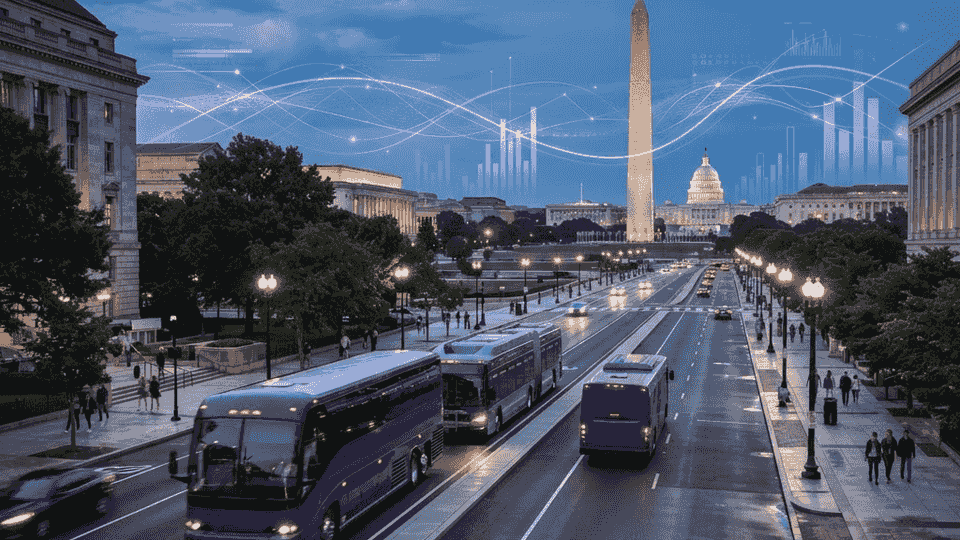
Washington Bus Travel at a Glance
Buses are essential to mobility in and around Washington, D.C. They connect neighborhoods beyond rail stations, carry commuters from Maryland and Virginia, link the capital with major East Coast cities, and move school, tour, conference, and corporate groups. Service types are not interchangeable: a public route prioritizes frequency and coverage, while a charter company focuses on private schedules, vehicle capacity, and group logistics.
1. Metrobus
Metrobus, operated by the Washington Metropolitan Area Transit Authority, is the backbone of regional bus travel. Its extensive network reaches the District, Maryland, and Virginia, including many communities without nearby Metrorail stations. Riders benefit from integrated regional fares and transfers, although traffic can affect arrival times on routes without dedicated lanes.
2. DC Circulator
DC Circulator has historically focused on simple connections among popular neighborhoods, attractions, and transportation hubs. Service plans can change, so passengers should check current District transit information before relying on a route. Its straightforward urban model illustrates the value of frequent, easy-to-understand service for visitors and residents making short central-city trips.
3. DASH
DASH serves the City of Alexandria and connects residential areas with Metrorail stations, Old Town, employment centers, and regional routes. It is a useful option for Washington-area commuters beginning or ending their journey in Alexandria. Local knowledge, accessible vehicles, and integration with the broader network make it an important regional operator.
4. Arlington Transit
Arlington Transit, known as ART, operates neighborhood-oriented routes in Arlington County. The system complements Metrobus and Metrorail by linking homes, commercial districts, schools, and stations. It is particularly relevant for car-free travel in dense Northern Virginia communities where short feeder connections can determine whether an entire transit journey is convenient.
5. Fairfax Connector
Fairfax Connector covers a large portion of Fairfax County, including links to rail stations and major employment areas. Its scale makes it valuable for suburban commuters and airport-area workers. Route frequency varies, so riders should study schedules and transfer windows, especially during evenings, weekends, or trips across multiple service zones.
6. Omniride
Omniride serves Prince William County and surrounding Northern Virginia communities with commuter and local bus options. Express routes are designed around travel to major job centers, including Washington. The operator is a strong fit for commuters seeking an alternative to driving on congested corridors, particularly when park-and-ride access is available.
7. Megabus
Megabus provides intercity coach service linking Washington with destinations along the East Coast and beyond. Online booking, luggage accommodation, and competitive pricing appeal to students and budget-conscious travelers. Pickup locations and schedules should be checked carefully, and passengers should arrive early because curbside boarding differs from a full-service terminal experience.
8. FlixBus
FlixBus operates an intercity network using a digitally focused booking model. Washington routes can connect passengers with cities throughout the Northeast, Mid-Atlantic, and other regions. Its broad marketplace offers useful schedule choices, while travelers should compare stop location, transfer details, baggage terms, and the operating partner assigned to a trip.
9. Greyhound
Greyhound remains a major intercity bus brand with a wide national network. It is useful for travelers who need connections beyond the markets served by regional carriers. The company’s breadth is its main differentiator, though journey quality can depend on the route, station, transfer count, and time of travel.
10. Academy Bus
Academy Bus provides charter transportation and scheduled services in the broader East Coast market. In Washington, its charter capabilities suit corporate events, school groups, tours, conventions, and private outings. Group planners should ask about fleet age, onboard amenities, driver-hour rules, insurance, accessibility, staging, and contingency vehicles.
How to Compare Operators
For public transit, prioritize stop location, frequency, transfer compatibility, accessibility, and real-time information. For intercity travel, compare total journey time, boarding point, baggage rules, refund terms, and transfer risk. Charter buyers should request a written scope covering vehicle size, parking, tolls, driver lodging, overtime, cleaning, and cancellation.
Washington presents special operational challenges, including motorcoach restrictions, limited curb space, security perimeters, and event road closures. Experienced operators plan legal staging points and realistic loading windows. Whether commuting or coordinating fifty passengers, the best bus company is the one that matches the service category, communicates disruptions promptly, and provides safe, well-maintained equipment.