
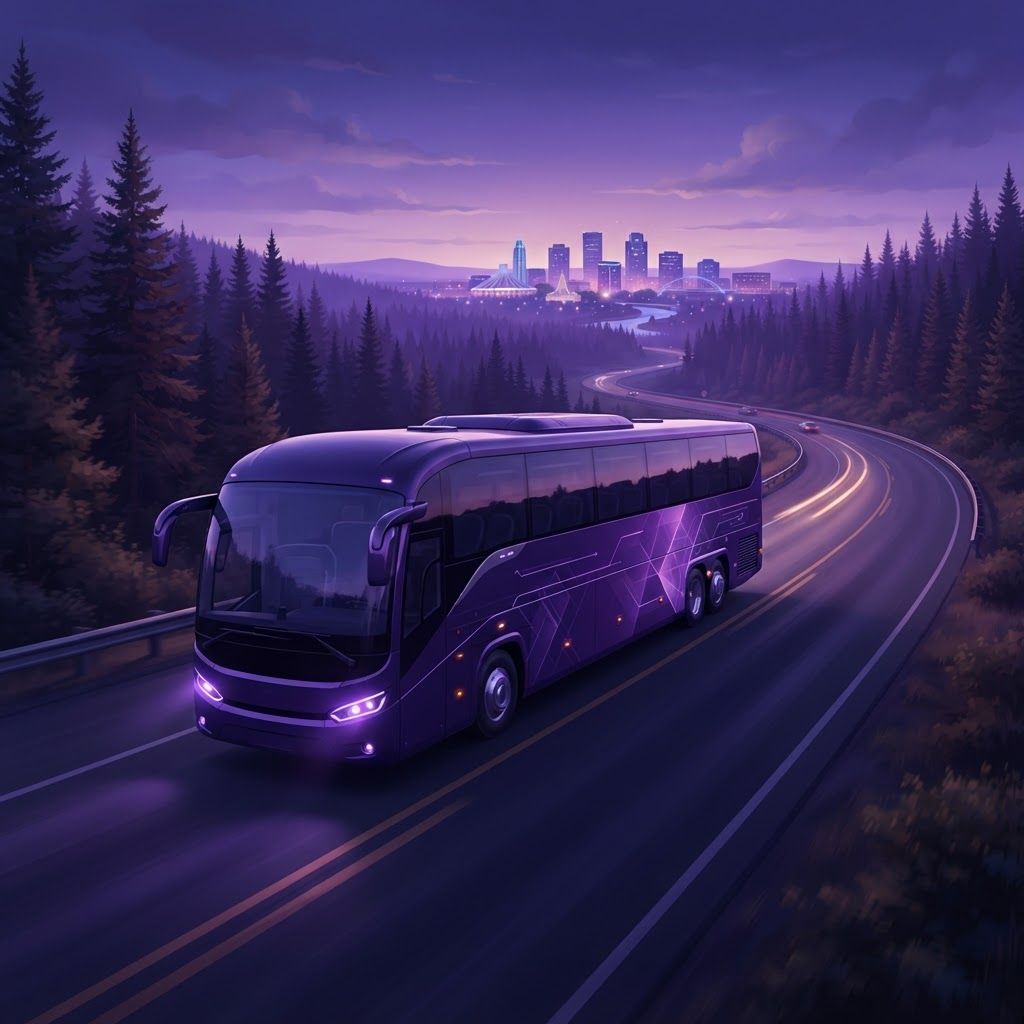
Why Bus Travel Still Matters in the Inland Northwest
Spokane's geography makes intercity bus service unusually relevant. The city is the largest population center between Seattle and Minneapolis, surrounded by smaller communities where air service is limited or nonexistent. For students traveling between campuses, workers commuting to regional job sites, families visiting relatives across the state, and travelers connecting to larger airports, the bus is often the only practical scheduled option. It is also frequently the most economical, and increasingly the most environmentally sensible on a per-passenger basis.
Two Distinct Markets: Scheduled and Charter
The bus industry in Spokane divides cleanly. Scheduled intercity carriers operate fixed routes and published timetables, selling individual tickets to the public. Charter and motorcoach operators sell entire vehicles to organizations, running school athletics trips, corporate shuttles, church groups, senior center outings, wedding shuttles, and the wine and brewery tours that have grown alongside the region's beverage industry. A third smaller segment covers shuttle services on defined corridors, particularly airport and ski area runs.
The Top 10 Bus Companies Serving Spokane
1. Greyhound Lines remains the backbone of long-distance scheduled service. Its network reach is unmatched, connecting Spokane eastward across the northern tier and westward toward Puget Sound, with interline ticketing that allows a single reservation to cover multi-carrier journeys across the country. For genuinely long trips, no other operator offers comparable coverage.
2. Northwestern Trailways is the essential regional carrier, serving corridors that national operators often skip. Routes linking Spokane with Lewiston, Moscow, Pullman, Coeur d'Alene, Sandpoint, and points along the Idaho border make it indispensable for university students and residents of smaller communities. Its regional focus translates into schedule choices that actually reflect local travel patterns.
3. FlixBus brought a modern low-cost model to the market, with app-based ticketing, assigned seating options, onboard power and connectivity, and aggressive advance-purchase pricing. It appeals strongly to younger travelers and to anyone comparing the true cost of driving against a ticket price, particularly on the Spokane to Seattle corridor.
4. Apple Line and Travel Washington intercity services fill critical rural gaps under public-private arrangements designed to preserve connectivity for communities that commercial economics alone would abandon. These routes matter enormously for medical travel, allowing residents of small towns to reach Spokane's specialty hospitals without owning a vehicle.
5. Wheatland Express serves the Palouse corridor and the higher-education market between Spokane, Pullman, and Moscow. Charter capability combined with corridor knowledge makes it a standard choice for athletic teams, academic groups, and event transportation in that part of the region.
6. Coach America style national charter operators and their regional successors provide large-fleet motorcoach capacity for major events. When a conference, tournament, or festival requires dozens of coordinated vehicles, only operators with substantial fleets and professional dispatch can execute reliably.
7. Cameo Limousine and Bus bridges the charter and luxury categories, offering everything from executive minibuses to full-size coaches. It performs particularly well on wedding shuttles and winery tours where comfort, presentation, and flexible timing outweigh cost considerations.
8. Special Mobility Services contributes accessible group transportation, an area where equipment matters as much as scheduling. Lift-equipped vehicles, secure wheelchair restraints, and drivers trained in passenger assistance make organized travel possible for senior communities and care facilities.
9. Ski and resort shuttle operators serve the winter corridors toward Mount Spokane, Schweitzer, Silver Mountain, and Lookout Pass. Beyond convenience, these services meaningfully improve safety by keeping tired skiers off snow-covered mountain highways after dark.
10. Local school and activity bus contractors round out the picture. Though rarely visible to travelers, contracted student transportation represents the largest daily bus movement in the region, and the operators involved maintain the driver training pipelines and maintenance facilities that the entire local industry depends on.
What Distinguishes a Strong Operator
Safety record is the first filter, and federal safety ratings are publicly available for interstate carriers. Fleet age and maintenance standards follow closely, since mechanical reliability determines whether a schedule is real. Driver retention is an underrated signal; companies that keep experienced drivers deliver smoother, safer, more punctual service. For charters, the quality of the quoting process reveals a great deal. Professional operators ask detailed questions about passenger counts, luggage, stops, timing, and accessibility needs before quoting, while less capable ones quote a number immediately and renegotiate later.
Practical Advice for Intercity Travelers
Book early for holiday periods, university move-in and move-out weekends, and any travel around Thanksgiving, when demand on the Spokane to Seattle corridor spikes sharply. Arrive at the terminal well before departure, since boarding for busy departures can close before the scheduled time. Pack a compact carry-on with essentials and check the operator's baggage allowance, which varies more than most travelers expect. In winter, monitor mountain pass conditions, as Snoqualmie and Fourth of July Pass closures can delay or cancel service regardless of the carrier's own performance. Finally, confirm the exact departure location, because some low-cost operators use curbside stops rather than the main terminal.
Industry Trends Shaping the Next Decade
Three trends are reshaping bus travel in the region. The first is digital transformation: mobile ticketing, real-time vehicle tracking, and dynamic pricing have become standard expectations rather than differentiators. The second is fleet modernization toward cleaner engines and, gradually, battery-electric coaches on shorter corridors, driven by both regulation and operating cost. The third is the growing recognition of intercity bus service as essential infrastructure rather than a residual option, reflected in public support for rural routes and improved terminal facilities.
Choosing the Right Bus Service
For cross-country travel, Greyhound's network reach is decisive. For regional trips within the Inland Northwest, Northwestern Trailways offers the most relevant schedules. For budget-conscious travel on major corridors, FlixBus usually wins on price when booked in advance. For rural connections, the publicly supported routes are often the only option and are genuinely reliable. For any group movement, charter operators with proper licensing, insurance, and a professional quoting process will always outperform improvised arrangements. Matching the trip to the right category is the difference between bus travel that feels like a compromise and bus travel that feels like a smart decision.