
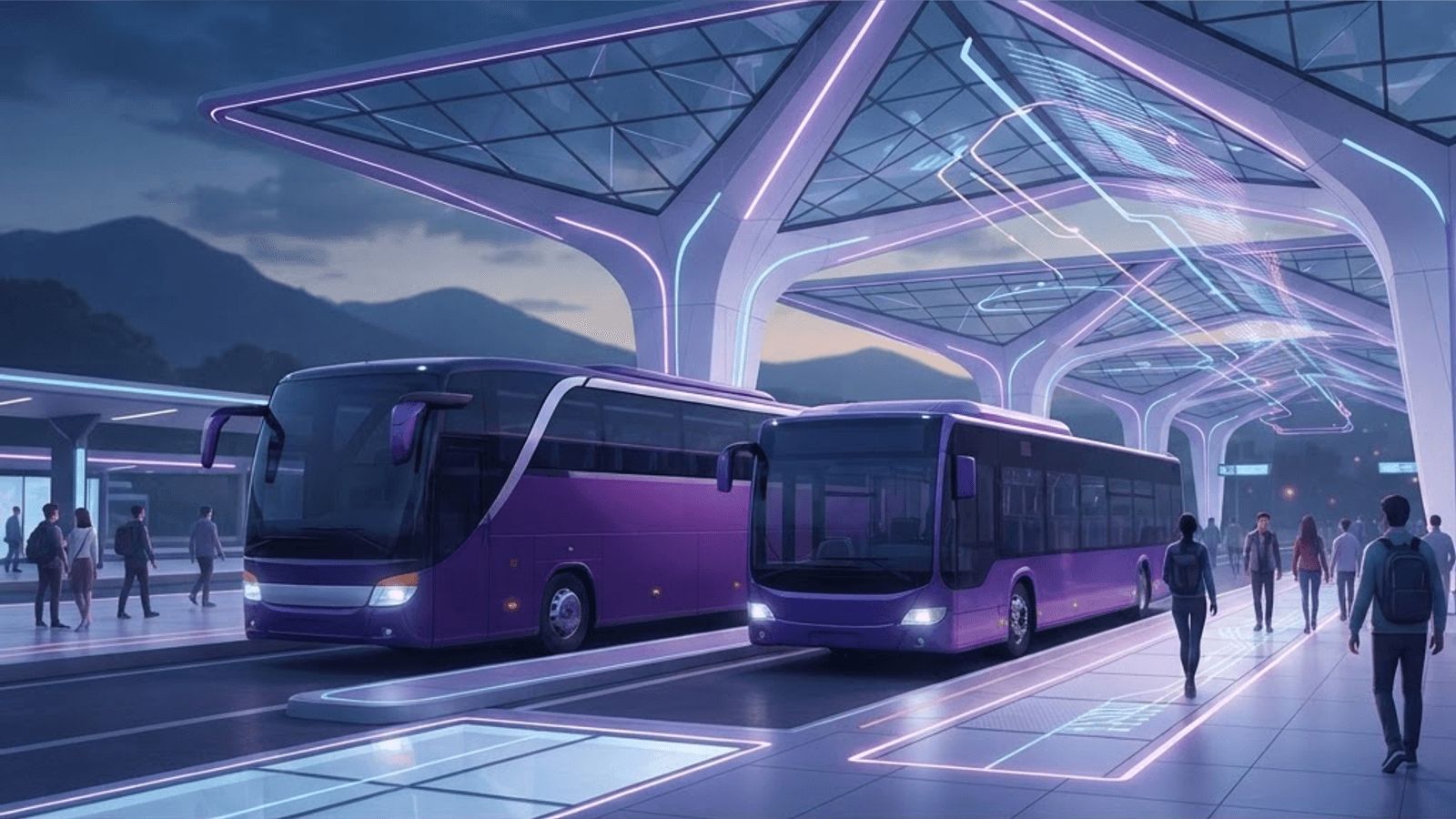
San Bernardino as a Transit Hub
The San Bernardino Transit Center changed the city's transportation picture considerably. By bringing local buses, regional coaches, Metrolink commuter rail, and intercity carriers into one facility near downtown, it created a genuine multimodal hub of the kind that most Inland Empire cities lack. Travelers can arrive from Los Angeles by train and continue by bus toward the mountains, the desert, or Las Vegas without arranging separate transfers across town.
That matters for a large share of the population. Students commuting to Cal State San Bernardino and San Bernardino Valley College, workers traveling to logistics and healthcare employers, and residents without cars all depend on bus service for daily mobility, while intercity carriers provide affordable long-distance options that compete effectively with flying on shorter routes.
Understanding the Categories of Service
Bus service in the region divides into four distinct types. Local fixed-route transit covers the city and adjacent communities with frequent stops and low fares. Regional express service connects San Bernardino to neighboring counties with limited stops. Intercity coach service links the city to Las Vegas, Phoenix, Mexico, and points across the country. Charter and tour operators provide private group transportation for schools, churches, corporate events, and casino excursions.
Choosing well means matching category to purpose. Using local transit for a cross-county trip wastes hours, while chartering a coach for a solo journey wastes money.
The Ten Leading Bus Companies
1. Omnitrans. The primary public transit provider for the San Bernardino Valley, operating an extensive network of local routes plus the sbX bus rapid transit line connecting Cal State San Bernardino through downtown to Loma Linda. Fares are low, service is frequent on major corridors, and it remains the backbone of local mobility.
2. Metrolink connecting bus services. Coordinated bus connections extend commuter rail reach into neighborhoods and employment centers not directly served by the train, making the combined system substantially more useful than either alone.
3. Mountain Transit. The essential service for reaching the mountain communities, operating routes to Big Bear Lake, Lake Arrowhead, Running Springs, and Crestline from the valley floor. For visitors without cars, this is the only practical public option to reach the mountains.
4. Greyhound Lines. The most extensive intercity network in North America, with San Bernardino service connecting to Las Vegas, Phoenix, Los Angeles, and long-haul destinations nationwide at prices that consistently undercut air travel on medium-distance routes.
5. FlixBus. A modern intercity operator offering Wi-Fi, power outlets, and reserved seating at aggressive fares, with strong service on the Southern California to Las Vegas corridor that many San Bernardino travelers use.
6. Tufesa. A well-regarded carrier specializing in routes to Mexico and the American Southwest, serving the region's substantial cross-border travel demand with comfortable coaches and multiple daily departures.
7. Crucero USA. Another operator focused on service between Southern California, Arizona, and northern Mexico, valued for reliability and bilingual customer service.
8. Riverside Transit Agency. Serving the adjacent county with routes that connect into San Bernardino, RTA extends regional reach for commuters traveling between the two counties.
9. Victor Valley Transit Authority. Providing service between the high desert communities and San Bernardino, including commuter routes through the Cajon Pass that carry significant daily volume.
10. Charter and tour coach operators in the Inland Empire. Several local motorcoach companies provide charter service for schools, sports teams, weddings, corporate outings, and casino trips, typically with modern coaches, restrooms, and professional drivers.
Practical Advice for Riders
Download the transit apps for real-time arrival information rather than relying on printed schedules, since service can shift with construction and traffic. Consider a monthly pass if you ride local transit more than a few times per week, as the break-even point comes quickly. For intercity travel, book online in advance where possible, since walk-up fares are considerably higher and popular departures to Las Vegas fill on weekends.
For mountain travel, check seasonal schedules carefully. Service frequency to Big Bear and Lake Arrowhead varies by season and weather, and winter storms can suspend routes entirely.
Accessibility and Comfort
All public transit vehicles in the region are wheelchair accessible, and paratransit service is available for riders unable to use fixed routes. On intercity coaches, request seating preferences at booking if you need extra legroom or proximity to the restroom, and bring water and a layer of clothing since coach temperatures vary widely.
Where Bus Service Is Heading
The region continues investing in transit, with ongoing expansion of rapid transit corridors, zero-emission bus procurement mandated by California policy, and better integration between rail and bus scheduling. For San Bernardino, the practical result should be faster local trips, cleaner vehicles, and a transit center that functions increasingly like a true regional gateway.
Getting the Most From Local and Intercity Service
San Bernardino is unusually well served for a city of its size, largely because the downtown transit center consolidates local routes, regional rail connections, and long-distance coach departures in one place. Riders traveling within the city and to neighboring communities are generally best served by the local network, where day passes and mobile ticketing reduce cost and eliminate exact-fare problems. Anyone commuting toward Los Angeles or Riverside should compare bus and rail combinations, since a transfer often beats a single long ride.
For intercity travel, book several days ahead where possible, since the lowest fares on long-distance coaches are released early and rise as departure approaches. Verify baggage allowances, especially for oversized items and ski or snowboard equipment during winter. Passengers with mobility needs should confirm accessibility arrangements when booking rather than at the platform, and travelers on tight connections should build in buffer time, because freeway congestion through the Inland Empire can delay even well-run schedules.