
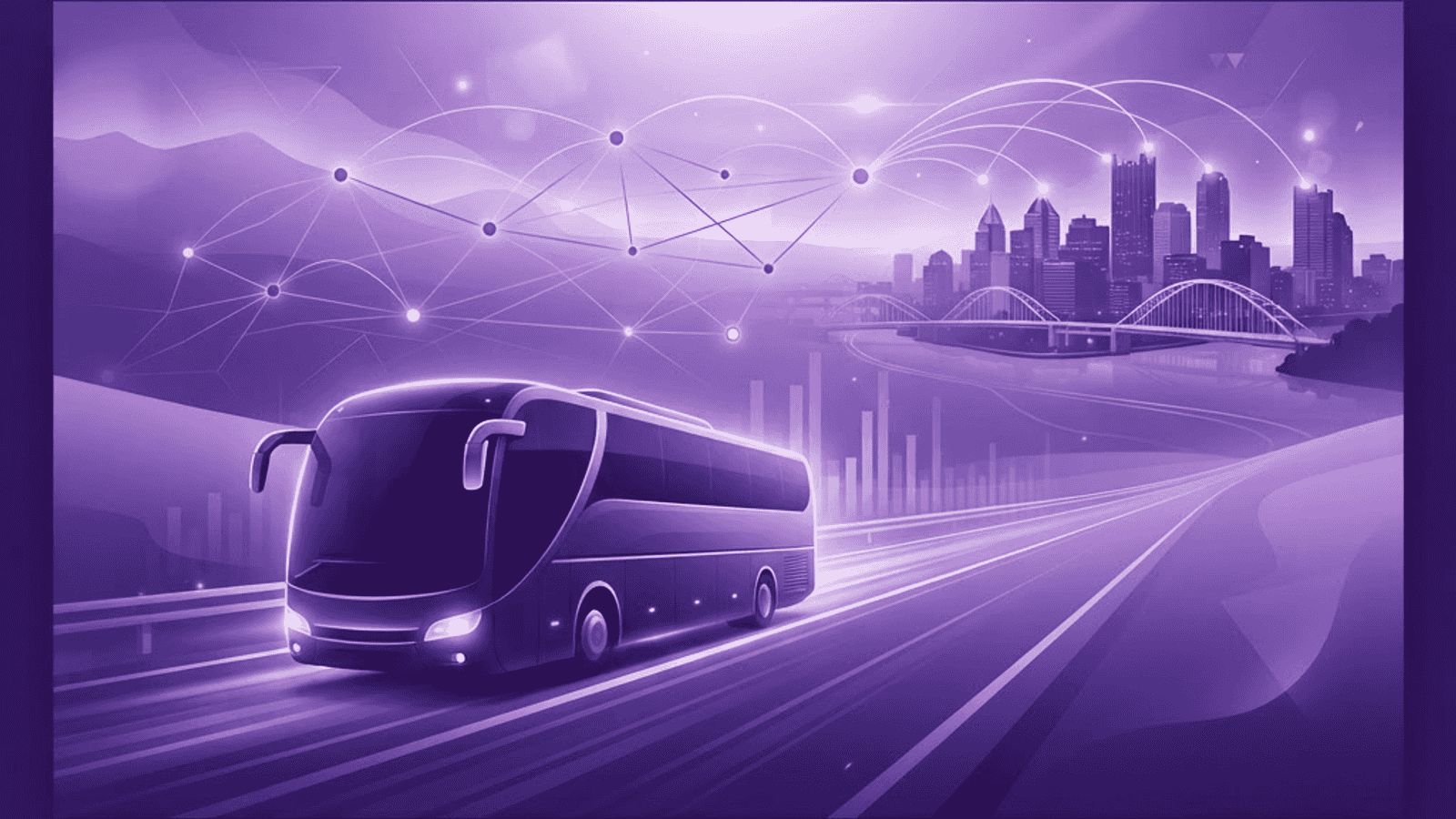
Pittsburgh as a Bus Hub
Pittsburgh's position in western Pennsylvania makes it a natural node on the intercity bus map. Interstate corridors radiate east toward Harrisburg and Philadelphia, west toward Columbus and Chicago, north toward Erie and Buffalo, and south toward Morgantown and Washington, D.C. That geography supports a surprising diversity of bus service for a metro area of its size, ranging from national scheduled carriers to university shuttles, casino runs, and charter fleets serving school and corporate groups.
Intercity buses matter here for practical reasons. Air service from Pittsburgh, while improved in recent years, does not cover every regional city economically, and rail service is limited to a small number of daily trains. For students, budget travelers, and anyone traveling to cities within a six-hour radius, buses often offer the best combination of price and frequency.
Ten Bus Companies Serving Pittsburgh
1. Greyhound Lines
Greyhound remains the backbone of national scheduled bus service, connecting Pittsburgh to hundreds of destinations through its network and interline partners. Its strength is reach rather than luxury, serving smaller towns that no other carrier touches.
2. Megabus
Megabus operates express service on high-demand corridors with double-decker coaches, reserved seating, and dynamic pricing that can produce remarkably low fares when booked early. It is popular with students traveling to New York, Philadelphia, and Washington.
3. FlixBus
FlixBus has expanded aggressively across the eastern United States, offering modern coaches, onboard connectivity, and app-based ticketing on routes linking Pittsburgh with major cities. Its network partnership model means service frequency changes seasonally.
4. Fullington Trailways
A Pennsylvania-based operator with deep regional roots, Fullington provides scheduled service across central and western Pennsylvania along with charter and tour operations. It serves communities that national carriers have reduced or dropped.
5. Barons Bus Lines
Barons operates scheduled routes through Ohio and Pennsylvania, connecting Pittsburgh with Cleveland, Columbus, and points west. It frequently interlines with larger carriers, extending its practical reach.
6. OurBus
OurBus uses a technology-forward model, coordinating routes with regional operators and adjusting schedules based on demand. Its Pittsburgh service focuses on university-oriented corridors and holiday travel peaks.
7. Lenzner Coach Lines
A long-established regional operator in the Pittsburgh area, Lenzner provides charter coaches, corporate shuttles, tours, and airport transportation. Local organizations frequently use it for group travel where reliability matters more than price.
8. Anderson Coach and Travel
Based in western Pennsylvania, Anderson combines motorcoach charter service with packaged tours to destinations across North America. Its tour catalog appeals particularly to retiree groups and organizational trips.
9. Krise Transportation
Krise operates school and contract transportation across the region along with charter services. Companies of this type form the backbone of student and athletic travel throughout Allegheny County and surrounding counties.
10. Pittsburgh-area casino and event shuttle operators
A number of local operators run scheduled shuttles to casinos, stadium events, and regional attractions. These services are often free or heavily subsidized by the destination and serve a substantial ridership that formal transit statistics miss.
Choosing Between Scheduled and Charter Service
Scheduled intercity carriers work best for individual travelers on established corridors. Fares are lowest when purchased weeks ahead, and the express operators generally provide better seating and amenities than legacy service on the same route. Travelers should confirm the boarding location carefully, since curbside stops and terminal departures coexist in Pittsburgh and can be several blocks apart.
Charter operators serve a different need entirely. For a school field trip, a wedding shuttle, a corporate offsite, or a sports team, chartering provides door-to-door service on a custom schedule. When evaluating charter companies, ask about fleet age, driver hours-of-service compliance, insurance limits, safety ratings, and whether the operator owns its coaches or subcontracts to third parties.
What Riders Should Evaluate
On-time performance is the most meaningful differentiator among scheduled carriers, and it varies by corridor rather than by brand alone. Routes crossing the Appalachians in winter face real weather risk, and connections through hub cities can be tight. Building buffer time into any trip with a downstream commitment is prudent.
Amenities have converged: most coaches now offer power outlets, wireless connectivity of variable quality, restrooms, and reserved seating options. Legroom, luggage allowance, and the presence of a physical terminal with waiting space are the differences that passengers actually notice. Accessibility is federally regulated, but riders needing a wheelchair lift should still notify the carrier in advance to guarantee equipment.
Industry Trends
The intercity bus sector has shifted decisively toward digital ticketing, dynamic pricing, and curbside operations that reduce terminal overhead. Consolidation has also continued, with ownership changes among major brands affecting route networks. On the equipment side, operators are gradually introducing lower-emission coaches, and charter fleets are adding vehicles with enhanced onboard technology for corporate clients.
Regionally, university-driven demand remains the strongest seasonal force in Pittsburgh. Late August, Thanksgiving week, December, and spring break produce sharp ridership spikes on routes to New York, Philadelphia, and Washington, and fares rise accordingly.
Final Thoughts
Pittsburgh's bus market rewards travelers who match the operator to the trip. Express carriers such as Megabus, FlixBus, and OurBus offer the best value on major corridors, Greyhound and regional Trailways affiliates provide the widest network coverage including smaller towns, and local charter companies like Lenzner, Anderson, and Krise deliver dependable group transportation. Booking early, verifying boarding locations, and allowing weather buffer in winter will handle most of what can go wrong.