
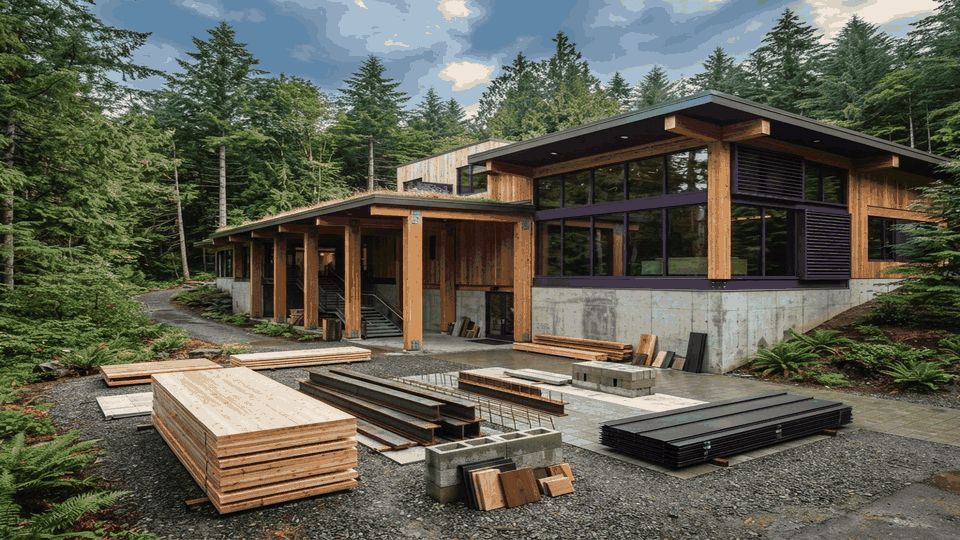
Building for Washington Conditions
Construction materials in Washington must address wet coastal weather, snow loads east of the Cascades, seismic risk, wildfire exposure, and increasingly strict energy codes. Regional sourcing can shorten lead times and make technical support more accessible. Contractors should compare documented performance, availability, warranties, installation requirements, and compatibility with the complete building assembly.
1. Weyerhaeuser
Seattle-based Weyerhaeuser is one of the country’s largest timber, lumber, and engineered wood businesses. Its products support framing and structural applications across residential and commercial construction. Forestry scale, technical literature, and established distribution are major advantages. Designers still need to follow span tables, moisture protection, and project-specific engineering requirements.
2. Cadman
Cadman supplies ready-mix concrete, aggregates, and related materials in western Washington. Its plants serve the active Puget Sound construction market, where delivery timing and mix consistency directly affect field performance. Technical mix support is especially valuable for high-strength, exposed, pumped, or lower-carbon concrete applications.
3. CalPortland
CalPortland is a major regional producer of cement, concrete, and aggregates with operations serving Washington. Its materials underpin roads, bridges, utilities, and buildings. The company’s scale, testing resources, and logistics network help support large projects. Contractors should coordinate placement conditions and environmental product information early.
4. Mutual Materials
Bellevue-area Mutual Materials produces masonry, pavers, retaining-wall systems, and related hardscape products. Its Northwest focus means product selections are suited to local architectural styles and climate. Regional showrooms and dealer access help homeowners, landscape professionals, and architects compare texture, color, and installation systems.
5. PABCO Roofing Products
PABCO Roofing Products manufactures asphalt shingles in Tacoma. Local production can support availability and gives the company direct relevance to western Washington roofing contractors. Buyers should compare wind ratings, algae resistance, warranty terms, ventilation requirements, and installer experience rather than choosing solely by appearance.
6. James Hardie Building Products
James Hardie fiber-cement siding is widely used across Washington because it offers dimensional stability and resistance to moisture and pests when correctly installed. The company provides region-specific product guidance and a broad contractor ecosystem. Proper flashing, clearances, fastening, and painting remain critical to long-term performance.
7. Milgard Windows and Doors
Milgard, founded in Tacoma, is a major window and door brand with strong recognition throughout the West. Its product lines include vinyl, fiberglass, and aluminum options suited to varied budgets and design goals. Washington buyers should focus on energy ratings, glass packages, water performance, operation, and local warranty service.
8. Issaquah Cedar and Lumber
Issaquah Cedar and Lumber serves builders seeking cedar, decking, siding, timbers, and specialty wood products. Independent suppliers can provide valuable grading knowledge and help customers select species and profiles for Northwest conditions. Buyers should discuss finish, ventilation, fasteners, and maintenance before installation.
9. Stoneway Concrete
Stoneway Concrete is a familiar western Washington ready-mix supplier serving residential, commercial, and infrastructure work. Concrete success depends on more than the delivered mix: site access, scheduling, weather, placement, consolidation, finishing, and curing all matter. An experienced local producer can help teams plan these variables.
10. Canyon Stone and Tile
Washington-based stone and tile suppliers support kitchens, bathrooms, facades, and commercial interiors with natural and engineered surfaces. Strong companies help designers understand slip resistance, stain sensitivity, freeze-thaw exposure, thickness, and setting materials. Product selection should account for installation location, not just visual appeal.
Buying Smarter
Request current technical data, environmental declarations where relevant, and written warranty terms. Confirm lead time before finalizing a design, particularly for custom colors or imported components. For envelope products, treat each material as part of a system that includes air, water, vapor, and thermal control layers.
Washington’s construction market increasingly rewards lower-carbon materials, efficient envelopes, durable finishes, and prefabricated systems. The strongest suppliers support these goals with transparent performance information and field expertise. Early coordination among architect, engineer, contractor, installer, and manufacturer is often the best way to avoid substitutions and costly rework.