
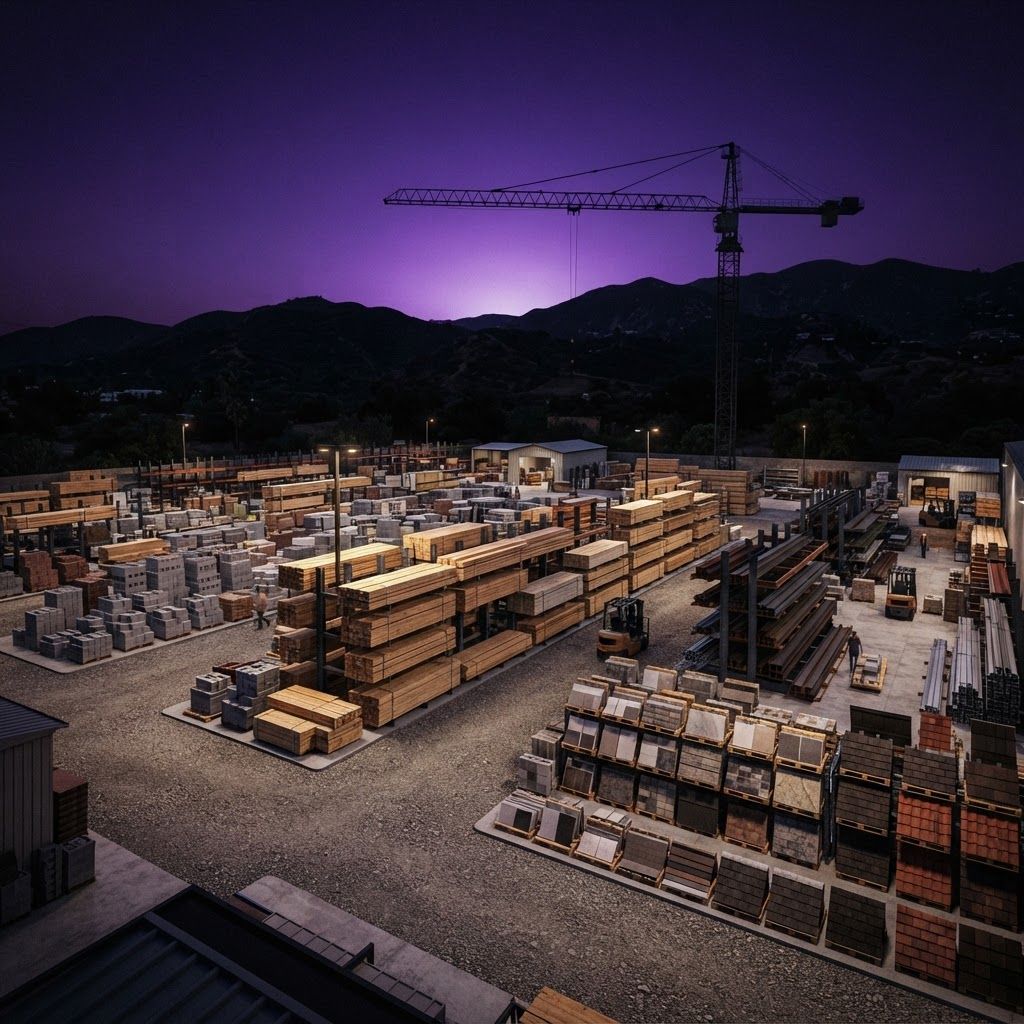
Construction Demand Drives a Deep Supply Network
Few Southern California cities have grown as consistently as Santa Clarita. Master-planned communities in Valencia, ongoing infill development in Newhall and Saugus, commercial expansion along Soledad Canyon Road, and a large base of homeowners investing in renovations together create sustained demand for building materials. That demand supports a supplier network broad enough to handle everything from a single pallet of pavers for a backyard project to a full framing package for a multifamily building.
Geography helps. The Interstate 5 and Highway 14 corridors give distributors efficient access to the ports, to regional cement and aggregate sources, and to the wider Los Angeles market. Many suppliers operate from yards in the Santa Clarita Industrial Center and along Sierra Highway, where truck access and outdoor storage are practical.
Categories of Building Materials Available Locally
Structural materials include dimensional lumber, engineered wood products such as laminated veneer lumber and I-joists, structural steel, and cold-formed metal framing. Concrete and masonry cover ready-mix, block, rebar, aggregates, and hardscape products. Envelope materials span roofing systems, stucco and plaster components, siding, windows, doors, and waterproofing membranes. Interior finish materials include drywall, insulation, flooring, tile, cabinetry, countertops, and paint. Specialty categories cover fasteners, adhesives, formwork, and equipment rental that most yards now bundle with material sales.
Ten Building Material Companies Serving the Santa Clarita Valley
1. Valencia Lumber & Building Supply — A full-service yard carrying framing lumber, engineered wood, sheathing, and fasteners, with takeoff services that convert plans into itemized material lists for framers and general contractors.
2. Santa Clarita Ready Mix — A concrete supplier with local batch plant capability, offering standard and specialty mixes including fiber-reinforced and high-early-strength designs, plus scheduling support for phased pours.
3. Newhall Masonry Supply — Concrete block, brick, retaining wall systems, pavers, and mortar products, with a display yard that helps homeowners and landscape designers compare hardscape options in person.
4. Canyon Country Roofing Distributors — Distributors of asphalt shingles, concrete and clay tile, single-ply membranes, underlayments, and edge metal, serving both re-roof contractors and new construction.
5. Soledad Drywall & Insulation Supply — Gypsum board, metal studs, joint compound, acoustic ceiling systems, and insulation, offering boom-truck stocking that places material directly on upper floors.
6. Rye Canyon Steel Supply — Structural steel shapes, plate, tube, and rebar with cutting and light fabrication services, supporting both commercial framing and custom architectural work.
7. Placerita Tile & Stone Gallery — Porcelain, ceramic, natural stone, and engineered quartz for flooring and surfaces, combining a designer-oriented showroom with contractor pricing tiers.
8. Bouquet Canyon Windows & Doors — Suppliers of energy-code-compliant fenestration, including dual-glazed vinyl and aluminum windows, patio systems, and entry doors, with measurement and installation coordination.
9. Golden Valley Paint & Coatings — Architectural and industrial coatings, primers, elastomeric stucco finishes, and color matching, plus sundries and spray equipment for painting contractors.
10. Sierra Highway Aggregates — Sand, gravel, decomposed granite, base rock, and bulk landscape materials, with delivery and bin service for grading, drainage, and hardscape projects.
Codes, Climate, and Compliance in the Santa Clarita Valley
Local conditions shape material selection more than many buyers expect. Much of the valley sits in or near a Very High Fire Hazard Severity Zone, which triggers wildland-urban interface requirements: ignition-resistant exterior materials, ember-resistant vents, Class A roof assemblies, and tempered glazing in certain assemblies. Seismic design governs structural connections, shear wall detailing, and anchorage hardware. California's energy standards drive insulation levels, window performance ratings, cool roof requirements, and increasingly, readiness for solar and electrification.
Water efficiency and stormwater rules also matter. Drought-tolerant landscape material, permeable paving, and on-site retention products appear regularly in local project specifications. Suppliers who understand these requirements can steer buyers toward compliant products the first time rather than after a plan check correction.
Working Effectively With Suppliers
The most productive contractor-supplier relationships share a few habits. Provide plans early so takeoffs are accurate and long-lead items are identified before they become schedule risks. Ask about credit terms, volume pricing, and whether the yard offers job-account billing that simplifies cost coding. Confirm delivery logistics honestly: narrow hillside streets in parts of Canyon Country and Sand Canyon may require smaller trucks or staged drops. Establish a clear returns policy for overage, particularly on cut-to-order and special-order goods where returns are typically restricted.
For homeowners, the advice is different but complementary. Bring photographs and measurements, ask for the specification sheet rather than only a price, and confirm whether a product is approved for your application — many attractive finishes are rated for interior use only. Reputable local suppliers will tell you when a product is wrong for the job, which is precisely why relationships with them are worth building.
Market Trends Reshaping Material Supply
Price volatility has made forward-buying and locked quotes more important, with many suppliers now offering shorter quote validity windows and material escalation clauses. Prefabrication is rising: panelized walls, pre-cut framing packages, and factory-assembled trusses reduce field labor in a tight labor market. Sustainability credentials, including recycled content, environmental product declarations, and low-emitting material certifications, increasingly influence commercial specifications. And digital tools — online ordering portals, real-time inventory visibility, and delivery tracking — are becoming a genuine competitive differentiator among yards.
For anyone building or renovating in the Santa Clarita Valley, the local supply base is a real advantage. Material availability, code-aware guidance, and short delivery distances translate directly into fewer delays and better outcomes, provided you choose suppliers whose scale and specialization actually match your project.