
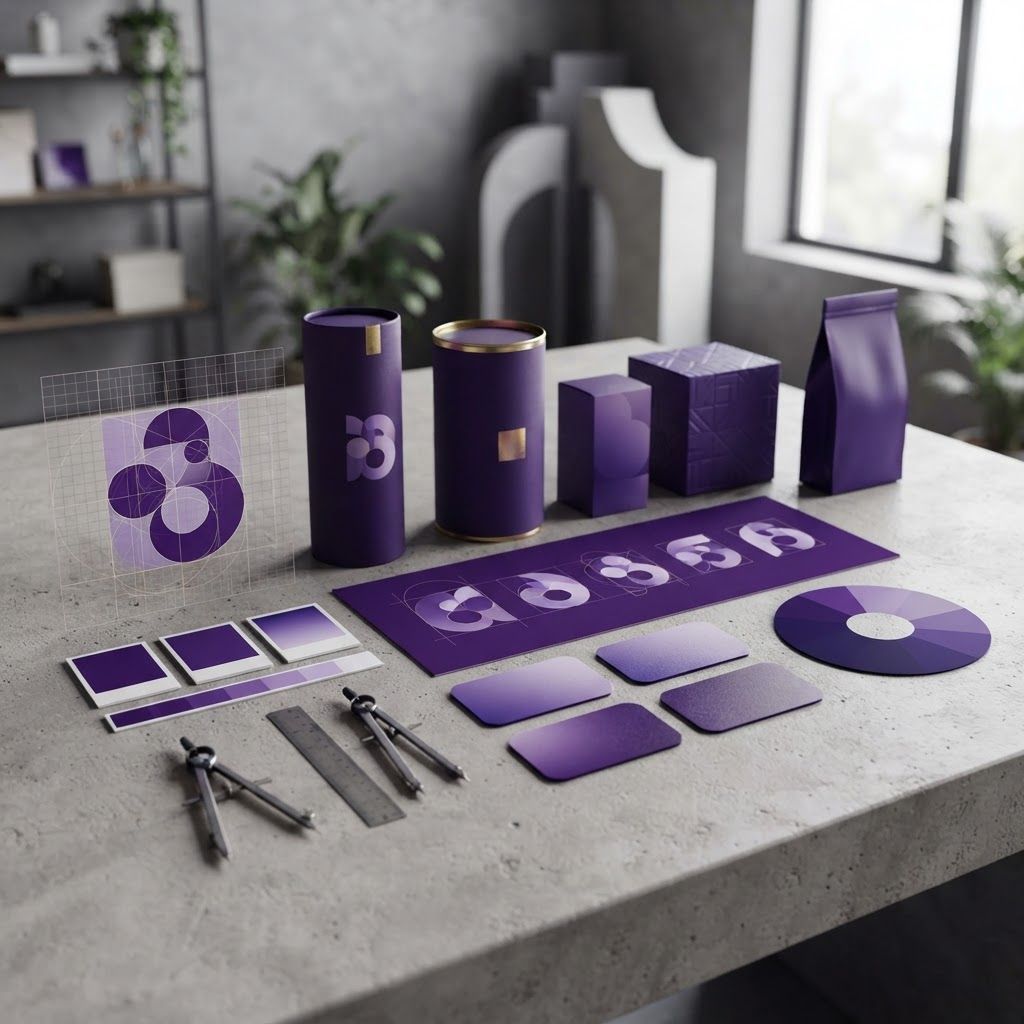
Branding in a City Built on Making Things
Birmingham has a long history of design attached to manufacturing — jewellery, metalwork, engineering and printing all required visual identity systems long before branding became a professional discipline. That inheritance is visible in the city's current agency scene, which tends toward practical, well-crafted identity work rather than abstract theory.
The client base is equally grounded. Manufacturers, professional services firms, universities, property developers and consumer brands across the West Midlands all commission branding work, and most of them need identity systems that function across signage, packaging, digital products and print rather than just a logo presentation.
The Top 10 Branding Agencies in Birmingham
1. Halo
Halo delivers brand strategy and identity design with a focus on positioning before aesthetics. The agency works through audience research and competitive analysis to define what a brand should stand for, then builds visual and verbal systems to express it — the correct sequence, and one that many cheaper alternatives skip.
2. Cogent Elliott
A long-established Midlands agency, Cogent Elliott combines branding with broader marketing communications. Its longevity reflects an ability to handle substantial rebrand programmes for established organisations, where internal stakeholder management is as demanding as the design work itself.
3. Substrakt
Based in Birmingham's creative community, Substrakt works extensively with arts and cultural organisations on digital-first brand and product design. Cultural sector branding requires balancing institutional gravity with accessibility, and the agency's work in this space is well regarded nationally.
4. Un.titled
Un.titled operates across brand identity, digital design and development, which suits organisations where the brand largely lives in software rather than print. Designing identity systems that work as design systems — components, states, accessibility considerations — is a distinct skill from traditional identity work.
5. Yellow Door Creative
Yellow Door focuses on brand identity and packaging for consumer businesses, an area where physical execution details determine success. Substrate choice, print finish and shelf visibility are practical considerations that separate packaging designers from general graphic designers.
6. Fluid Ideas Midlands
Offering full-service branding including naming, identity, guidelines and rollout, Fluid works with property, leisure and education clients. Rollout capability matters enormously: a rebrand that lacks proper implementation planning fragments within a year as different teams interpret guidelines differently.
7. Ignition Brand Consultancy
Ignition specialises in B2B and industrial branding, sectors where visual identity has historically been undervalued. Differentiating a manufacturing or engineering business through clear positioning and disciplined visual language often produces disproportionate commercial return because so many competitors look identical.
8. Stone Create
Stone Create combines branding with campaign and content capability, making it suitable for organisations that need the new identity activated immediately rather than handed over as a document. The ability to produce launch assets in-house shortens the gap between approval and visible change.
9. Superb Digital Branding Studios of the Jewellery Quarter
The Jewellery Quarter hosts numerous small studios producing high-craft identity work, often for independent businesses, hospitality venues and creative organisations. Their advantage is direct access to senior designers and a willingness to take creative risks that larger agencies moderate.
10. Glorious Creative
Glorious focuses on brand strategy and creative direction for organisations undergoing significant change — mergers, market repositioning or generational transition in family businesses. These projects are as much about internal alignment as external perception, and require facilitation skills alongside design ability.
What a Rebrand Should Actually Deliver
A logo is the smallest part of the output. A complete brand programme should produce a defined positioning statement, an articulated set of values that actually differentiate, a verbal identity including tone of voice and messaging hierarchy, a full visual system covering typography, colour, imagery and layout, and comprehensive guidelines with real-world application examples.
Critically, it should also produce an implementation plan. Signage, vehicle liveries, uniforms, document templates, digital interfaces and packaging all need sequencing and budgeting. Organisations that fund the design but not the rollout end up with two identities running simultaneously.
When to Rebrand and When Not To
Legitimate triggers include a genuine change in what the business does, a merger, expansion into new markets, or an identity that has become functionally unusable across modern digital contexts. Poor triggers include boredom among the leadership team and a desire to look like a competitor.
Rebranding carries real risk. Existing recognition has value, and discarding it should be a considered decision. Evolution — refining rather than replacing — is often the better commercial choice, preserving equity while resolving practical problems.
Cost, Process and Timelines
Expect a serious identity programme for an established organisation to run several months, with discovery and strategy consuming a significant portion. Costs vary enormously with scope, and the honest driver is complexity of application rather than creative difficulty: a brand applied across hundreds of touchpoints requires far more work than one applied across a dozen.
Agree decision-making structures upfront. The most common cause of delay and cost overrun is unclear approval authority, with late-stage stakeholders reopening settled decisions.
Trends in Brand Design
Flexible identity systems designed to adapt across contexts have replaced rigid single-lockup approaches. Accessibility has become a design requirement rather than an afterthought, influencing colour contrast and typographic choices. Motion is now part of core identity development, since most brand encounters happen on screens. And there is a visible move away from minimal sameness toward distinctive, characterful design as brands react to a decade of near-identical simplification.
Final Thoughts
Birmingham's branding agencies combine strategic rigour with genuine craft, serving everything from cultural institutions to industrial manufacturers. Choose based on whether your challenge is positioning, digital system design, packaging execution or organisational alignment, and insist on a programme that includes implementation rather than ending at a guidelines document.