
Why New Orleans Is Made for Cycling
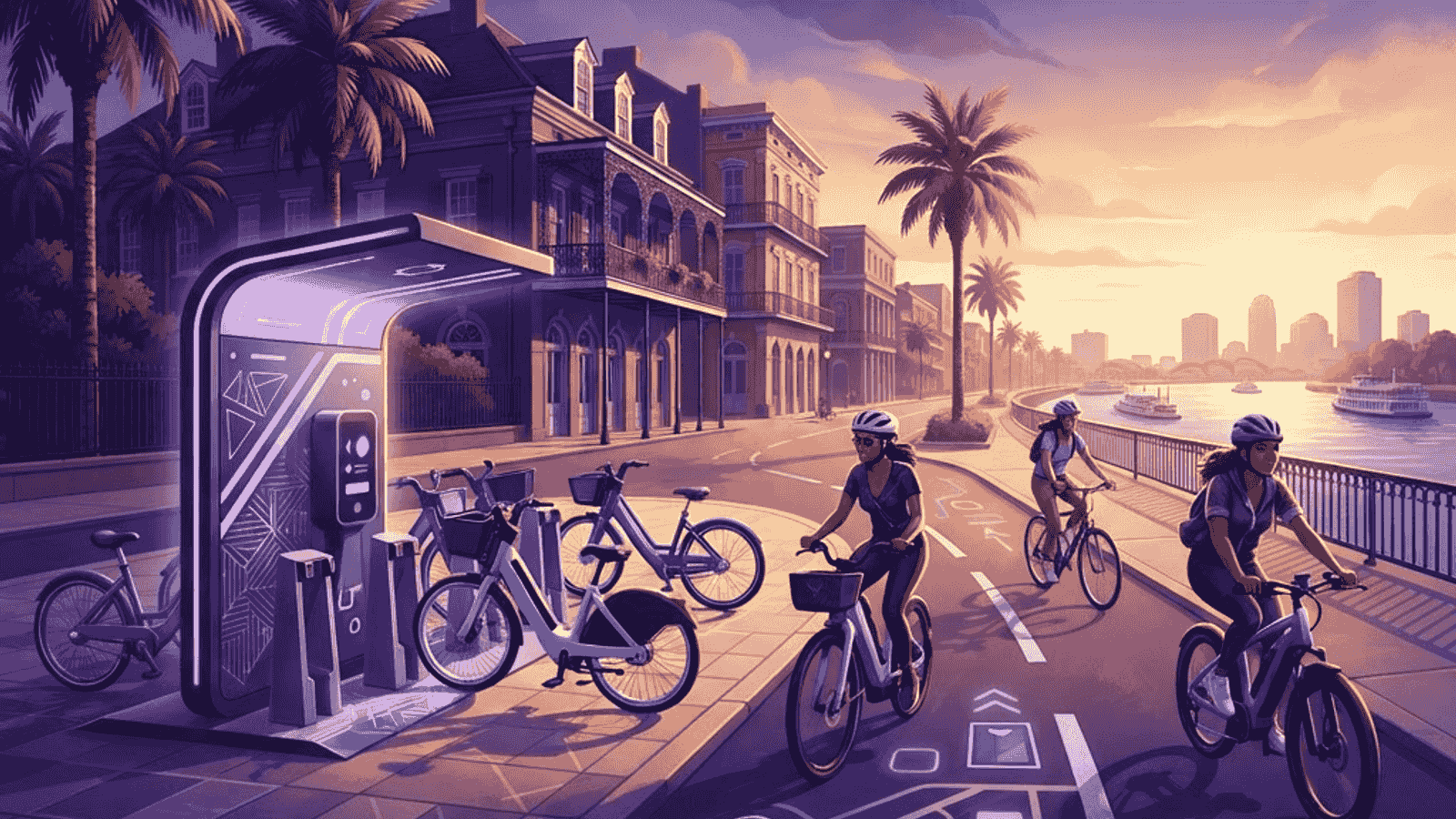
New Orleans has quietly become one of the most bike-friendly cities in the American South, and the reasons are structural. The terrain is almost perfectly flat, with elevation changes measured in a few feet rather than hills. Distances are short, so a ride from the French Quarter to City Park or the Garden District takes minutes rather than an hour. The city has invested in protected bike lanes and greenways, including the Lafitte Greenway connecting Mid-City to the edge of the Quarter and riverfront paths along the Mississippi.
Cycling also solves practical problems. Parking downtown is expensive and scarce. Streets in the French Quarter are narrow and congested. A bicycle bypasses all of it while letting riders actually see the architecture, courtyards, and neighborhood details that blur past a car window. For visitors, it is arguably the single best way to experience the city.
How to Evaluate a Bike Rental Service
Quality varies widely, so a few criteria matter. Fleet condition is first: check brakes, tire pressure, gearing, and chain condition before accepting any rental. Fit and comfort matter for longer rides, so look for adjustable seats and a range of frame sizes. Safety equipment should be included or available, including helmets, front and rear lights, and a sturdy lock. Clear pricing with published hourly, daily, and weekly rates prevents surprises, and a transparent damage and theft policy protects you. Finally, good operators provide route advice, since knowing which streets to avoid materially improves the experience.
1. Blue Bikes New Orleans
The city's bike share system offers docked and hybrid access to pedal-assist bicycles across dozens of stations. Its advantages are convenience and spontaneity: unlock a bike with an app, ride one way, and leave it at a station near your destination. Pricing options include per-minute passes and monthly memberships, and reduced-fare programs improve accessibility for residents. For short point-to-point trips, this is often the most practical choice.
2. Bicycle Michael's
A long-standing fixture in the Marigny, Bicycle Michael's is respected for mechanical expertise as much as rentals. Riders get well-maintained bikes, knowledgeable fitting advice, and honest guidance on routes through the Bywater, Marigny, and along the riverfront. The shop's repair credibility is a strong signal that rental fleets are properly serviced.
3. Bayou Bicycles
Located near Mid-City and the bayou district, Bayou Bicycles serves riders heading to City Park, the Lafitte Greenway, and Bayou St. John. Its appeal lies in comfortable cruisers and hybrids suited to relaxed exploration, friendly service, and proximity to some of the most pleasant cycling terrain in the city.
4. American Bicycle Rental Company
Operating near the French Quarter, this rental company focuses on visitor convenience with easy pickup, simple daily rates, and cruisers built for flat city streets. Included locks and helmets, plus practical maps and route suggestions, make it an approachable option for travelers who have not cycled in a while.
5. Freewheelin Bike Tours
Freewheelin combines rentals with guided experiences, leading small groups through neighborhoods with historical and cultural narration. Guides cover topics from architecture and jazz history to food traditions, and routes are paced for casual riders. For visitors who want context along with exercise, guided tours deliver far more than a self-directed loop.
6. Confederacy of Cruisers
Known for creative themed rides, this operator emphasizes comfortable cruiser bikes with wide tires and upright seating, ideal for the city's uneven pavement. Tours explore Creole neighborhoods, cocktail history, and local food culture. The combination of easy bikes and genuinely knowledgeable guides makes it a standout for first-time visitors.
7. Flambeaux Bicycle Tours
Flambeaux offers guided rides that highlight the everyday texture of New Orleans neighborhoods rather than only headline attractions. Small group sizes, attentive guides, and thoughtfully planned routes on low-traffic streets make it a comfortable choice for riders who feel nervous about urban cycling.
8. Buzz NOLA Bike Tours and Rentals
Combining rentals with tour options, Buzz NOLA is valued for flexible scheduling and local insight. Riders can rent independently or join guided outings covering the Garden District, the Quarter, and riverfront paths. Its practical approach suits travelers who want to mix a guided introduction with independent exploration later.
9. Electric Bike and Scooter Rental Operators
Electric-assist rentals have grown quickly in New Orleans, and for good reason. Pedal assist neutralizes heat and humidity, extends comfortable range toward Lakeview or the Ninth Ward, and helps riders of varying fitness levels travel together. Look for operators that clearly explain battery range, charging expectations, and speed limits on shared paths.
10. Hotel and Neighborhood Guesthouse Bike Programs
Many New Orleans hotels, boutique inns, and guesthouses offer complimentary or low-cost bicycles to guests. Convenience is the main draw: bikes are on site, staff can suggest routes, and there is no separate booking process. Quality varies, so inspect the bike carefully, but for short rides to breakfast or a nearby park these programs are hard to beat on value.
Trends in Urban Cycling
Cycling in New Orleans is being reshaped by infrastructure and technology. Protected bike lanes and greenway expansion continue to reduce conflict with vehicle traffic. Electric bikes are becoming the default choice for many riders, flattening the effect of heat and distance. App-based unlocking and integrated payment have simplified access. There is also growing attention to equity, with reduced-fare bike share programs and community bike shops improving access for lower-income neighborhoods. Cycling tourism has become a meaningful part of the local visitor economy.
Safety and Practical Tips
Ride defensively and assume drivers may not see you, particularly around the French Quarter where distraction is constant. Use lights after dark, since many streets are dimly lit. Watch for uneven pavement, streetcar tracks, and drainage grates, and cross tracks at a perpendicular angle. Lock frames to fixed objects rather than only wheels, and never leave a bike unattended overnight on the street. Carry water, ride earlier in the day during summer, and check the forecast, because afternoon thunderstorms arrive suddenly.
Final Thoughts
A bicycle may be the ideal vehicle for New Orleans: fast enough to cover the city, slow enough to absorb it. The ten services above cover bike share for quick trips, quality shop rentals for full-day exploration, guided tours for cultural depth, and electric options for effortless range. Pick the format that matches your plans, respect the traffic, and the city opens up in a way no car ever allows.