
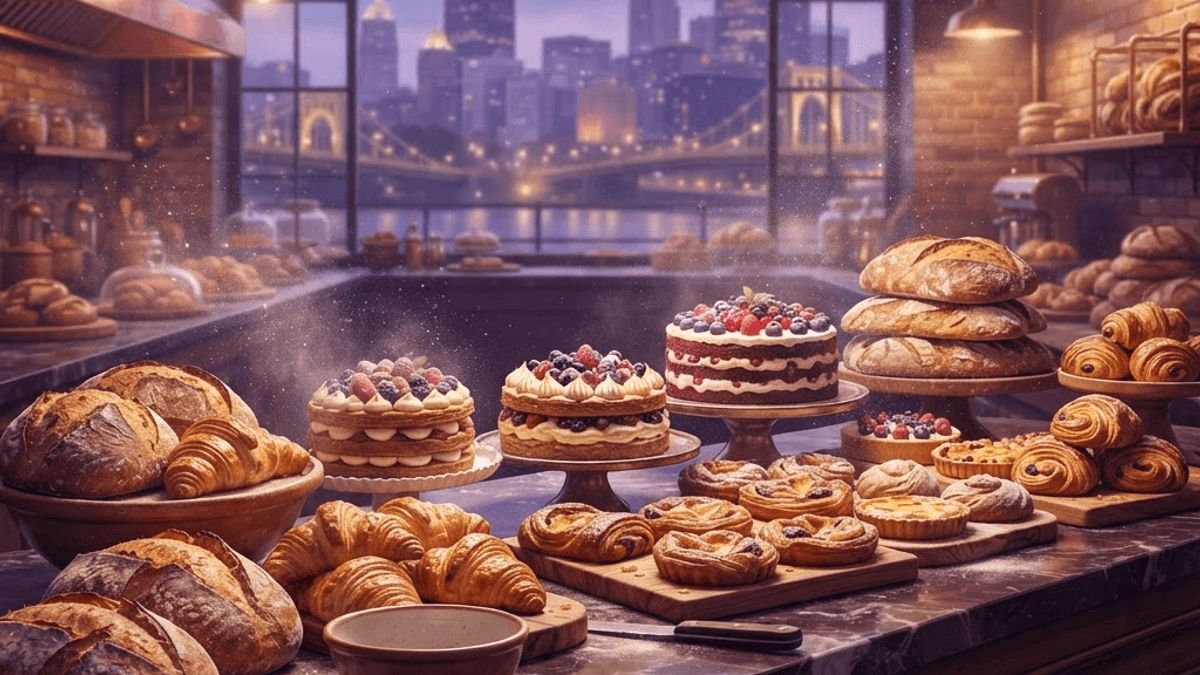
A Baking Tradition Built by Immigration
Pittsburgh's bakeries tell the story of who settled here. Waves of Polish, Italian, German, Slovak, Croatian, Hungarian, and Lebanese immigrants arrived to work in the mills and brought their baking with them, and remarkably, much of it survived. The city still supports bakeries making nut rolls the way somebody's grandmother did in the nineteen forties, alongside newer shops pulling naturally leavened sourdough from steam-injected deck ovens.
What makes the scene distinctive is that these two traditions coexist without much friction. Neighborhoods like Bloomfield, Lawrenceville, the Strip District, Squirrel Hill, and the South Side each developed their own bakery character, and the city's cookie table wedding tradition, where families collectively bake hundreds of dozens of cookies, means baking here is genuinely woven into social life rather than being a specialty purchase.
The Top 10 Bakeries in Pittsburgh
1. Mediterra Bakehouse. A regional benchmark for naturally leavened bread, Mediterra works with long fermentation and quality flour to produce loaves with genuine crust structure and complex flavor. Their breads appear on menus across the city, which is the strongest possible endorsement from professional kitchens. Look for their country sourdough and seeded loaves.
2. Allegro Hearth Bakery. A Squirrel Hill fixture, Allegro Hearth built a devoted following on hearth-baked breads, morning pastries, and a genuinely neighborhood atmosphere. It is the kind of bakery where the same customers appear on the same mornings, and the bread rewards that loyalty. Their challah and rustic loaves are standouts.
3. Enrico Biscotti Company. Tucked into the Strip District, Enrico's is a Pittsburgh institution for Italian biscotti and traditional baking. The narrow shop, the smell, and the sheer variety of biscotti make it as much an experience as a purchase. The adjacent cafe serves what many consider some of the best simple Italian food in the city.
4. Jean-Marc Chatellier's French Bakery. Located in Millvale, this bakery brings classical French technique to the region: proper laminated croissants, delicate fruit tarts, éclairs, and macarons executed with genuine pastry discipline. For anyone who wants to understand the difference between a croissant and an actual croissant, this is the reference point.
5. Oakmont Bakery. An enormous, endlessly popular operation, Oakmont Bakery covers extraordinary range: cookies, doughnuts, cakes, breads, pastries, and the cookie trays that anchor countless regional weddings and funerals. Its scale is part of the appeal, and it remains a genuine family bakery despite the volume.
6. Prantl's Bakery. Famous well beyond Pittsburgh for its burnt almond torte, Prantl's earned national attention for a cake that sounds simple and is difficult to replicate. The torte's caramelized almond topping and light custard filling explain why boxes of it leave the city in carry-on luggage regularly.
7. Gluuteny Bakery. A dedicated gluten-free and allergy-conscious bakery, Gluuteny fills a role most cities handle poorly. Their achievement is producing baked goods that are genuinely good rather than merely acceptable given restrictions, which requires substantially more skill than conventional baking.
8. Bread and Butter and the neighborhood artisan wave. A cohort of newer small bakeries across Lawrenceville, Bloomfield, and the East End work with local grain, natural leavening, and small daily batches. They sell out early, publish limited menus, and represent the most technically ambitious end of the current scene. Arrive in the morning or accept disappointment.
9. Polish and Eastern European neighborhood bakeries. Scattered through the city's traditional neighborhoods, these shops make nut rolls, poppy seed rolls, kolache, paczki, and lady locks, particularly around holidays. Paczki season before Lent produces genuine lines. These bakeries are irreplaceable cultural institutions, and several have operated for three or four generations.
10. Middle Eastern and Mediterranean bakeries. Concentrated in areas with strong Lebanese and Syrian heritage, these bakeries produce fresh pita, manakish, spinach pies, baklava, and semolina pastries. They are frequently the best value in the city, selling substantial quantities of freshly baked food for very little money.
How to Tell Real Craft From Imitation
With bread, examine the crust and the crumb. A properly fermented loaf has a crust with actual structure and color, not a pale uniform surface, and an irregular open crumb rather than the tight even texture of a commercially conditioned dough. Ask how long the dough ferments. Bakers doing long fermentation will happily tell you, often at length.
With laminated pastry, look at the layers in cross-section. A real croissant shows distinct thin layers and a honeycomb interior, feels light for its size, and shatters slightly when torn. A bread-like interior means insufficient lamination or shortcuts with the butter. Speaking of butter, ask whether they use butter or shortening, because it changes everything about flavor and mouthfeel.
With cakes and fillings, taste for restraint. Excessive sweetness usually masks either poor ingredients or a lack of technique. The best regional bakeries let dairy, nuts, and fruit carry the flavor.
Practical Advice for Visiting
Go early. Serious bakeries bake finite quantities and the best items disappear first, sometimes within an hour of opening on weekends. Weekend mornings at popular shops involve lines, and that is normal rather than a sign of poor operations.
Order holiday and specialty items well ahead. Paczki, holiday nut rolls, Easter breads, and cookie trays require advance orders at nearly every bakery on this list, sometimes weeks in advance. If you are planning a wedding and want a traditional cookie table, start those conversations early, because the bakeries that do it well book up.
Finally, eat bread the day you buy it, or at least the same day it was baked. Naturally leavened bread stales differently and slower than commercial bread, but nothing recovers a two-day-old croissant. Freeze what you cannot eat, and refresh loaves in a hot oven rather than a microwave.