
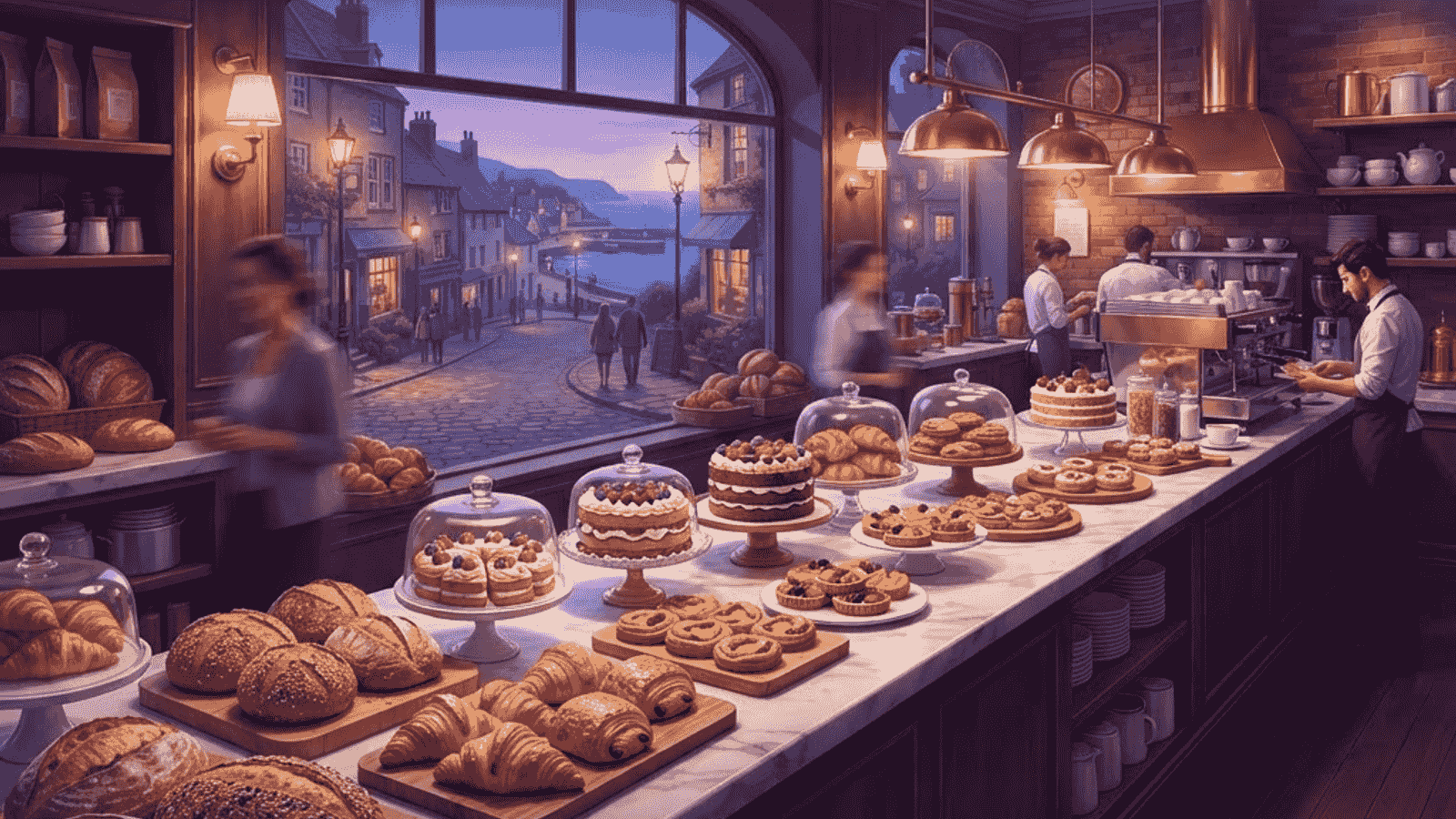
A Baking Culture Shaped by the Coast
Oyster Bay's baking scene developed the way most good food cultures do: slowly, driven by a few stubborn people who refused to cut corners. The town's mix of year-round residents and seasonal visitors creates an unusual commercial dynamic. Summer traffic supports ambitious menus and specialty equipment, while a loyal off-season customer base rewards consistency rather than novelty. The result is a cluster of bakeries with genuine technical skill instead of tourist-season shortcuts.
Coastal humidity plays a real role in what appears in the display case. High ambient moisture affects dough hydration, proofing schedules, and the crispness of laminated pastry, and bakers here adjust constantly. When a local baker mentions changing their formula in July, they are describing an actual technical response, not marketing language.
Ten Bakeries That Define the Town
Harborlight Bread Company is the anchor of the local bread scene. Naturally leavened loaves fermented overnight, baked in a deck oven with steam injection, produce the blistered, deeply caramelized crust that distinguishes serious sourdough from the merely tangy. Their country loaf and seeded rye sell out early, and the crumb structure holds up to a full day without going gummy.
Marsh Street Patisserie handles French technique with unusual discipline. Their croissants show visible honeycomb lamination and audible shatter, which requires precise butter temperature control that many bakeries never master. Seasonal fruit tarts, canelés, and a properly set crème pâtissière round out a case that would be respectable in a much larger city.
Cedar Cove Bakehouse occupies the comfortable middle ground brilliantly: muffins, scones, coffee cake, and layer cakes made with real butter and no shortcuts. It is the bakery locals use for everyday needs and family celebrations alike, and their carrot cake has a following that borders on unreasonable.
Northshore Bagel Works boils before baking, which sounds obvious and is increasingly rare. The resulting chew and glossy exterior are unmistakable, and their weekend lines confirm the difference is noticed.
Quarrystone Mill & Loaf mills a portion of their own grain on site, which meaningfully changes flavor. Fresh-milled whole wheat carries a nuttiness that disappears within weeks of milling, and their whole-grain breads demonstrate the point convincingly.
Tidewater Sweet Shop focuses on classic American baking done well: pies with laminated all-butter crusts, brownies with proper fudgy centers, and seasonal fruit galettes. Their blueberry pie during peak season is a legitimate reason to plan a visit.
Lantern Lane Cakes specializes in custom celebration and wedding cakes. Beyond decoration, they are notable for cake that actually tastes good, which is a lower bar than it should be in the custom cake business. Structural reliability in summer heat is another quiet strength.
Fern Alley Gluten-Free Bakery operates a dedicated facility, which matters enormously for customers with celiac disease rather than a preference. Their focus on rice, buckwheat, and starch blends tuned per product avoids the single-flour-for-everything trap that produces uniformly disappointing results.
Anchor Bay Doughnuts fries in small batches throughout the morning rather than producing everything at dawn. The difference between a doughnut twenty minutes out of the fryer and one that has sat for four hours is not subtle, and they build their entire operation around it.
Sound Harbor Coffee & Crumb completes the list as a café-bakery hybrid, pairing carefully sourced espresso with a compact pastry selection. It is the sit-down option for people who want a good morning bun and a table rather than a bag and a walk.
How to Judge Bakery Quality
For bread, examine the crust and crumb together. A good naturally leavened loaf has an irregular, open crumb with translucent walls between air pockets, and a crust that crackles rather than bends. Uniform, cottony holes usually indicate commercial yeast and a short fermentation, which is not a crime but is a different product.
For laminated pastry, look at the cross-section. Distinct layers, visible honeycomb, and a hollow-ish interior indicate proper lamination and proofing. Dense, bready croissants with an even interior have typically been underproofed or made with insufficient butter.
For cakes and pies, texture reveals the ingredients. All-butter pie crust tastes of butter and fractures into flakes. Shortening-based crust is tender but flat in flavor. Neither is wrong, but bakeries that charge premium prices should deliver premium ingredients.
Timing affects everything. Arriving within the first two hours of opening gets the best of the day's bread and pastry. By late afternoon, even excellent bakeries are selling product that has passed its peak, and the honest ones will tell you so.
Trends in the Local Baking Scene
Long fermentation has become a genuine standard rather than a marketing claim, driven partly by flavor and partly by customer interest in digestibility. Several local bakeries now run twelve to twenty-four hour cold fermentations as their default process.
Regional grain sourcing is expanding. Bakers are working with nearby mills on heritage and hard red wheat varieties, which produces breads with distinctive character and supports a shorter supply chain. Customers can taste the difference even when they cannot name it.
Preorder systems have quietly transformed the business. Weekend bread subscriptions and holiday pie reservations let bakeries plan production accurately, reducing waste and guaranteeing customers get what they came for. For popular items, ordering ahead is now less an option than a requirement.
Allergen awareness has also matured. More bakeries maintain documented ingredient lists and can speak precisely about cross-contact risk, which is a meaningful improvement for customers managing real dietary restrictions.
Making the Most of a Bakery Visit
Ask what came out of the oven most recently. Bakery staff know, and they will steer you correctly if asked directly. Buy bread the day you plan to eat it, and store it cut-side down on a board rather than in plastic, which softens the crust you paid for.
For events, book custom work well in advance, particularly during summer wedding season when local bakeries reach capacity. Provide a firm guest count and be honest about outdoor conditions, since buttercream and coastal heat interact badly without planning.
Oyster Bay's bakeries reward curiosity. The town is small enough to visit several in a morning and varied enough that each visit produces something the others do not offer, which is the strongest recommendation any local food scene can earn.