
How Minneapolis Became a Baking City
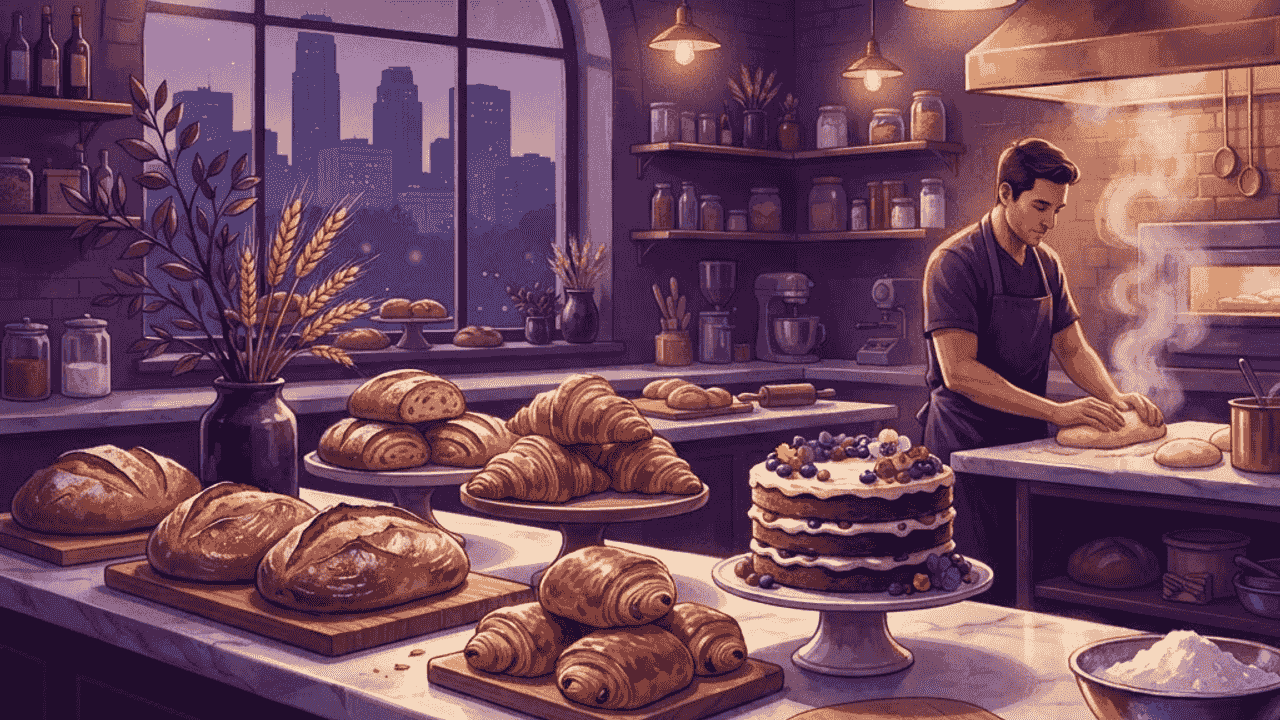
Minneapolis was literally built on flour. The city's mills once supplied much of the country, and that heritage never fully left the local food culture. Today the connection shows up differently: in bakers who source Upper Midwest heritage grains, in a strong Scandinavian and Northern European pastry tradition, and in an unusually knowledgeable customer base willing to line up in February for good bread. Long winters may even help, since baking thrives where warmth and comfort carry cultural weight.
What sets the local scene apart is craft depth rather than volume. Many of the best bakeries here are small, chef-driven operations that mill or source thoughtfully, ferment slowly, and sell out daily.
Patisserie 46
Located in the Kingfield neighborhood, Patisserie 46 is widely considered the standard-bearer for French baking in Minneapolis. The kitchen produces laminated croissants with genuinely distinct layers, refined entremets, tarts, and naturally leavened breads. Precision is the hallmark here, and the pastry case reads more like Paris than the Upper Midwest.
Rustica Bakery
Rustica has been central to the city's bread culture for years, known for rustic hearth loaves, baguettes, and an exceptionally good selection of morning pastries. Many local restaurants and coffee shops serve Rustica bread, which makes it something of a foundational supplier for Minneapolis dining as well as a beloved retail bakery.
Sun Street Breads
Sun Street Breads pairs serious bread baking with a genuinely satisfying menu of breakfast and lunch. Its hand pies, biscuits, doughnuts, and sandwich program have made it a Southside institution. The bakery is a good example of the local tendency to blend craft baking with unpretentious neighborhood hospitality.
Laune Bread
Laune Bread has earned strong recognition for naturally leavened loaves built on regionally grown and freshly milled grain. The bakery's approach is deliberately narrow: a small selection, executed with obsessive attention to fermentation and flavor development. For anyone interested in what Minnesota grain actually tastes like, this is the place to start.
Isles Bun and Coffee
Near Lake of the Isles, Isles Bun and Coffee is famous for oversized cinnamon rolls served with a jar of extra frosting on the counter. It is not subtle and does not try to be. The bakery has become a genuine Minneapolis ritual, especially on weekend mornings when the line stretches out the door and the whole block smells like cinnamon.
Wuollet Bakery
Wuollet is a longstanding family bakery with multiple Twin Cities locations and deep Scandinavian roots. It is the default choice for many families ordering celebration cakes, and its kringler, cardamom pastries, and butter cookies preserve a Northern European tradition central to Minnesota baking history.
Sarah Jane's Bakery
Sarah Jane's, in Northeast Minneapolis, is a warm neighborhood bakery known for scones, coffee cake, hand pies, and lovely decorated cakes. The atmosphere is friendly and unhurried, and the baking leans toward comforting American and European home-style classics done carefully.
Angel Food Bakery and Coffee Bar
Downtown's Angel Food Bakery focuses on playful, well-executed doughnuts, cupcakes, and cake bites. Its rotating doughnut flavors are creative without becoming gimmicky, and it serves a useful role for downtown workers and event caterers looking for approachable, crowd-pleasing pastry.
Bogart's Doughnut Co.
Bogart's makes small-batch cake and yeast doughnuts with a restrained, quality-first approach: good ingredients, balanced sweetness, and thoughtful seasonal flavors. Its brown butter glaze has a devoted following, and the bakery helped raise expectations for what a Minneapolis doughnut should be.
Cardigan Donuts
Cardigan Donuts, in downtown Minneapolis, builds brioche-style doughnuts fresh throughout the day with proper fermentation and quality fillings. The result is noticeably lighter than typical shop doughnuts, and the operation demonstrates how technique-driven baking can succeed even in a fast, grab-and-go downtown format.
Trends in the Local Baking Scene
Several trends are shaping Minneapolis baking. Regional grain sourcing continues to expand, with bakers working directly with Upper Midwest farmers and mills. Long, natural fermentation is now expected at the top of the market, prized both for flavor and digestibility. Cardamom and other Scandinavian flavors remain enduringly popular, reflecting local heritage. Gluten-free and vegan options have improved dramatically, moving from afterthought to legitimately good. And many bakeries now operate on limited daily production, treating scarcity as a quality decision rather than a marketing tactic.
Tips for Ordering Well
Arrive early, especially on weekends, since the best croissants and sourdough often sell out before midday. Order celebration cakes several days ahead, and longer during graduation and holiday seasons. Ask what came out of the oven most recently rather than defaulting to your usual. If you are buying bread for the week, ask about crumb and crust characteristics, because a loaf built for toast behaves differently than one built for sandwiches. Finally, bring cash for smaller operations and expect limited parking in dense neighborhoods.
Final Thoughts
Minneapolis rewards curious eaters with a baking scene that spans refined French patisserie, grain-forward sourdough, and gloriously excessive cinnamon rolls. The bakeries above represent the range of that culture, rooted in the city's milling history and pushed forward by bakers who take fermentation, sourcing, and hospitality seriously.