
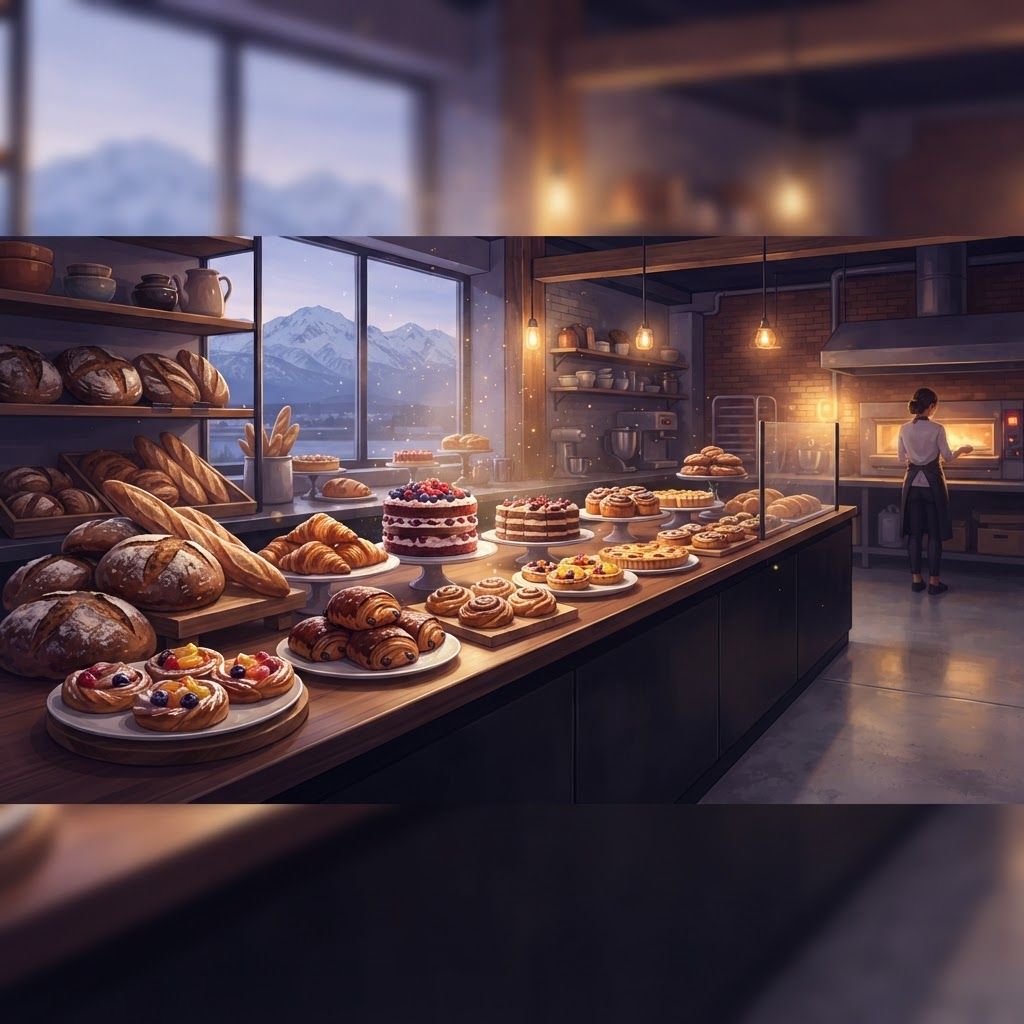
Baking at High Latitude
Anchorage has developed a bakery culture disproportionate to its size, and the reasons are partly cultural and partly practical. Long winters make bakeries genuine social infrastructure, warm rooms where people gather during months of limited daylight. Meanwhile, the difficulty and cost of importing fresh baked goods means local production is not competing with national chains on the same terms as in the Lower 48.
The technical environment is also distinctive. Dry winter air, cold ingredient temperatures, and long transport times for flour and butter all affect results. Experienced Anchorage bakers adjust hydration, fermentation timing, and proofing conditions seasonally in ways that bakers in temperate climates rarely need to consider.
Ten Notable Anchorage Bakeries and Bakery Categories
1. Fire Island Rustic Bakeshop. Perhaps the most recognized artisan bakery in Anchorage, known for naturally leavened breads, morning pastries, and a neighborhood cafe atmosphere. Its sourdough program and rotating seasonal offerings have made it a benchmark for local baking quality.
2. Great Harvest Bread Company Anchorage. A whole grain focused bakery milling its own flour, offering hearty sandwich loaves, scones, and sweet breads. Its emphasis on freshly milled grain gives products a distinctive flavor profile and appeals to customers prioritizing nutrition.
3. Alaska Sourdough Traditions. Sourdough occupies a genuine place in Alaskan history, with prospectors and settlers maintaining starters through harsh winters. Several Anchorage bakers continue this tradition with long fermented loaves, and the term sourdough remains local slang for a longtime Alaskan.
4. European Style Pastry Shops. Anchorage supports several bakeries producing laminated pastries, croissants, danishes, and continental cakes to serious technical standards. Lamination in a dry, cold climate requires careful temperature management, and the results at the best shops are excellent.
5. Wild Berry Specialty Bakeries. Alaskan wild berries including blueberries, salmonberries, lingonberries, and crowberries appear in pies, tarts, scones, and preserves. These ingredients are genuinely regional, often foraged, and produce flavors unavailable elsewhere in American baking.
6. Coffee Roaster Bakery Combinations. Anchorage's strong coffee culture has produced numerous establishments pairing serious espresso with in house baking. These venues function as workspaces and community rooms through the dark months, and their pastry programs are frequently underrated.
7. Custom Cake and Celebration Bakeries. Wedding and celebration cake specialists serve Anchorage's event market, working around a summer wedding season compressed into a few months and delivery logistics complicated by weather and distance.
8. Ethnic and International Bakeries. Anchorage is among the most ethnically diverse cities in the United States by some measures, and its bakeries reflect this with Filipino, Korean, Mexican, Russian, and Pacific Islander baked goods available across the city. This diversity is one of the local food scene's genuine strengths.
9. Gluten Free and Specialty Diet Bakers. Dedicated producers serve customers with celiac disease and other dietary requirements, a meaningful service in a city where mail ordering specialty baked goods is expensive and slow.
10. Farmers Market and Small Batch Bakers. Anchorage's summer markets host small producers selling breads, pies, cinnamon rolls, and pastries. Several established local bakeries began at these markets, and the scene remains an incubator for new bakers.
Ingredients and Sourcing
Nearly all flour, sugar, and butter arrives by barge or air, adding cost and requiring careful inventory management. Bakers plan around shipping schedules and maintain buffer stock, a discipline unfamiliar to their counterparts in agricultural regions.
Local ingredients do exist and matter. Wild berries, birch syrup, spruce tips, rhubarb from Alaskan gardens, and honey from local apiaries appear in seasonal products. Alaska's long summer daylight produces vegetables and rhubarb of unusual size and sweetness, which bakers exploit in pies and preserves during a brief window.
The Seasonal Business Cycle
Anchorage bakeries experience pronounced seasonality. Summer brings tourists and long daylight, driving high volume and extended hours. Winter shifts business toward regular local customers, holiday orders, and the comfort baking that carries a community through darkness. Successful operators plan staffing and cash flow around this pattern rather than fighting it.
Trends in Local Baking
Naturally leavened bread has moved from specialty to expectation, with many Anchorage customers now able to discuss fermentation intelligently. Whole grain and locally milled flour interest continues to grow. Nordic and Scandinavian influences, appropriate to the latitude, appear in cardamom buns, rye breads, and berry preparations. Meanwhile, bakeries increasingly function as full food businesses, adding sandwiches, soups, and prepared items to smooth revenue across the day.
How to Find the Best Baked Goods in Anchorage
Visit early, since the best products at serious bakeries sell out before midday. Ask what was baked that morning rather than ordering from a static menu, because the strongest items rotate seasonally. Explore beyond downtown, as excellent bakeries operate in Midtown, Spenard, and outlying neighborhoods with less visitor traffic and often better value.
Seek out the international bakeries, which offer some of the city's most interesting baking and are frequently overlooked by visitors. Finally, try anything featuring wild Alaskan berries in season, since these are genuinely regional flavors that cannot be replicated with imported fruit. Anchorage's bakery scene rewards curiosity, and its best practitioners are producing work that would stand comparison in far larger cities.