
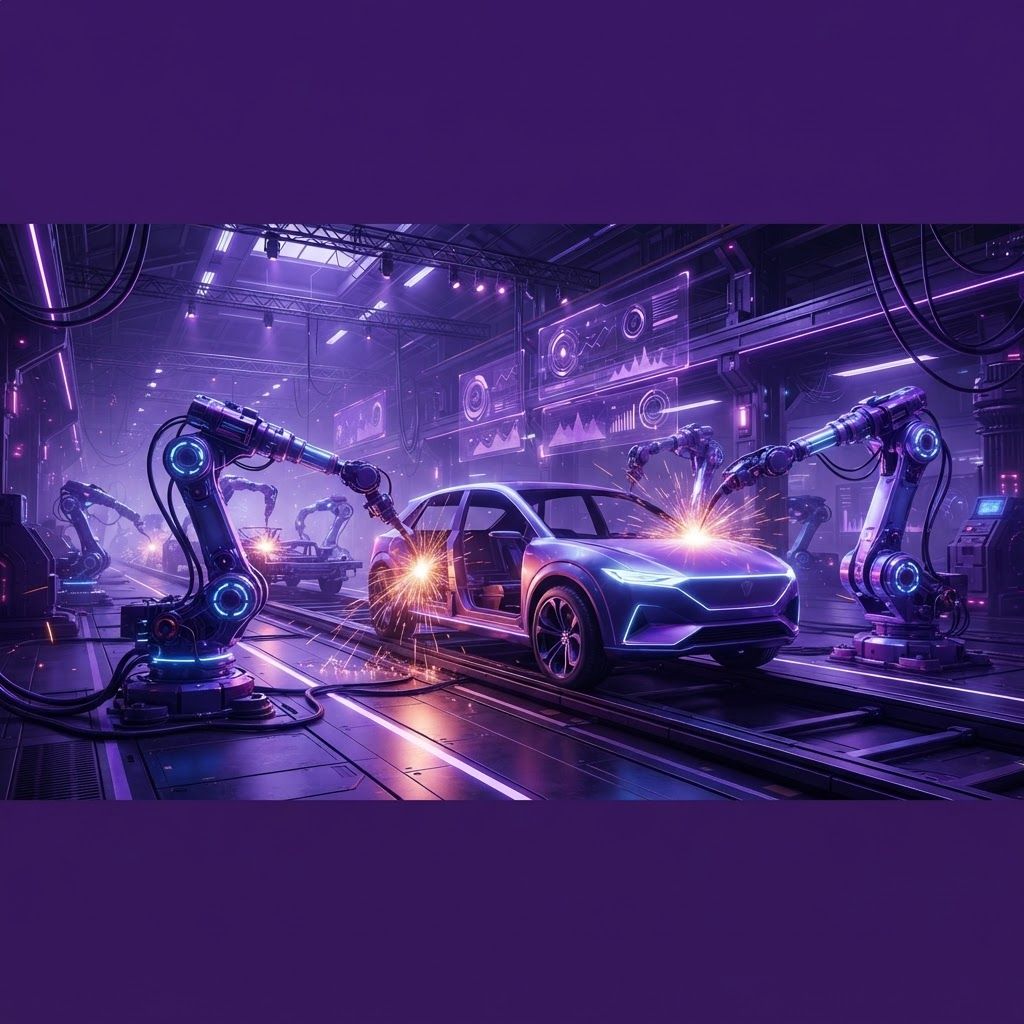
An Automotive Sector Built on Technology
Arizona has become an unexpectedly important automotive state, and Tempe sits near the center of that development. The region never hosted the massive assembly plants of the Midwest, yet it has attracted electric vehicle companies, autonomous driving programs, component manufacturers, and proving grounds. The reasons are practical: extreme heat provides the toughest possible durability testing environment, open land supports test tracks, and the regional engineering talent pool has grown substantially.
The result is an automotive manufacturing community focused on innovation, components, specialty vehicles, and validation rather than mass production. For suppliers, engineers, and fleet operators, that creates a distinctive set of local capabilities.
Vehicle and Powertrain Manufacturers
Sonoran Electric Vehicles develops and assembles electric commercial vehicles designed for delivery and municipal service duty cycles. Its engineering emphasizes thermal management, an obvious priority given local operating conditions.
Desert Drive Powertrain Systems manufactures electric drive units, including motors, gearboxes, and integrated controllers, supplying both vehicle manufacturers and retrofit specialists.
Valley Battery Technologies produces battery packs and thermal management systems for automotive applications, with particular expertise in maintaining cell temperature in extreme ambient heat.
Component and Parts Manufacturers
Papago Automotive Components machines and fabricates precision metal parts for suspension, braking, and structural applications, serving both original equipment programs and aftermarket brands.
Tempe Injection Molded Auto Parts specializes in interior trim, housings, and functional polymer components, working with materials selected for ultraviolet and heat resistance.
Copper State Wiring Systems builds wiring harnesses and electrical distribution assemblies for vehicles and heavy equipment, an increasingly complex product as vehicle electronics content grows.
Specialty Vehicles and Upfitting
Rio Salado Vehicle Upfitters converts commercial vans and trucks into service vehicles, installing shelving, power systems, lighting, and equipment mounts for trades and utility fleets.
Arizona Custom Coach Works builds specialty and mobility-adapted vehicles, performing structural modifications that require careful engineering to preserve crash performance.
Testing, Validation, and Engineering
Sun Valley Automotive Testing provides durability, thermal, and component validation services, taking advantage of local conditions that replicate worst-case operating environments naturally.
Broadway Mobility Engineering offers design and simulation services covering structural analysis, thermal modeling, and systems integration for vehicle programs and component suppliers.
Trends Reshaping Automotive Manufacturing
Electrification dominates every conversation. The shift changes the supplier base fundamentally, reducing demand for engine and transmission components while creating demand for power electronics, battery systems, and thermal management. Suppliers who recognized this early have repositioned successfully; those who did not face difficult transitions.
Software content continues to rise. Modern vehicles contain tens of millions of lines of code, and manufacturing now includes software flashing, configuration, and over-the-air update infrastructure. The line between automotive and technology manufacturing has genuinely blurred.
Heat testing has grown in commercial importance. As battery thermal performance becomes a competitive differentiator, the ability to validate under genuine extreme conditions gives Arizona facilities an advantage that cannot be replicated in a laboratory chamber at reasonable cost.
Lightweighting continues across all vehicle types. Aluminum, high-strength steel, and composite materials reduce mass to extend range, which drives demand for manufacturers capable of joining dissimilar materials reliably.
Evaluating an Automotive Manufacturing Partner
Quality system certification is non-negotiable in this industry. Automotive-specific quality standards govern supplier qualification, and a manufacturer without appropriate certification will not survive a customer audit regardless of its technical capability.
Assess production part approval capability. The documentation process required to qualify a part for automotive production is rigorous, and suppliers experienced with it will move through qualification far faster than those learning it on your program.
Understand capacity and flexibility. Automotive volumes fluctuate with model cycles and market conditions. A supplier with rigid capacity may struggle during ramp-up or become uneconomical during slow periods.
Review traceability practices. Automotive recalls depend on the ability to identify exactly which vehicles received which lot of components. Manufacturers who maintain rigorous traceability protect their customers from recalls of unnecessary scope.
Finally, evaluate engineering collaboration. The strongest supplier relationships involve early participation in design, where manufacturing input can reduce cost and improve quality before tooling is committed.
Workforce and Talent in the Local Sector
The automotive manufacturing community in Tempe depends heavily on a talent pipeline that combines university engineering programs, community college technical training, and experienced professionals relocating from traditional automotive regions. That mix has produced teams comfortable with both established manufacturing discipline and newer electric and software-defined vehicle technologies.
For companies building or expanding operations here, the practical implication is that specialized skills are available but competitive. Battery engineering, power electronics, and controls software talent in particular attract multiple offers. Employers who invest in apprenticeship programs, technician training, and partnerships with local institutions tend to staff more reliably than those recruiting reactively.
For suppliers evaluating a manufacturing partner, workforce stability is worth investigating. High turnover on a production floor shows up as inconsistent quality regardless of how good the equipment is. Ask about average tenure among production staff and how training is documented. A manufacturer that can describe its training program in detail is usually one that maintains consistent output across shifts and across years.
Final Thoughts
The automotive sector in Tempe reflects where the industry is heading rather than where it has been. Electric powertrains, advanced components, specialty vehicles, and extreme-condition validation define the local capability set. For companies building vehicles or supplying the industry, the combination of engineering talent, testing conditions, and manufacturing capacity available here is genuinely valuable. Choose partners with the certifications, documentation discipline, and technical curiosity the modern industry demands.