
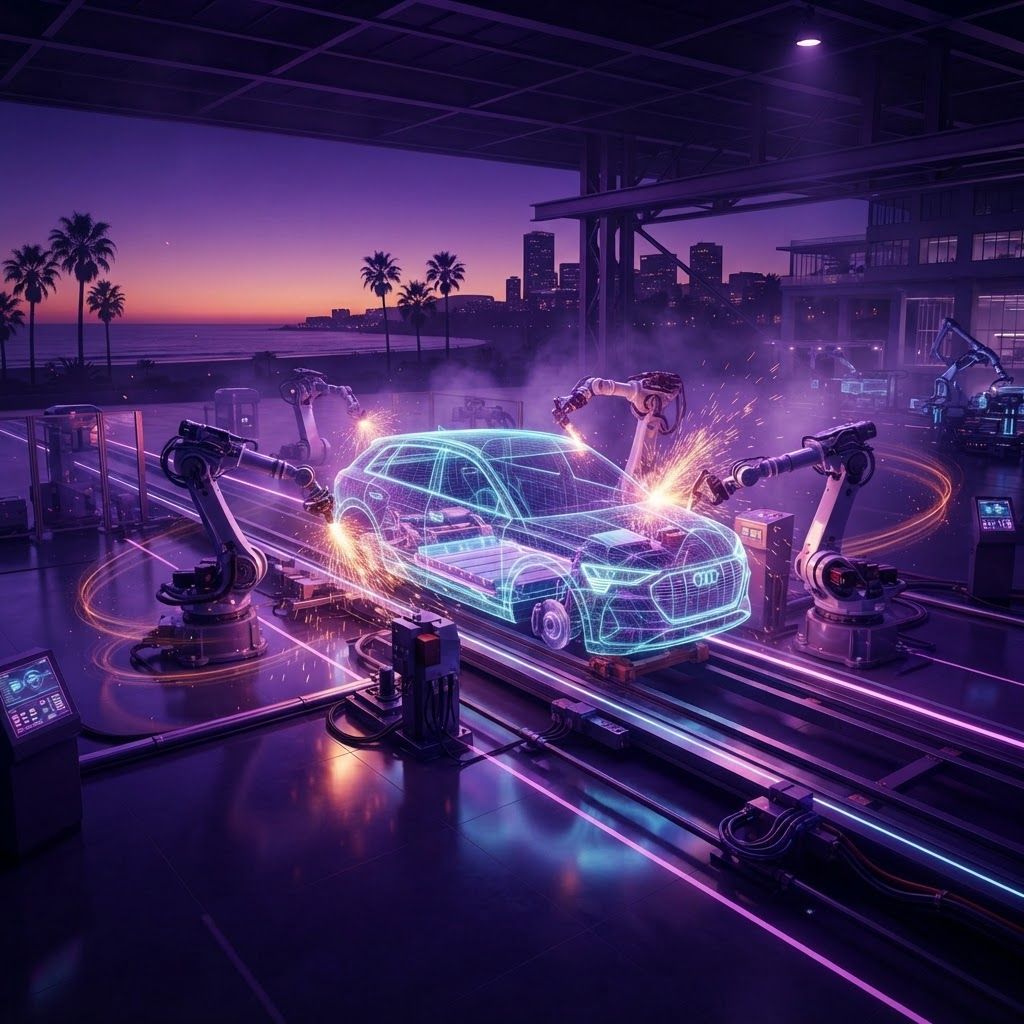
Southern California is where automotive design and aftermarket innovation have concentrated for generations, and while large assembly plants are not part of the Ventura County landscape, a substantial automotive manufacturing sector operates here. It is oriented toward specialty vehicles, components, commercial upfitting, and increasingly toward electrification, serving customers who need something other than what rolls off a standard production line.
How the Local Automotive Sector Is Structured
Demand comes largely from commercial and institutional fleets. Agricultural operations need specialized transport and field service vehicles. Logistics companies need cargo configurations and telematics integration. Municipalities need utility bodies, emergency equipment, and increasingly electric replacements for aging diesel fleets. Each of these requires engineering and fabrication rather than catalog purchasing.
Electrification has expanded that opportunity considerably. Converting or specifying electric commercial vehicles involves battery integration, thermal management, charging infrastructure, and control systems, work that suits regional firms with electronics and fabrication capability. California incentive programs supporting fleet conversion have accelerated demand meaningfully.
Ten Automotive Manufacturers and Fabricators Serving Oxnard
1. Pacific Coast Specialty Vehicles
Building custom chassis configurations, utility bodies, and purpose-built work vehicles for agricultural, municipal, and industrial fleets.
2. Channel Islands Electric Drivetrain Works
Engineering and installing electric powertrain conversions for commercial vehicles, including battery packaging, motor integration, and vehicle control software.
3. Meridian Automotive Components
Manufacturing precision machined and stamped components for suspension, braking, and drivetrain applications, supplying both original equipment and aftermarket channels.
4. Harbor Fleet Upfitting Group
Installing shelving, refrigeration, lift gates, telematics, and safety equipment on commercial vans and trucks, with a focus on ergonomics and payload optimization.
5. Oxnard Composite Body Manufacturing
Producing lightweight composite panels, truck bodies, and aerodynamic components that reduce weight and improve efficiency for delivery and refrigerated fleets.
6. Rio Verde Trailer and Towing Systems
Fabricating agricultural, equipment, and specialty trailers along with hitch and towing systems engineered for heavy regional loads.
7. Anacapa Performance Engineering
Serving the motorsport and enthusiast market with engine components, suspension systems, and fabricated assemblies, an segment where Southern California expertise remains internationally recognized.
8. Seaward Charging Infrastructure Manufacturing
Producing charging station enclosures, mounting systems, and power distribution equipment for depot and public charging installations.
9. Del Mar Automotive Interiors
Manufacturing seating, upholstery, and cabin components for commercial, marine, and specialty vehicle applications, including durable materials suited to agricultural use.
10. Ventura Remanufacturing Works
Rebuilding transmissions, alternators, starters, and hydraulic assemblies, extending component life and offering fleets a lower cost alternative to new replacement.
What Fleet Buyers Should Consider
Total cost of ownership rather than purchase price should drive decisions, and the gap between the two is wide in commercial vehicles. Fuel or energy cost, maintenance intervals, uptime, and residual value frequently outweigh the initial differential. Electric vehicles in particular can look expensive on a purchase basis and favorable over a five-year horizon, especially for high-mileage urban duty cycles with predictable routes.
Service availability is the practical constraint that determines success. A vehicle with excellent specifications and no local service network becomes an operational liability. Buyers should confirm parts availability, technician training, and diagnostic support before committing to a platform, particularly for newer electric offerings.
Trends Shaping the Industry
Fleet electrification is the dominant force, driven by both regulation and operating economics. Regional rules affecting drayage and heavy duty vehicles have created firm timelines that fleets must plan against. Charging infrastructure has become part of the vehicle purchase decision, since depot capacity and utility service upgrades often require longer lead times than the vehicles themselves.
Lightweighting continues across all vehicle categories, as composite and aluminum construction improve both fuel economy and payload. Telematics and predictive maintenance have shifted service from scheduled to condition-based, reducing downtime for operators who adopt the systems fully. And supply chain diversification has brought some component manufacturing back to domestic suppliers, benefiting regional machine shops and fabricators.
Evaluating a Manufacturer or Upfitter
Ask to see completed work similar to your application rather than a general portfolio. Confirm compliance with applicable federal vehicle safety standards and California emissions and equipment requirements, since noncompliant modifications can render a vehicle unregistrable. Review warranty interaction carefully, because modifications can affect original manufacturer coverage in ways that should be documented before work begins.
Discuss lead times realistically and build schedule buffer, particularly for electrified builds where component availability remains variable.
Planning a Fleet Transition
Organizations converting fleets to electric or alternative fuel platforms benefit from a staged approach rather than a single replacement event. Beginning with the routes and duty cycles best suited to the technology, typically predictable urban circuits returning to a central depot, allows an operation to build experience and infrastructure before committing broadly. Data from that first phase informs everything that follows, from charger sizing to driver training.
Infrastructure timelines deserve particular attention. Utility service upgrades for depot charging can take considerably longer than vehicle delivery, and fleets that order vehicles before initiating the electrical work often find equipment sitting idle. Experienced regional manufacturers and upfitters will raise this sequencing issue early, and their willingness to do so is a useful signal of competence.
Final Thoughts
Automotive manufacturing in Oxnard is a specialist trade serving customers whose needs the mass market does not address. From composite bodies to electric conversions to remanufactured components, the companies described here keep regional fleets running and are increasingly central to how those fleets transition over the coming decade.