
Middle Tennessee's Automotive Corridor
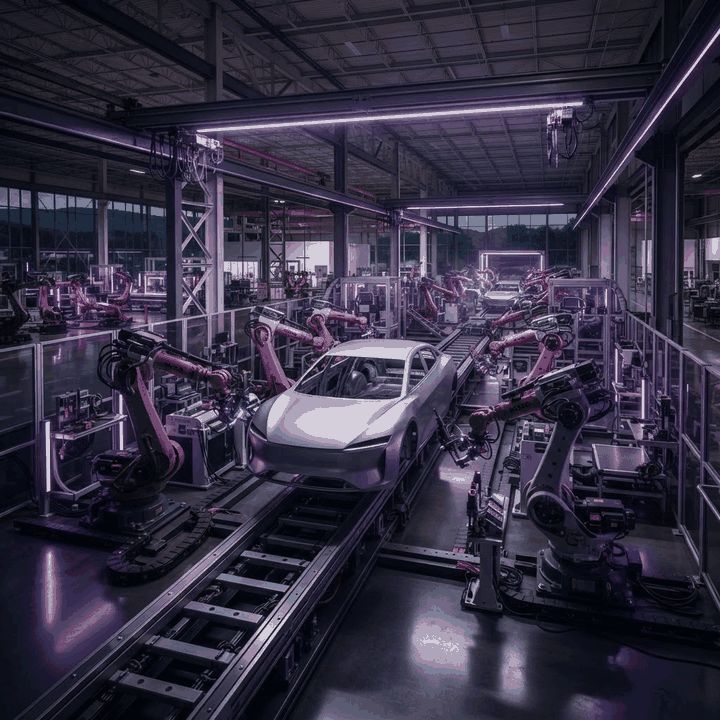
Nashville benefits from one of the Southeast's most important automotive clusters. Vehicle assembly, powertrain production, glass, tires, seating, electronics, and logistics are distributed across Middle Tennessee and connected by interstate and rail infrastructure. The sector supports engineering, skilled trades, production, quality, maintenance, and supply-chain careers. It also creates opportunities for smaller local businesses that can meet demanding cost, delivery, and quality requirements.
This list covers manufacturers in the Nashville region and major companies whose Tennessee operations influence the local automotive economy. It is not a consumer ranking of vehicle brands. Instead, it highlights production capability, regional importance, technology, and supply-chain impact.
1. Nissan North America
Nissan North America's headquarters in Franklin and major assembly operations in Smyrna make it the defining automotive presence in the Nashville area. The Smyrna plant has produced millions of vehicles and has supported both conventional and electric models. Nissan's regional footprint includes corporate, engineering, manufacturing, and supplier functions. Its scale attracts specialized vendors and creates a deep pool of experienced automotive talent throughout Middle Tennessee.
2. General Motors
General Motors operates its Spring Hill Manufacturing complex south of Nashville. The site has a long history in Tennessee vehicle production and plays an important role in GM's evolving manufacturing strategy. Spring Hill supports vehicle and powertrain activity and benefits from substantial regional supplier infrastructure. Its transition toward advanced and electrified products illustrates how established plants can adapt to major technology changes.
3. Ultium Cells
Ultium Cells operates a large battery-cell manufacturing facility in Spring Hill through a joint venture involving General Motors and LG Energy Solution. Battery production adds a new dimension to Middle Tennessee's automotive economy, requiring advanced process control, materials handling, clean manufacturing, and technical skills. The plant strengthens the region's position in electric-vehicle supply chains and creates demand for specialized suppliers and workforce development.
4. Bridgestone Americas
Bridgestone Americas is headquartered in Nashville and maintains major manufacturing and business operations across Tennessee and North America. Tires are highly engineered products in which compounds, reinforcement, tread design, testing, and quality control directly influence safety and efficiency. Bridgestone's presence gives Nashville a major corporate connection to mobility, fleet solutions, and advanced material development beyond vehicle assembly.
5. Hankook Tire
Hankook Tire operates a manufacturing plant in Clarksville, northwest of Nashville. The facility produces passenger and light-truck tires and contributes to Tennessee's strong automotive manufacturing network. Its regional presence offers logistical proximity to assembly plants and national distribution routes. Modern tire manufacturing depends on automation, material consistency, energy management, and rigorous inspection.
6. DENSO
DENSO's Tennessee operations manufacture automotive systems and components related to electrification, thermal management, safety, and electronics. As vehicles become more software-defined and electrically complex, tier-one suppliers like DENSO play an expanding role. Its manufacturing and technical presence supports the wider Nashville automotive labor market and provides a pathway for local suppliers capable of meeting global standards.
7. Calsonic Kansei
Calsonic Kansei, now part of Marelli, has a longstanding connection to Middle Tennessee's automotive supply base. The company develops and manufactures systems such as interiors, thermal products, electronics, and exhaust-related components. Proximity to major assembly customers supports just-in-time delivery and close launch coordination. Buyers and job seekers should consider the specific product group and facility because global suppliers often operate specialized plants.
8. Martinrea International
Martinrea manufactures metal structures, propulsion systems, and other automotive components. Its operations support vehicle programs that demand precise forming, joining, machining, and quality assurance. Companies in this tier of the supply chain must synchronize closely with assembly schedules and manage rapid production changes. Their capabilities are central to the region even when their names are less visible to consumers.
9. Adient
Adient is a major automotive seating supplier with manufacturing activity tied to vehicle assembly networks. Seating combines steel structures, foam, textiles, electronics, safety requirements, and ergonomic design, making it a complex system rather than a simple interior accessory. Regional production helps manufacturers deliver bulky assemblies in sequence to nearby plants while responding quickly to model and trim changes.
10. Magna International
Magna is one of the world's largest mobility technology suppliers, with capabilities spanning body structures, powertrain, electronics, seating, mirrors, and complete vehicle engineering. Its broad portfolio makes it relevant to Tennessee's diverse vehicle programs. Magna's global scale also reflects the sophistication expected of suppliers serving modern automakers: advanced engineering, launch discipline, traceability, and continuous cost improvement.
What Makes a Strong Automotive Manufacturer
Automotive production is defined by repeatability. Strong manufacturers build quality into the process through error-proofing, statistical control, preventive maintenance, standardized work, and rapid root-cause analysis. They also protect workers, develop suppliers, and coordinate launches across engineering and operations. Certifications matter, but customers should examine actual performance in delivery, defects, warranty response, and change management.
The Nashville cluster is now balancing two realities: high-volume production of established vehicles and accelerated investment in batteries, power electronics, charging, and electrified platforms. Suppliers that can retrain workers, automate intelligently, reduce energy use, and adapt existing processes will be well positioned. For businesses seeking entry into the automotive market, a focused capability, excellent documentation, and reliable on-time delivery are more persuasive than broad but unproven claims.