
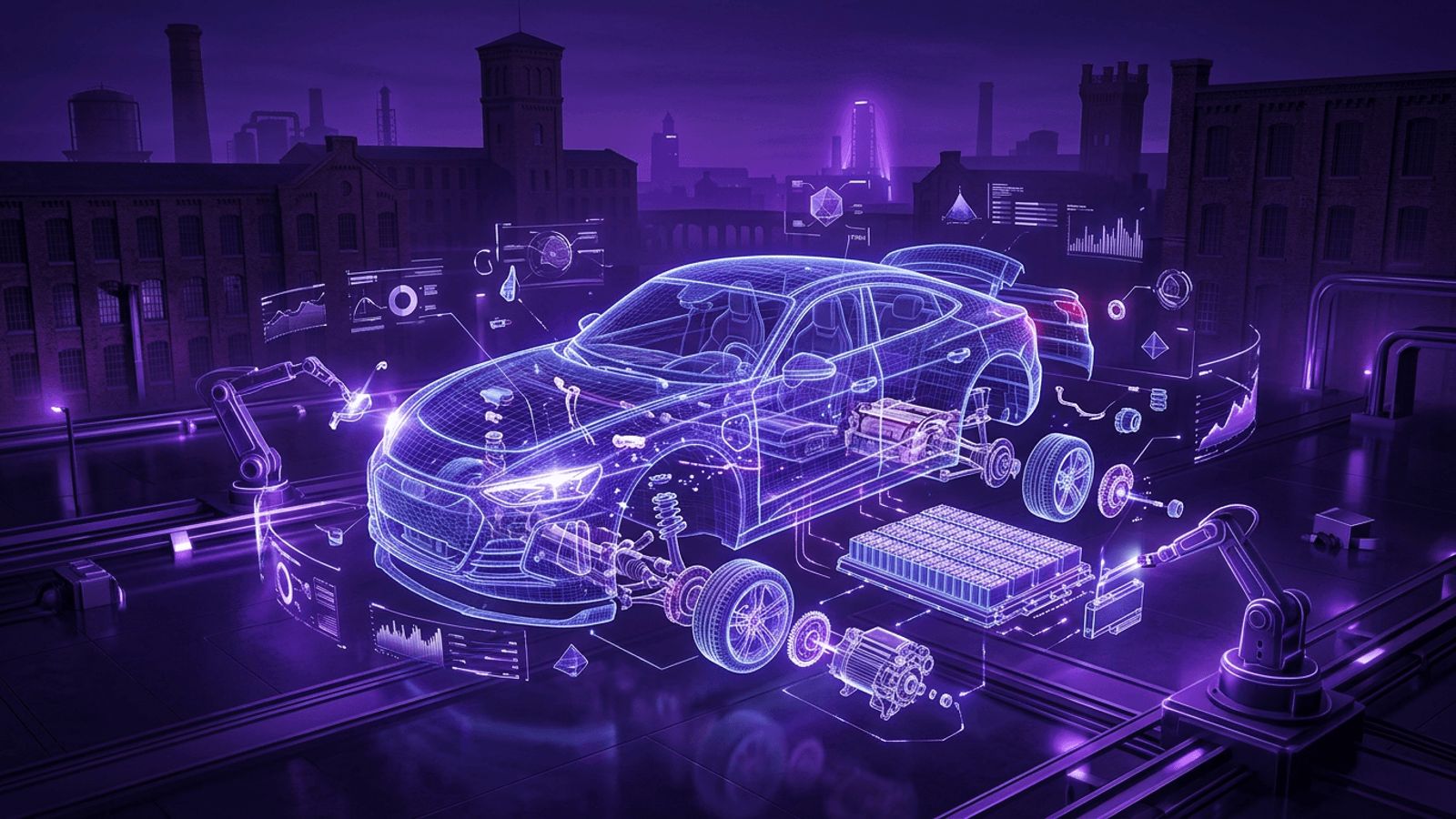
Lowell's Place in the Automotive Supply Chain
When people think of automotive manufacturing, they usually picture massive assembly plants in Michigan or the South. Lowell's contribution is different but no less important. The city and surrounding Merrimack Valley are home to precision machine shops, materials companies, electronics firms, and engineering talent that supply components and technology for vehicles, especially as the industry shifts toward electric and connected cars.
Modern vehicles contain thousands of precision parts, sophisticated sensors, power electronics, and advanced materials. Lowell's manufacturing ecosystem, built on generations of industrial skill, is well positioned to support this evolving supply chain.
Key Automotive Manufacturing Capabilities
- Precision machining: Tight-tolerance parts for engines, drivetrains, and prototypes.
- Advanced materials: Carbon fiber, composites, and battery materials.
- Electronics: Sensors, radar, and RF components for driver assistance.
- Prototyping: Fast-turn development parts for engineering teams.
- Fabrication: Sheet metal, welding, and custom assemblies.
The Top 10 Automotive-Related Manufacturers in Lowell
1. AvCarb Material Solutions
AvCarb produces carbon fiber materials used in fuel cells and batteries. These materials are essential to hydrogen fuel cell vehicles and next-generation energy storage, connecting Lowell directly to the future of transportation.
2. MACOM
MACOM's semiconductor technology supports high-speed connectivity and RF applications. As vehicles become more connected, these technologies support communications and sensing systems.
3. AMC Machine Co.
AMC Machine Co. is a Lowell machine shop with automotive-focused services, providing machining and repair work for engines and vehicle components.
4. Arlin Mfg. Co.
Arlin Mfg. is a long-established Lowell manufacturer known for precision machined parts and assemblies. Its capabilities support industrial and transportation customers.
5. Precision Manufacturing
Precision Manufacturing provides CNC machining services for demanding sectors, including aerospace and defense. Those same capabilities are valuable for automotive prototypes and specialty parts.
6. Precise Industries
Precise Industries specializes in custom sheet metal fabrication and precision machining, producing brackets, enclosures, and assemblies that can serve automotive and equipment applications.
7. Wie Sic Machine
Wie Sic Machine delivers precision machine parts and assemblies, supporting manufacturers that require consistent quality and reliable delivery.
8. Trivak
Trivak offers precision machining, welding, and equipment repair. Its versatility makes it a practical partner for fleet operators and automotive equipment builders.
9. Wilkie America
Wilkie America produces performance textile coatings at its Lowell facility. Coated technical fabrics are used in a range of transportation applications, from covers to protective materials.
10. Lowell Makes
Lowell Makes is a community makerspace with a machine shop and fabrication tools. It supports hobbyists, inventors, and small companies building custom vehicle parts and prototypes.
Trends Transforming Automotive Manufacturing
Electrification is the most significant shift in the automotive industry, driving demand for batteries, power electronics, thermal management, and lightweight materials. Advanced driver assistance systems require radar, lidar, cameras, and high-speed processors. Additive manufacturing is accelerating prototyping and enabling complex geometries. Supply chain disruptions in recent years have encouraged automakers to diversify suppliers and invest in domestic sources.
Massachusetts' strengths in materials science, battery research, and electronics give Lowell-area manufacturers opportunities to participate in these trends, particularly in specialized, high-value components.
Working with Local Manufacturers
Automotive startups and engineering teams can benefit from working with nearby shops for prototypes and low-volume production. Proximity allows faster iterations, easier quality checks, and closer collaboration. When selecting a partner, ask about quality certifications, inspection equipment, materials experience, and capacity for scaling.
Frequently Asked Questions
Are any cars built in Lowell?
Lowell does not have a vehicle assembly plant. Its strength lies in components, materials, electronics, and engineering services that feed the broader automotive supply chain.
How do carbon fiber materials help electric vehicles?
Carbon fiber papers and fabrics serve as gas diffusion layers in fuel cells and as components in advanced batteries. They help improve efficiency, durability, and performance in clean transportation technologies.
Can local shops produce parts for racing or restoration?
Yes. Lowell-area machine shops and fabricators frequently produce custom parts for performance vehicles, restorations, and specialty equipment, often working directly from drawings or sample parts.
What certifications matter for automotive suppliers?
Automotive production suppliers often follow quality management systems designed for the industry, which emphasize process control, traceability, and continuous improvement. For prototypes and specialty work, general ISO quality certifications and strong inspection practices are typically sufficient.
How can students enter the field?
Programs at Greater Lowell Technical High School, Middlesex Community College, and UMass Lowell prepare students for careers in machining, mechanical engineering, electrical engineering, and materials science, all of which are relevant to the automotive industry.
Local Insight: Lowell's Advantage for Mobility Startups
Mobility and clean transportation startups increasingly look beyond traditional automotive regions. Lowell offers affordable industrial space in historic mills, access to battery and materials researchers at UMass Lowell, and a supply base of machinists and fabricators who can turn prototypes around quickly. Proximity to Boston-area investors and a strong engineering workforce adds to the appeal. For founders working on electric vehicle components, charging hardware, or fuel cell technology, the Mill City provides a practical, cost-effective place to design, test, and build early production units before scaling elsewhere.
Conclusion
Lowell's automotive contribution lies in precision, materials, and electronics rather than full vehicle assembly. The manufacturers listed here demonstrate how the city's industrial expertise continues to support one of the world's most important industries as it races toward an electric, connected future.