
Kansas City: A Genuine Automotive Capital
Kansas City ranks among the top vehicle-producing metropolitan areas in the United States, a fact that surprises people who associate American auto manufacturing exclusively with Detroit. Two major assembly plants operate within the metro, producing some of the highest-volume vehicles sold in North America, and they anchor a supplier network employing tens of thousands of people across both states.
The region's advantages are logistical and historical. Kansas City is the largest rail hub by tonnage in the country, giving assembly plants efficient access to inbound components and outbound vehicle distribution. Interstate access in every direction, a large industrial workforce, and decades of accumulated manufacturing expertise reinforce that position.
How the Regional Automotive Ecosystem Is Structured
Vehicle manufacturing operates in tiers. Original equipment manufacturers run final assembly, welding bodies, painting them, and installing powertrains and interiors. Tier one suppliers deliver major systems such as seats, instrument panels, exhaust systems, and axles directly to the assembly line, often on just-in-time schedules measured in hours. Tier two and three suppliers produce the components and materials feeding those systems.
Kansas City hosts all three tiers, plus logistics providers operating sequencing centers, and a substantial aftermarket and heavy equipment segment. This depth means the region's automotive economy extends well beyond the two headline assembly plants.
The Top 10 Automotive Manufacturers in Kansas City
1. Ford Motor Company, Kansas City Assembly Plant. Located in Claycomo, Missouri, this facility is one of Ford's largest and most important plants, producing high-volume pickup trucks and commercial vans. It has operated for generations and represents one of the largest single manufacturing employers in the metro.
2. General Motors Fairfax Assembly Plant. Situated in Kansas City, Kansas, the Fairfax complex has produced popular passenger vehicles for decades and has undergone substantial investment to support next-generation vehicle programs, including electric platforms. Its body shop, paint operations, and general assembly employ thousands.
3. Kawasaki Motors Manufacturing Corporation. Operating a major facility in the broader Kansas City region, Kawasaki manufactures utility vehicles, all-terrain vehicles, and rail and industrial products, diversifying the region's vehicle production beyond passenger cars and trucks.
4. Adient. A global leader in automotive seating, Adient operates supply facilities in the Kansas City area delivering complete seat assemblies to nearby assembly plants on tightly sequenced schedules. Seating is among the most logistically demanding automotive components due to its size and variant complexity.
5. Faurecia, now part of FORVIA. This major tier one supplier produces interior systems, seating components, and emissions control technologies, with regional operations supporting Kansas City assembly plants and broader Midwest vehicle programs.
6. Piston Automotive and Sequencing Logistics Providers. Several suppliers operate sequencing and subassembly centers near the metro's assembly plants, receiving components in bulk and delivering them in build order. This model is essential to just-in-time manufacturing and represents significant regional employment.
7. Dana Incorporated. A global driveline and sealing technology supplier with regional operations, Dana produces axles, driveshafts, and thermal management products used in light trucks and commercial vehicles assembled in the central states.
8. Gates Corporation and Regional Component Manufacturers. Suppliers of belts, hoses, fluid power products, and rubber components maintain operations in the region, serving both original equipment programs and the aftermarket. These businesses provide stability because aftermarket demand is less cyclical than new vehicle production.
9. Regional Metal Stamping and Tooling Suppliers. Kansas City supports a strong network of stamping plants, tool and die shops, and precision machining operations producing body panels, brackets, and structural components. Their capabilities also serve agricultural and construction equipment manufacturers.
10. Commercial Vehicle and Specialty Vehicle Manufacturers. The metro hosts upfitters and specialty builders producing work truck bodies, emergency vehicles, and customized commercial fleets. This segment has grown alongside expanding last-mile delivery demand across the region.
Trends Reshaping Kansas City Automotive Manufacturing
Electrification is the defining transition. Battery electric vehicles require fewer powertrain components but far more battery, power electronics, and thermal management content. Regional assembly plants have received investment for electric platforms, and suppliers historically focused on internal combustion components are actively repositioning toward electrical systems and lightweight structures.
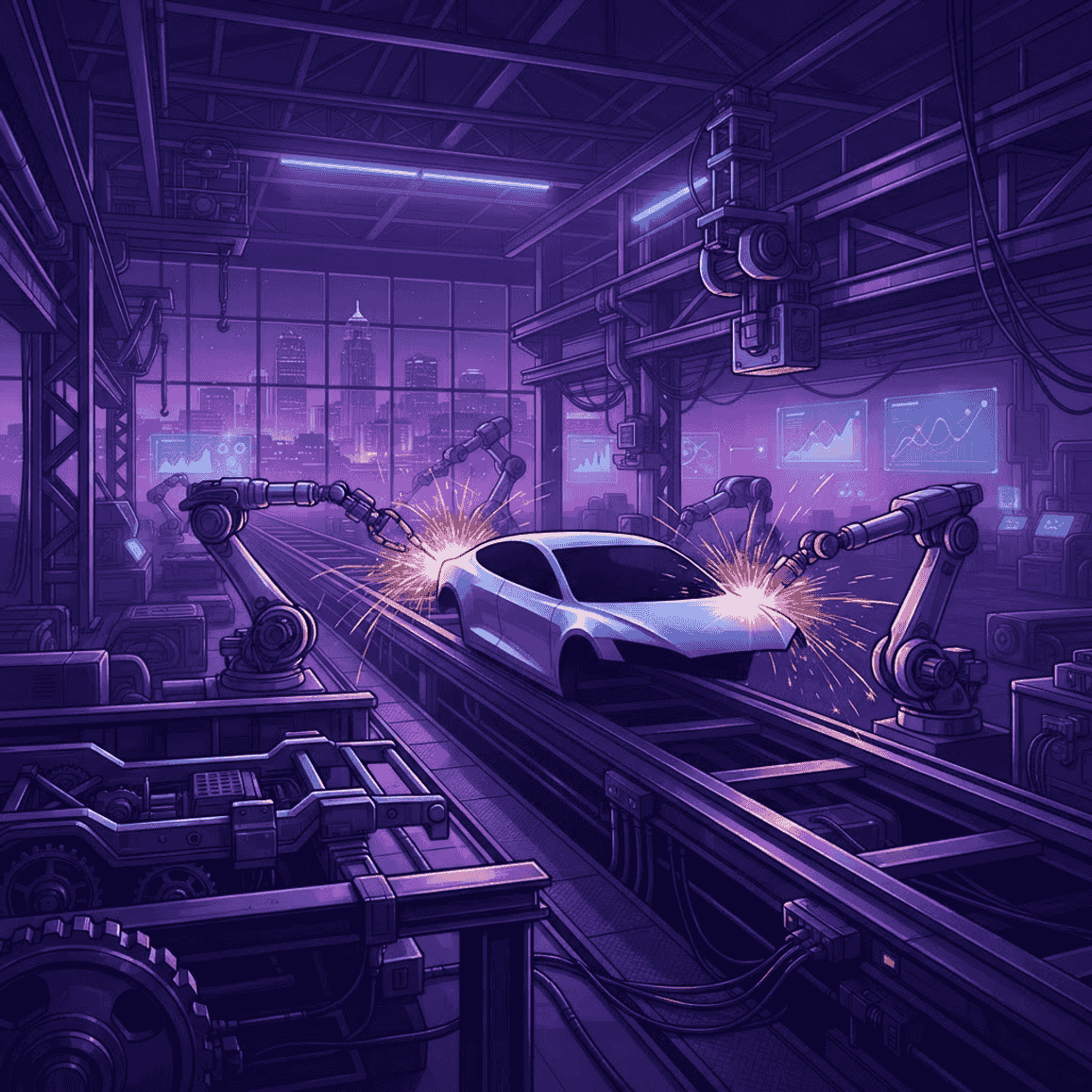
Automation continues to advance beyond welding robots into vision-guided assembly, autonomous material handling, and predictive maintenance. This raises skill requirements, and the region's community colleges and technical programs have expanded mechatronics and controls training to match employer needs.
Supply chain localization is the third major shift. After years of extended global sourcing, manufacturers have moved toward regional supplier bases to reduce risk. Kansas City's central location and existing supplier density make it a beneficiary of that recalibration, particularly for components that are bulky or schedule-sensitive.
What This Means for Businesses and Workers
For suppliers seeking to enter the regional automotive market, quality certification, capacity documentation, and demonstrated launch discipline are prerequisites. Original equipment manufacturers evaluate suppliers on delivery performance and defect rates as heavily as on price, and a single line stoppage can outweigh years of cost savings.
For workers, the transition favors adaptable technical skills. Electrical systems knowledge, controls programming, robotics maintenance, and quality engineering are in sustained demand, and these capabilities transfer across employers and vehicle platforms.
Final Thoughts
Kansas City's automotive sector is large, deeply established, and actively transforming. With two major assembly plants, a dense tier one and tier two supplier network, specialty vehicle producers, and unmatched rail logistics, the metro remains one of the most important vehicle manufacturing centers in North America as the industry moves toward electrification.