
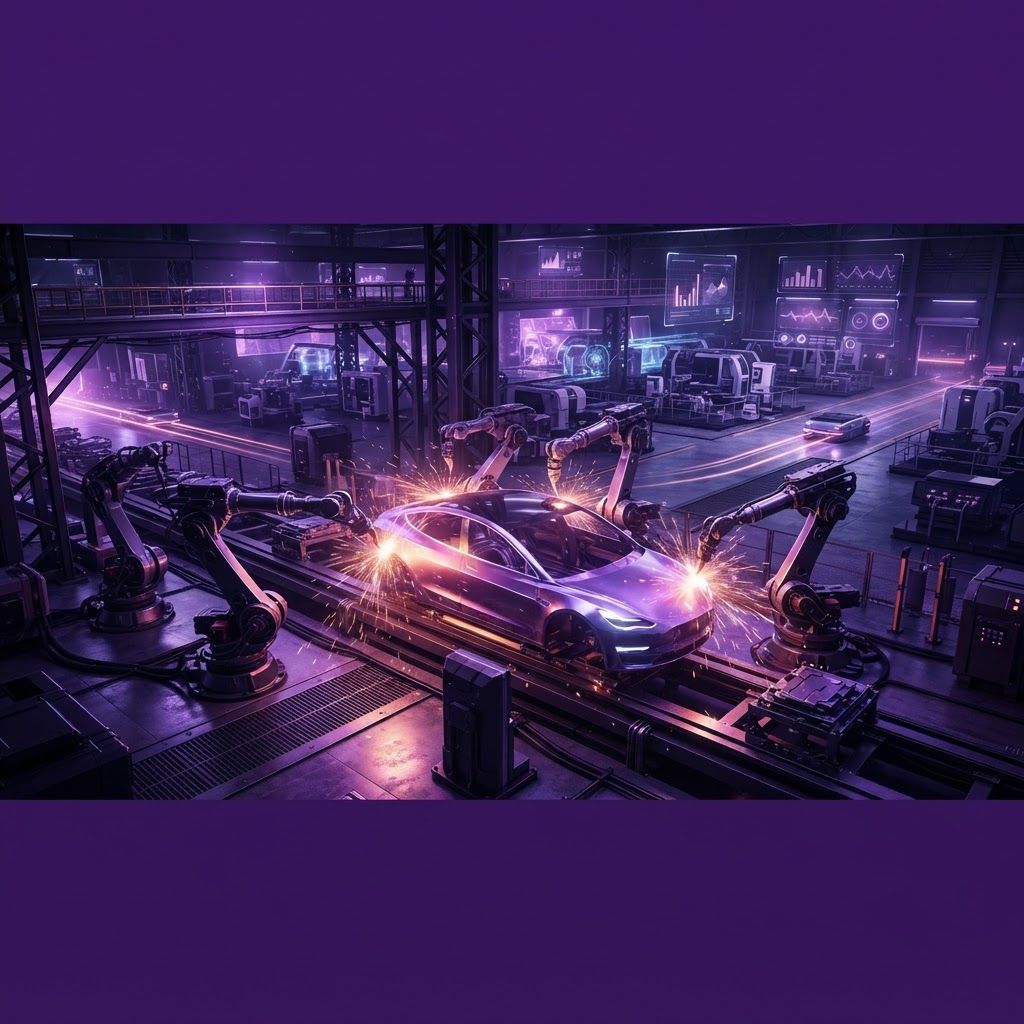
Automotive Manufacturing in the Irving Context
North Texas has become one of the most important automotive regions in the United States, combining vehicle assembly in the wider metroplex with an extensive network of component suppliers, upfitters, remanufacturers, and fleet specialists. Irving contributes to that network in a specific way. Rather than hosting a single vast assembly plant, the city supports component manufacturing, commercial vehicle upfitting, collision and refinishing operations at scale, engineering and testing services, and the corporate functions that coordinate large fleets and dealer networks.
Location explains much of it. Irving sits at the junction of major interstate corridors with an international airport alongside it, which suits just in time delivery into assembly plants and rapid distribution of parts across the southern United States. The surrounding labour market supplies machinists, welders, technicians, and manufacturing engineers, while the region large fleet base creates steady demand for vehicle modification and maintenance manufacturing work.
The Segments Within Automotive Manufacturing
Automotive manufacturing divides into recognisable tiers and specialisms. Original equipment manufacturers assemble complete vehicles. Tier one suppliers produce major systems such as seats, instrument panels, axles, or electronic modules and ship directly to assembly lines. Tier two and three suppliers manufacture the stampings, castings, machined parts, fasteners, and sub components that feed tier one operations. Upfitters and secondary stage manufacturers convert base vehicles into service trucks, ambulances, shuttle buses, or specialised work platforms. Remanufacturers rebuild engines, transmissions, and electronic modules to specification. Aftermarket manufacturers produce accessories, performance parts, and replacement components.
Recognising these distinctions is essential when sourcing. A fleet manager needs an upfitter. A vehicle programme engineer needs a tier one or tier two supplier with the appropriate quality certification. A parts distributor needs a remanufacturer with reliable core supply.
The Top 10 Best Automotive Manufacturers in Irving
1. Caliber Collision Manufacturing and Refinishing Operations
Headquartered in Irving, Caliber Collision operates one of the largest collision repair networks in the country. Although classified as a service business, its operations involve genuine manufacturing discipline in panel forming, structural repair to original specifications, welding procedure control, and refinish paint application under controlled conditions. Its scale has driven standardisation in repair processes, technician training, and quality auditing that influences practice across the industry.
2. Toyota Motor North America Regional Operations
With its North American headquarters in the immediate region, Toyota exerts enormous influence on manufacturing practice throughout North Texas. Its production system principles, covering standardised work, continuous improvement, error proofing, and pull based material flow, have been adopted by suppliers across the metroplex. For local manufacturers, proximity to this organisation has raised expectations around delivery precision and defect prevention.
3. Peterbilt Motors Company
Manufacturing heavy duty trucks in the Dallas Fort Worth region, Peterbilt is a cornerstone of commercial vehicle production in Texas. Its differentiators are build to order configurability, aerodynamic and powertrain efficiency engineering, and a supplier network that includes numerous component manufacturers across the metroplex. Fleet buyers value the durability engineering and the extensive dealer support infrastructure behind the product.
4. General Motors Regional Assembly and Supplier Network
Large scale vehicle assembly in the wider Dallas Fort Worth area supports a substantial tier supplier base that reaches into Irving. Sequencing centres, stamping suppliers, plastics moulders, and logistics providers all operate on tight delivery windows to serve assembly schedules, and the presence of this demand sustains capability in tooling, automation, and quality engineering throughout the region.
5. Commercial Vehicle Upfitters and Secondary Stage Manufacturers of Irving
Irving hosts upfitters that convert chassis and vans into service bodies, utility trucks, refrigerated units, mobile workshops, and specialty platforms. Their value lies in engineering compliance with weight distribution requirements, electrical integration, safety certification, and fast turnaround so that fleets can put revenue earning assets into service quickly.
6. Automotive Stamping, Machining, and Metal Component Manufacturers
A network of precision machining shops and metal formers around Irving produces brackets, housings, shafts, fittings, and structural components for automotive and heavy truck customers. Buyers evaluate them on dimensional capability, process capability indices, tooling maintenance practice, and their ability to hold tolerance across long production runs without drift.
7. Automotive Plastics, Trim, and Interior Component Producers
Injection moulders and trim fabricators in the region manufacture interior panels, consoles, clips, ducting, and exterior trim. The technical demands include material selection for ultraviolet and heat resistance, class A surface finish quality, colour and grain matching across mouldings, and control of warpage in large thin walled parts.
8. Powertrain and Component Remanufacturers
Remanufacturers rebuilding engines, transmissions, alternators, starters, and electronic control modules serve both fleets and the parts aftermarket. Their manufacturing rigour is often underestimated. Proper remanufacturing involves complete disassembly, cleaning, dimensional inspection, replacement of all wear components, machining to specification, and dynamometer or functional testing before release.
9. Automotive Electronics and Wiring Harness Manufacturers
As vehicles have become more electronically complex, regional manufacturers producing wiring harnesses, sensor assemblies, telematics hardware, and control modules have grown in importance. Quality depends on crimp integrity, connector sealing, circuit protection design, and validation testing against vibration, temperature cycling, and moisture ingress.
10. Aftermarket Accessory and Performance Parts Manufacturers
Texas has a strong truck and performance culture, and manufacturers across the metroplex produce bumpers, racks, lighting assemblies, suspension components, exhaust systems, and bed accessories. These companies compete on design distinctiveness, coating durability, fitment accuracy across model years, and installation simplicity, and many operate direct to consumer alongside distributor channels.
Trends Driving Change
Electrification is the largest structural shift. It reduces demand for some traditional components while creating new requirements in high voltage wiring, battery enclosures, thermal management systems, power electronics cooling, and charging infrastructure hardware. Suppliers who invest in high voltage safety training and aluminium or composite forming capability are positioning for that transition.
Supply chain regionalisation continues to favour North American manufacturing, particularly for bulky or logistics sensitive parts. Automation adoption is accelerating in welding, material handling, and inspection to offset labour constraints. Vehicle software content has grown so substantially that suppliers increasingly need firmware and cybersecurity competence alongside mechanical capability. Meanwhile fleet electrification is reshaping upfitting work, since electrical load management on converted vehicles now requires genuine engineering analysis rather than rule of thumb.
How to Evaluate an Automotive Supplier
Quality certification is the entry requirement, and for production parts that usually means an automotive specific quality management standard rather than a general one. Ask for process capability data on the characteristics that matter to your application, not a generic summary. Review the production part approval process documentation the supplier can produce, including measurement system analysis and control plans.
Assess capacity honestly by asking about current utilisation, shift patterns, and how the supplier has handled demand spikes. Examine tooling ownership and maintenance responsibility in the contract, because unclear tooling terms create serious problems if you later need to move production. Evaluate logistics performance, since delivery reliability into an assembly schedule is as important as part quality. Finally, look at engineering support, because suppliers who propose design improvements and cost reductions deliver value long after the first shipment.
Final Thoughts
Automotive manufacturing around Irving is a broad and technically capable sector spanning heavy truck production influence, tier component supply, upfitting, remanufacturing, electronics, and aftermarket products. The region proximity to major assembly operations and its logistics advantages give buyers real choice and short supply lines. Define your technical and regulatory requirements clearly, verify capability with data rather than assurances, and build relationships with suppliers who engage with your engineering challenges. That is how durable automotive supply partnerships are built in this market.