
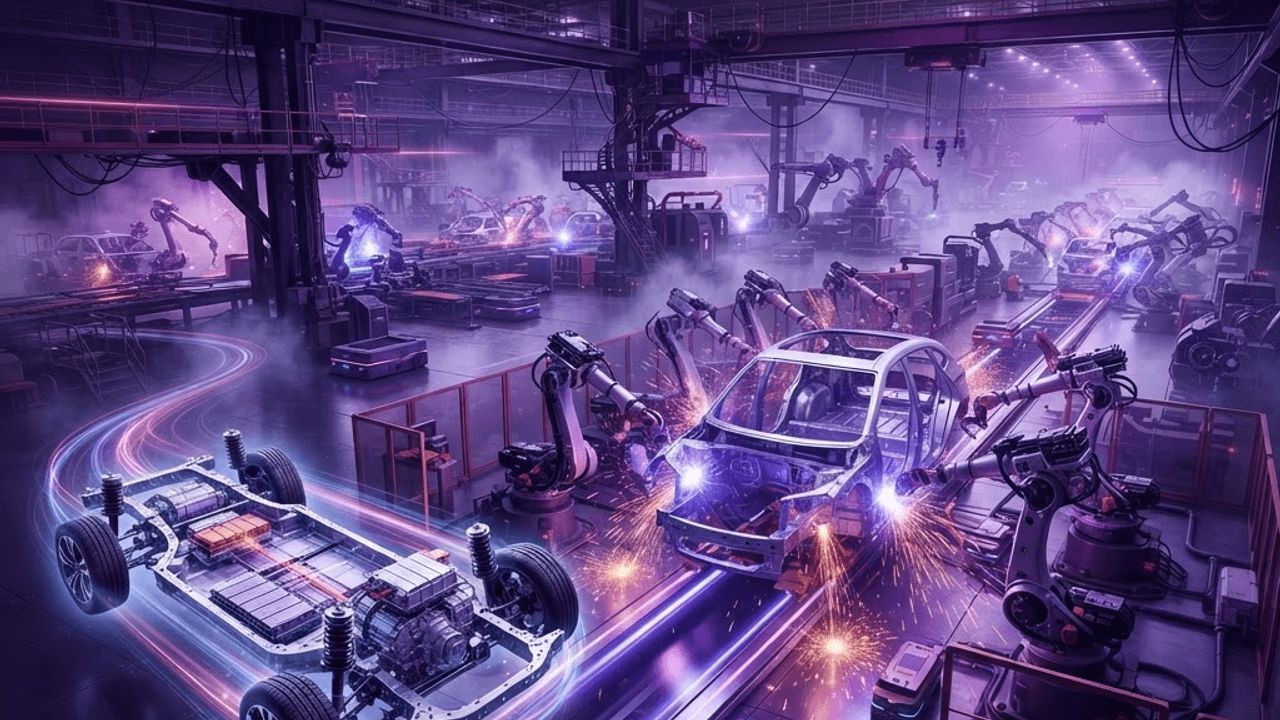
Grand Prairie's Place in the North Texas Automotive Supply Chain
Texas is one of the largest vehicle-producing states in the country, and Grand Prairie occupies a strategic position within that ecosystem. The city is close enough to major assembly operations and regional distribution networks to serve just-in-time schedules, while offering industrial land and utility capacity that older manufacturing districts cannot match. That combination has attracted tier-two and tier-three suppliers, specialty vehicle builders and aftermarket manufacturers who need room to grow without losing proximity to their customers.
The local automotive sector is less about final assembly and more about the components and specialty work that make vehicles possible. Metal stamping, precision machining, injection-molded interior parts, wiring harnesses, seating and trim, brake and suspension components, and commercial vehicle upfitting all happen inside the city. This depth matters because it lets an engineering team source a bracket, its fastener, its coating and its packaging within a very small radius.
Quality Standards That Matter in Automotive Manufacturing
Automotive buyers evaluate suppliers differently than most industries, and for good reason. A single defective component can trigger a recall affecting tens of thousands of vehicles. The baseline expectation is IATF 16949 certification, which extends ISO 9001 with automotive-specific requirements for defect prevention, variation reduction and supply chain control. Beyond certification, look for production part approval process documentation, capability studies showing process performance indices, and a functioning advanced product quality planning discipline.
Traceability is equally important. Strong suppliers can identify which raw material lot, which machine, which operator and which shift produced any part, which turns a potential mass recall into a contained lot-level action. Ask how long records are retained and whether the data is genuinely searchable rather than buried in paper files.
The Top 10 Automotive Manufacturers in Grand Prairie
1. Trinity Automotive Components
A well-regarded tier-two supplier producing stamped and welded assemblies including brackets, reinforcements and structural mounts. Trinity Automotive Components operates progressive die presses alongside robotic welding cells and maintains in-house tool and die support, which shortens changeover and repair cycles. Customers frequently mention its capability studies and disciplined launch documentation.
2. Lone Star Drivetrain Manufacturing
Focused on precision machined driveline components such as shafts, housings and gear blanks, Lone Star Drivetrain Manufacturing runs multi-axis CNC turning and milling with automated in-process gauging. Tight geometric tolerance work and a temperature-controlled inspection room support the dimensional consistency that rotating assemblies demand.
3. Prairie Molded Interiors
Specializing in injection-molded interior components including trim panels, consoles and cluster bezels, Prairie Molded Interiors combines molding with in-house painting, texturing and ultrasonic welding. Its appearance-part expertise, including color matching and gloss control, makes it a natural fit for visible cabin surfaces where cosmetic standards are strict.
4. Metroplex Brake and Chassis
Metroplex Brake and Chassis manufactures friction and chassis components for original equipment and aftermarket channels. Investment in dynamometer testing and fatigue validation allows the company to prove performance claims rather than assert them, a meaningful differentiator in safety-critical product categories.
5. Summit Commercial Vehicle Works
Serving fleets rather than passenger customers, Summit Commercial Vehicle Works builds and upfits service bodies, utility beds, refrigerated bodies and specialty configurations for work trucks. Fleet managers value the company's ability to standardize a build across dozens of units so that every technician finds tools in the same place, and its structural engineering support for load-critical modifications.
6. Crossroads Wiring Systems
Vehicle electrical architecture continues to grow more complex, and Crossroads Wiring Systems produces the harnesses, junction assemblies and power distribution modules that support it. The company performs continuity and hi-pot testing on completed assemblies and builds custom test boards for each program, which catches wiring faults before they reach a vehicle line.
7. Vantage Seating and Trim
Vantage Seating and Trim manufactures seat frames, foam assemblies and upholstered components for commercial, transit and specialty vehicles. Capabilities span frame welding, foam pouring, cut-and-sew operations and durability testing, with flammability compliance handled in-house for transit applications.
8. Pioneer Aluminum Castings
Lightweighting has driven sustained demand for cast aluminum structures, and Pioneer Aluminum Castings supplies housings, covers and mounting components produced through permanent mold and low-pressure casting. Radiographic and dye-penetrant inspection support pressure-tight applications where porosity is unacceptable.
9. Skyline Surface Technologies
Corrosion protection quietly determines how long an automotive component survives, and Skyline Surface Technologies provides e-coating, powder coating, phosphating and specialty plating with salt-spray validation. The company works as a finishing partner to many other local manufacturers, which keeps supply chains compact.
10. Grand Prairie Performance Fabrication
Rounding out the list, Grand Prairie Performance Fabrication produces exhaust systems, roll structures, suspension components and specialty fabrications for performance and off-road markets. Tube bending, TIG welding and small-batch flexibility let it serve niche vehicle builders and motorsport programs that larger suppliers cannot economically support.
Electrification and the Shift in Component Demand
The most significant trend reshaping automotive manufacturing in Grand Prairie is electrification. Electric powertrains eliminate some traditional components while creating demand for others: battery enclosures, cooling plates, high-voltage cabling, busbars, thermal management assemblies and precision aluminum structures. Local suppliers who invested early in aluminum forming, high-voltage insulation expertise and leak-tight welding have found new programs opening to them.
A second trend is nearshoring and supply chain resilience. After several years of disrupted logistics, automotive buyers now assign real value to a supplier they can reach by truck in a day. A third is data expectations. Customers increasingly want live production and quality data rather than monthly reports, which is pushing local plants toward connected equipment and digital shop floor systems.
Practical Advice for Selecting an Automotive Supplier
Begin with a clear technical package. Automotive suppliers quote and perform best when tolerances, materials, finish requirements and validation expectations are unambiguous. Next, audit the supplier's launch process rather than only its running production, because most program failures happen during ramp-up, not steady state.
Ask direct questions about capacity. Understand what percentage of available machine hours your program would consume and what happens if another customer's volume spikes. Review the supplier's own supply base, since a strong plant with a fragile raw material source is still a risk. Finally, visit in person. Housekeeping, tool storage, gauge calibration tags and how openly employees discuss problems tell you more about a manufacturer than any certificate on the wall. Grand Prairie's automotive base is deep enough that patient evaluation will find you a supplier who fits both the part and the partnership.