
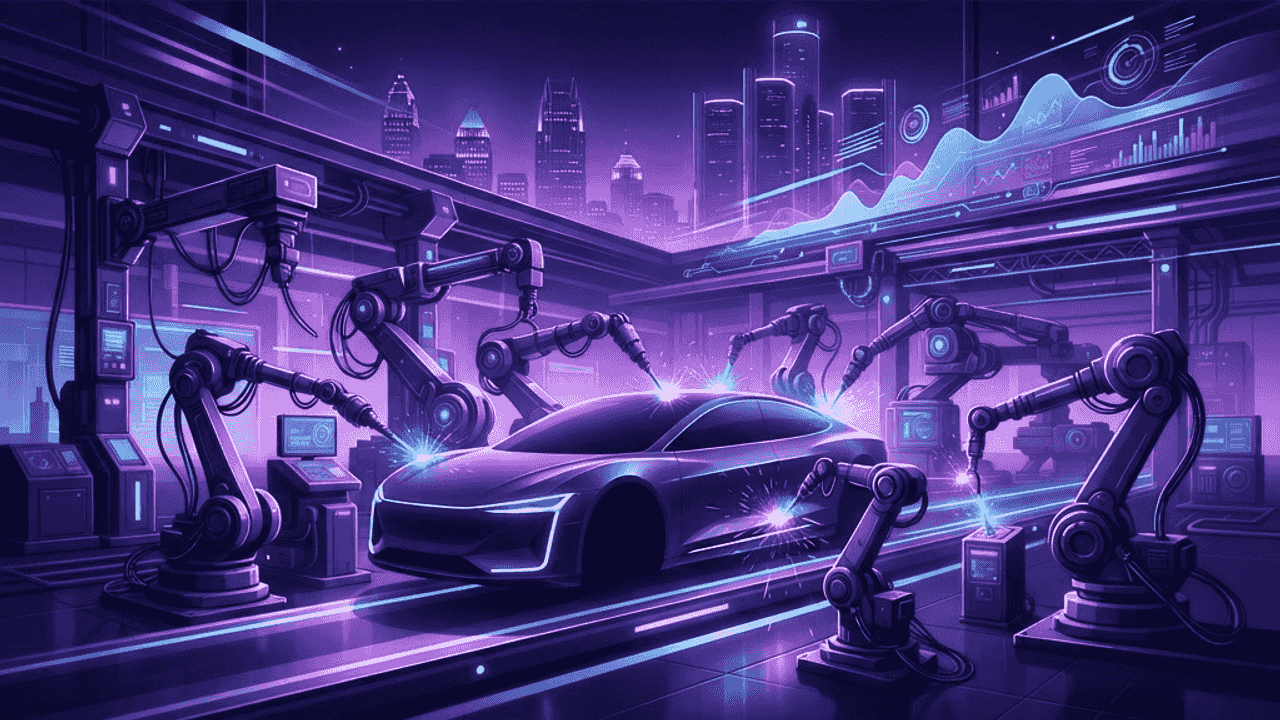
The Heart of the Auto Industry
Detroit's identity is inseparable from the automobile. For more than a century, the Motor City has been the epicenter of American automotive manufacturing, giving rise to iconic brands, pioneering assembly techniques, and a vast network of suppliers. Today, Detroit remains a global leader in vehicle production, while also driving the industry's transformation toward electrification, connectivity, and autonomous technology. Its automotive manufacturers continue to shape how the world moves.
The region's automotive ecosystem extends far beyond the major automakers. It includes tier-one suppliers, specialized component manufacturers, and advanced engineering firms that support every stage of vehicle development. This dense concentration of expertise, talent, and infrastructure makes Detroit uniquely capable of both mass production and cutting-edge innovation.
What Makes a Leading Automotive Manufacturer
Top automotive manufacturers in Detroit are defined by engineering excellence, manufacturing precision, and relentless innovation. Producing safe, reliable vehicles and components requires sophisticated design, rigorous testing, and highly disciplined production systems. Leading companies invest heavily in research and development, quality management, and skilled workforces to maintain their competitive edge.
Adaptability is increasingly important as the industry evolves. The best manufacturers embrace new technologies, from electric powertrains to advanced driver-assistance systems, and integrate them into scalable production. Strong supplier relationships, robust supply chains, and a commitment to continuous improvement further distinguish the region's automotive leaders.
Leading Automotive Manufacturers in Detroit
Motor City Motors stands as a cornerstone of Detroit's automotive legacy, producing a range of vehicles known for quality and innovation. Great Lakes Automotive Group specializes in advanced components and assemblies for major automakers. Detroit Drive Systems focuses on powertrain and electrification technology, supporting the industry's shift toward electric vehicles.
Peninsula Auto Manufacturing brings expertise in precision components and stamped parts, while Riverfront Mobility develops next-generation vehicle platforms and mobility solutions. Woodward Motor Works is recognized for its craftsmanship in specialty and performance vehicles.
Additional prominent firms include Lakeshore Automotive Systems, a leader in chassis and suspension components; Cadillac Component Manufacturing, praised for its quality and reliability; North Star Vehicle Technologies, known for connected and autonomous systems; and Rustbelt Auto Fabrication, which supports both established automakers and emerging mobility startups.
Trends Transforming Automotive Manufacturing
The automotive industry is undergoing its most significant transformation in generations. Electrification is reshaping vehicle design and production, driving demand for batteries, electric motors, and power electronics. Connectivity and autonomy are adding layers of software and sensor technology, blurring the line between automaker and tech company. Detroit's manufacturers are at the forefront of these shifts, retooling facilities and building new capabilities.
Advanced manufacturing techniques are equally transformative. Automation, robotics, and data-driven production improve efficiency, quality, and flexibility. Sustainability has also become a priority, with companies reducing emissions, adopting cleaner processes, and designing vehicles for a lower-carbon future. These trends are securing Detroit's role in the next era of mobility.
Choosing the Right Automotive Partner
For businesses seeking automotive manufacturing partners, expertise, quality, and capacity are paramount. Automakers and suppliers should evaluate a partner's engineering capabilities, quality certifications, and track record in relevant technologies. Emerging mobility companies may prioritize innovation, flexibility, and collaborative development support.
Detroit's automotive manufacturers continue to define the global industry, blending a century of expertise with bold innovation. As vehicles grow smarter, cleaner, and more connected, these companies remain essential drivers of progress. For anyone in the automotive value chain, the Motor City offers unmatched depth, talent, and capability to build the vehicles of tomorrow.
Evaluating an Automotive Manufacturing Partner
Potential customers should begin with the manufacturer's experience in the relevant vehicle system and production volume. A company that excels at low-volume specialty components may not be structured for a high-volume global platform, while a mass-production supplier may offer limited flexibility during an early prototype program. Clear discussion of launch timing, tooling ownership, capacity, and engineering responsibilities helps align expectations.
Quality systems deserve close review. Buyers should examine traceability, production-part approval processes, layered audits, corrective-action performance, and contingency planning. For safety-related components, testing and documentation must extend through the complete supply chain. Transparent metrics are more useful than broad claims about quality.
The Shift Toward Electric and Connected Vehicles
Electrification is changing the capabilities customers need from Detroit manufacturers. Battery enclosures, thermal systems, power electronics, lightweight structures, and charging components introduce new materials and validation requirements. Connected vehicles also demand tighter coordination between mechanical, electrical, and software teams. Manufacturers that invest in these disciplines can support customers as vehicle architectures continue to evolve.
Sustainability is influencing procurement as well. Automakers increasingly evaluate energy use, recycled content, waste reduction, logistics, and supplier emissions. Detroit companies that can document improvements may strengthen both competitiveness and resilience. By combining disciplined manufacturing with new technical expertise, the region's automotive ecosystem remains equipped to lead through one of the industry's most significant transformations. Customers can strengthen selection decisions by visiting facilities, meeting program leaders, and reviewing evidence from comparable launches. These conversations reveal how teams communicate when schedules tighten or technical problems emerge, which is often as important as the equipment visible on the factory floor.