
Corona's Automotive Manufacturing Identity
Among Southern California cities, Corona has developed a particularly strong association with automotive manufacturing, especially in the performance and aftermarket sectors. The combination of available industrial space, skilled fabrication labor, proximity to a car enthusiast culture with deep regional roots, and access to motorsport activity has supported a cluster of companies designing and building automotive products.
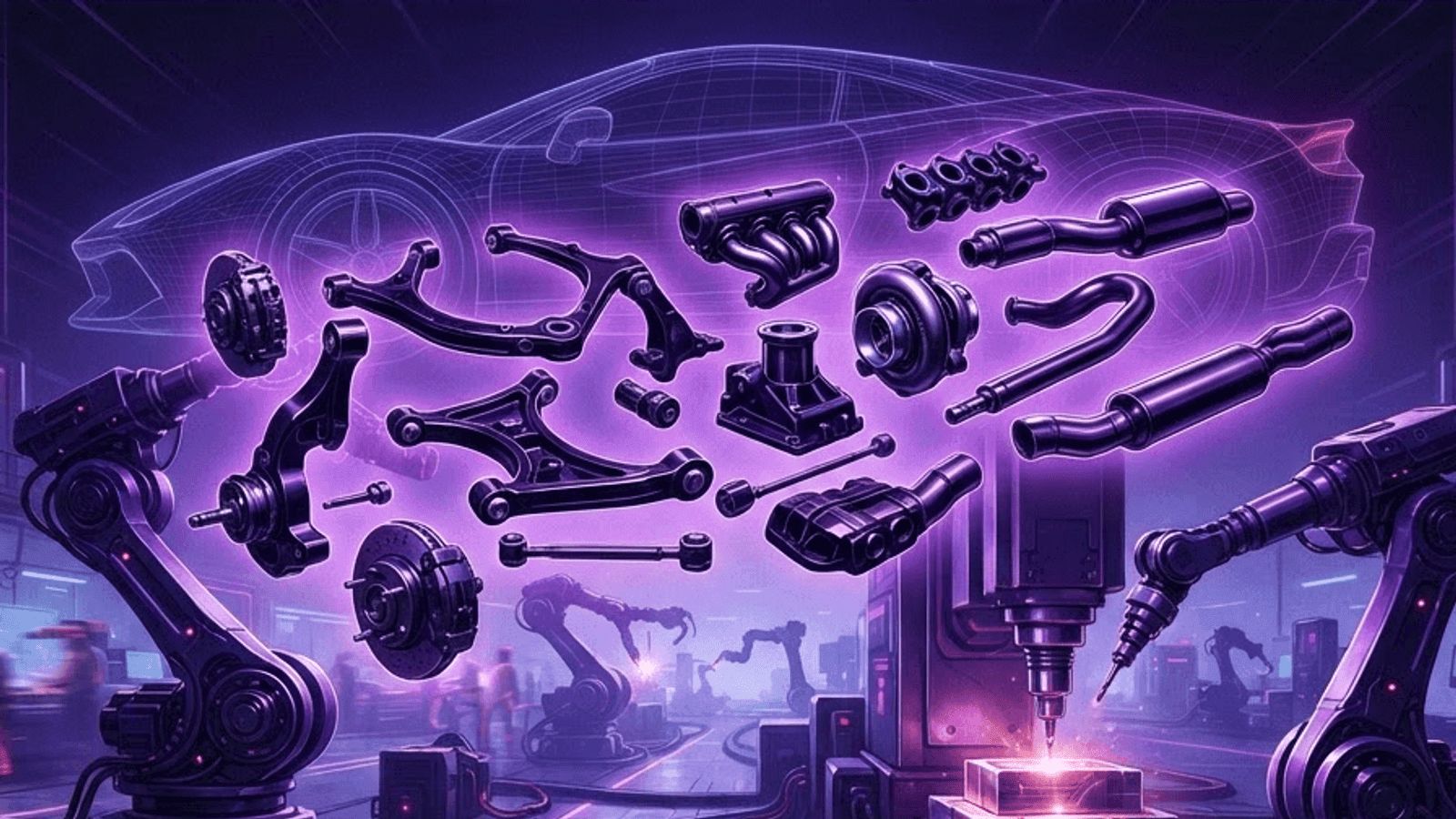
This is not vehicle assembly in the traditional sense. Rather, it is component manufacturing: suspension systems, exhaust components, intake systems, engine management hardware, drivetrain parts, off-road accessories, racing safety equipment, and specialty fabrication. Many of these companies design, manufacture, and market their own branded products rather than serving purely as contract suppliers.
Product Categories Manufactured Locally
Suspension and chassis components represent a substantial segment. Coilover systems, control arms, sway bars, bushings, lift kits, and long-travel suspension for off-road vehicles all require precision machining, welding, and testing. Off-road products in particular have grown considerably, driven by desert recreation throughout the region.
Exhaust and air induction manufacturing involves tube bending, welding, muffler construction, and flow testing. Producing these components requires balancing performance objectives against emissions compliance, which in California means designing products that maintain legal status for street use.
Engine and drivetrain components include cylinder heads, intake manifolds, pulley systems, clutch assemblies, differential components, and cooling parts. This work demands tight tolerances and often specialized materials or coatings.
Safety and motorsport equipment covers roll cages, racing seats, harnesses, fire suppression systems, and fabricated safety structures. Products in this category frequently require certification to sanctioning body standards, which involves documented testing and periodic recertification.
Electrical and electronic systems have grown rapidly as vehicles have become more computerized. Engine management controllers, wiring harnesses, lighting systems, and sensor products all fall within this category.
Accessories and appearance products including bumpers, racks, protective components, and interior items complete the picture, with fabrication capability supporting both production runs and custom work.
Manufacturing Capabilities Behind the Products
Computer-controlled machining forms the technical backbone, producing components from billet aluminum and steel with repeatable precision. Multi-axis capability allows complex geometries in single setups, improving both accuracy and efficiency.
Fabrication and welding capability supports tubular structures, exhaust systems, and chassis components. Welding quality directly affects safety in structural applications, so certified welders and documented procedures matter significantly.
Tube bending, sheet metal forming, and press work handle components requiring shaped material. Finishing operations including powder coating, anodizing, plating, and ceramic coating provide both appearance and corrosion protection.
Composite fabrication serves applications requiring light weight, producing body panels, aerodynamic components, and interior parts from carbon fiber and fiberglass.
Testing capability separates serious manufacturers from assemblers. Flow benches, dynamometers, fatigue testing equipment, and materials verification allow companies to validate performance claims rather than simply asserting them.
Evaluating an Automotive Manufacturer or Supplier
Engineering depth is the first indicator. Companies with in-house design capability, simulation tools, and testing infrastructure develop products that perform as specified. Those that copy existing designs without validation produce inconsistent results.
Compliance knowledge is essential in California. Emissions-related components must meet specific requirements to remain street legal, and manufacturers who have pursued proper certification for applicable products protect their customers from registration and inspection problems. Ask directly about the regulatory status of any emissions-related part.
Quality systems matter particularly for safety-critical components. Material certifications, lot traceability, dimensional inspection records, and documented welding procedures all indicate a manufacturer that takes reliability seriously.
For businesses seeking contract manufacturing rather than branded products, assess capacity, tooling capability, prototype support, and willingness to handle the volume you need. Many performance manufacturers also offer contract machining and fabrication services during available capacity.
Customer support deserves attention as well. Installation documentation, technical assistance, warranty handling, and parts availability determine the ownership experience long after purchase.
Industry Trends
Electrification has begun reshaping the aftermarket. Companies are developing conversion components, battery mounting systems, motor adapters, and thermal management products for electric vehicle builds. Traditional performance manufacturers are evaluating how their expertise transfers to a market where engine modification becomes less relevant.
Off-road and overland segments continue growing strongly, supporting demand for suspension, protection, storage, and power systems designed for extended remote travel.
Additive manufacturing has become a genuine production method for certain components, particularly complex geometries and low-volume parts where tooling cost would be prohibitive. It has also accelerated prototyping dramatically.
Supply chain strategy has shifted toward domestic sourcing and inventory buffers following recent disruptions, benefiting local manufacturers who can supply reliably without international freight exposure.
Final Thoughts
Automotive manufacturers in Corona produce suspension systems, exhaust components, drivetrain parts, safety equipment, and specialty fabrication serving performance, off-road, and motorsport markets. Evaluate suppliers on engineering capability, testing infrastructure, regulatory compliance, quality documentation, and customer support. Whether purchasing finished products or seeking a contract manufacturing partner, visit facilities, request evidence supporting performance claims, and confirm that emissions-related components carry appropriate certification for legal use.