
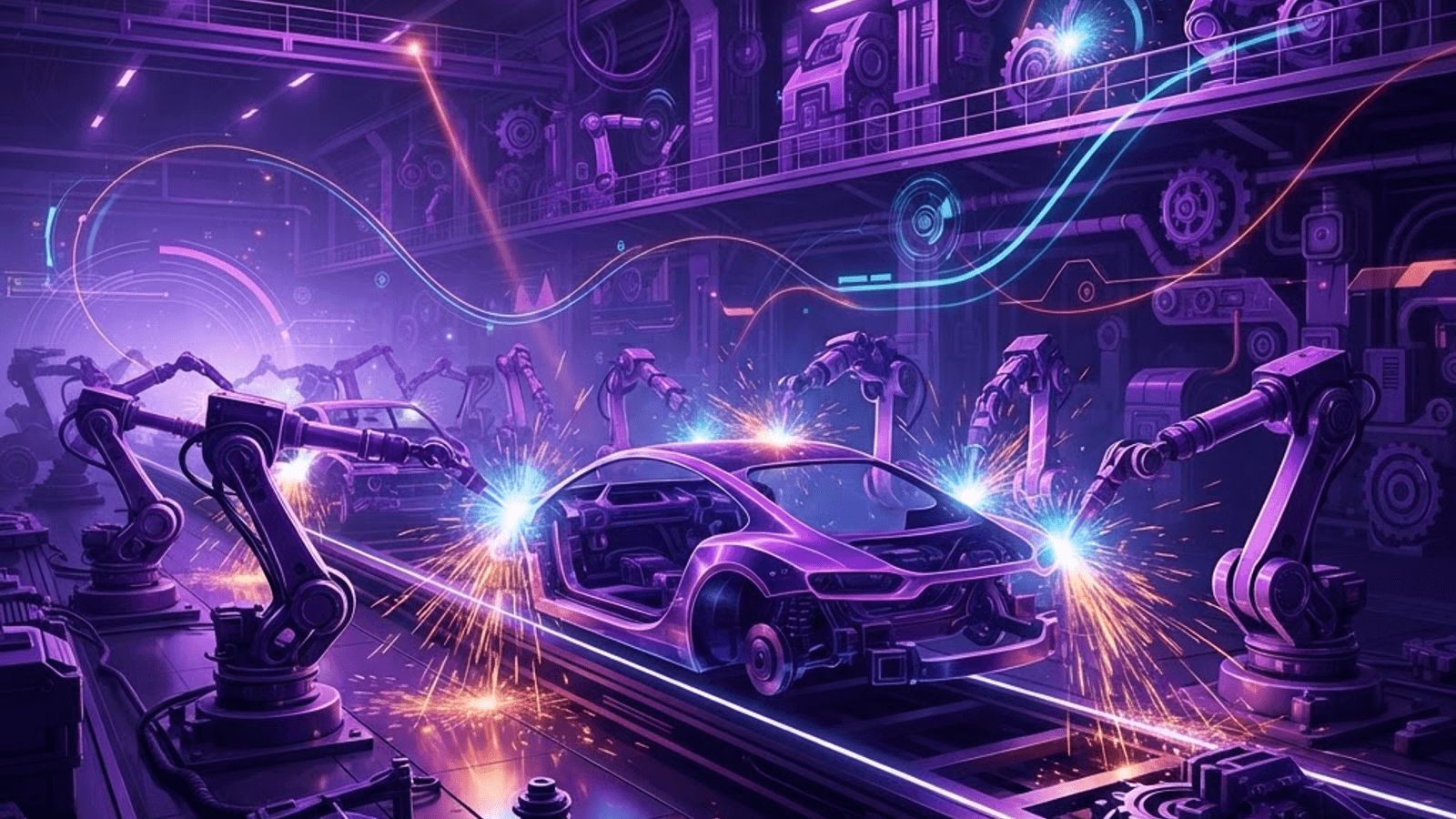
Charleston's Place in the Southeastern Auto Corridor
The automotive industry in South Carolina has grown from a handful of suppliers into one of the state's defining economic sectors. While major assembly plants sit elsewhere in the state, the Charleston region plays a distinctive role built on three advantages: a deepwater port capable of handling vehicle and component traffic, an inland port connection that moves containers efficiently, and a manufacturing workforce trained through strong technical college programs.
That combination has attracted component producers, subassembly specialists, and engineering-driven suppliers who serve original equipment manufacturers throughout the Southeast and beyond. The ten companies below reflect the diversity of automotive manufacturing activity in and around Charleston.
Top 10 Automotive Manufacturers Serving Charleston
1. Lowcountry Automotive Components
A tier-one supplier producing stamped and welded structural components for vehicle body and chassis applications. Lowcountry Automotive Components is known for robust process capability studies, in-line dimensional verification, and a launch team that manages new programs from tooling trials through full production ramp.
2. Palmetto Drive Systems
Specializing in driveline and transmission components, Palmetto Drive Systems machines shafts, gears, and housings to tight tolerances. Its investment in multi-axis machining centers and automated gauging allows the company to maintain consistency across high-volume runs where variation quickly becomes costly.
3. Harbor Interior Solutions
Vehicle interiors demand both aesthetic precision and durability, and Harbor Interior Solutions produces trim panels, soft-touch surfaces, and assembled interior modules. The firm coordinates closely with customer design teams on grain, color matching, and tactile quality, areas where perceived value is decided.
4. Cooper River Electric Vehicle Systems
Positioned for the electrification transition, Cooper River Electric Vehicle Systems manufactures battery enclosures, busbars, thermal management assemblies, and high-voltage connection hardware. Safety validation and thermal testing capability have made the company a credible partner as programs shift toward electrified platforms.
5. Ashley Precision Machining
Serving both automotive and adjacent industrial markets, Ashley Precision Machining produces engine, braking, and suspension components. Its reputation rests on rapid prototyping capability that transitions smoothly into serial production, giving customers continuity from development through launch.
6. Port City Plastics and Molding
Injection molding underpins a large share of modern vehicle content, and Port City Plastics and Molding produces exterior trim, under-hood components, and functional clips and fasteners. In-house tool maintenance and scientific molding practices support consistent quality across long production programs.
7. Sea Island Commercial Vehicle Works
Focusing on trucks, trailers, and specialty vehicles, Sea Island Commercial Vehicle Works fabricates bodies, upfits chassis, and builds application-specific equipment for fleet operators. Its customization capability serves utility, municipal, and logistics customers across the coastal region.
8. Charleston Aftermarket Manufacturing
Not all automotive production serves original equipment programs. Charleston Aftermarket Manufacturing produces performance parts, accessories, and replacement components sold through distribution channels, combining smaller batch flexibility with strong finishing and packaging capability.
9. Tidewater Seating and Safety
Tidewater Seating and Safety manufactures seat frames, foam assemblies, and restraint-related hardware. Because these components carry direct occupant safety implications, the company maintains rigorous traceability, destructive testing protocols, and documented validation for every design change.
10. Carolina Automotive Engineering Works
Blending design services with low-volume manufacturing, Carolina Automotive Engineering Works supports prototype builds, validation fixtures, and pre-production assemblies. Development teams rely on the company when a program needs physical hardware faster than conventional tooling timelines allow.
Forces Reshaping Automotive Manufacturing
Electrification is the most visible transformation. It reduces demand for some traditional powertrain components while creating entirely new categories around batteries, power electronics, and thermal management. Suppliers who have diversified early are better positioned than those tied exclusively to internal combustion content.
Lightweighting continues to influence material choices, pushing aluminum, high-strength steel, and engineered polymers into applications once dominated by conventional steel. Meanwhile, supply-chain regionalization has increased interest in suppliers located near assembly operations, benefiting the Southeast broadly. Finally, quality expectations keep rising, with customers requiring statistical evidence of capability rather than end-of-line sorting.
What to Look For in an Automotive Supplier
Automotive procurement is unforgiving, so evaluation should be systematic. Confirm that the supplier operates a recognized quality management system and can produce control plans, process flow diagrams, and failure mode analyses on request. Review capacity honestly against your projected volumes, including contingency for upside demand.
Assess launch discipline, since most supplier failures occur during program introduction rather than steady-state production. Ask how the company manages engineering changes, how quickly it can revalidate after a change, and what its containment process looks like if a defect reaches a customer plant. Logistics matters too, particularly for bulky components where freight economics can erode piece-price advantages.
Conclusion
Charleston automotive manufacturers occupy an important position in a regional industry that continues to expand and evolve. The companies profiled here compete through precision, engineering support, and a willingness to adapt as vehicle technology changes. For buyers seeking capable suppliers within the southeastern corridor, the Lowcountry deserves serious consideration.