
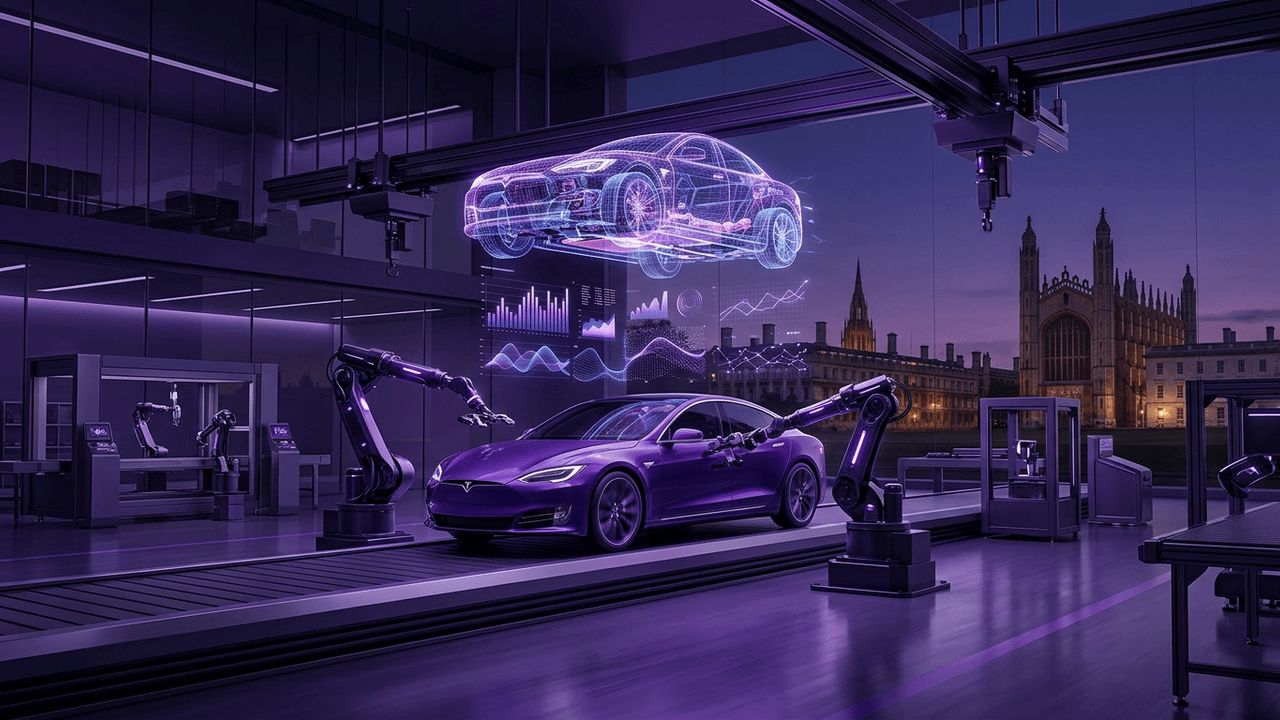
Cambridge and the Future of Mobility
When people think of British car manufacturing, they usually picture the Midlands. Yet Cambridge and the wider East of England contribute significantly to the automotive industry. The region is home to historic vehicle engineering businesses, iconic sports car makers, major research and technical centres, and a new generation of companies developing batteries, chips and software for electric and autonomous vehicles. As the industry shifts from combustion engines to electrification, Cambridge's innovation strengths are becoming more relevant than ever.
This guide profiles ten automotive manufacturers and engineering companies with strong links to Cambridge and its surrounding region.
The Changing Automotive Landscape
The automotive industry is undergoing its biggest transformation in a century. Electric drivetrains, connected software and driver assistance systems are redefining what a vehicle is. This shift plays to the strengths of Cambridge, where battery chemistry, semiconductor design and machine learning research are world-leading. Many Cambridge companies supply technology to global carmakers rather than building complete vehicles themselves.
Top 10 Automotive Companies
1. Marshall
Marshall is one of Cambridge's most historic businesses, with roots in motor trading and engineering. Today its group is best known for aerospace and defence, including specialist vehicle and shelter engineering, and it remains a major local employer.
2. Lotus
Lotus, based at Hethel in Norfolk, is one of Britain's most famous sports car manufacturers. The brand is renowned for lightweight engineering and is investing heavily in electric performance vehicles.
3. Ford
Ford's Dunton Technical Centre in Essex is one of its key engineering sites in Europe, focusing on commercial vehicle development. It employs engineers from across the East of England, including Cambridge.
4. Cosworth
Cosworth is a legendary name in high-performance engines and electronics. Its expertise now extends to electrified powertrains and data systems for motorsport and road cars.
5. Nyobolt
Cambridge-born Nyobolt develops ultra-fast charging battery technology. It has demonstrated electric vehicle concepts that charge in a fraction of the usual time, highlighting the potential of its innovations.
6. Echion Technologies
Echion Technologies, a Cambridge University spin-out, produces niobium-based anode materials that enable fast-charging, long-life batteries for electric vehicles and industrial machines.
7. Arm
Arm's processor designs are increasingly used in vehicles, powering infotainment, driver assistance and other electronic systems. Its automotive work places Cambridge at the centre of the software-defined vehicle trend.
8. Cambridge Consultants
Cambridge Consultants develops breakthrough products and technologies for clients, including automotive and mobility applications such as sensing, connectivity and battery management.
9. Ricardo
Ricardo is a global engineering and environmental consultancy with deep roots in the automotive industry. It supports manufacturers with powertrain development, electrification and emissions reduction.
10. Cambridge Mechatronics
Cambridge Mechatronics develops precision actuators that improve camera and sensing systems. These technologies have applications in vehicle cameras and advanced driver assistance systems.
How to Choose an Automotive Partner
If you are sourcing engineering services, look for proven experience with automotive quality standards and functional safety requirements. For technology suppliers, consider scalability, certification and long-term support. Start-ups should look for partners that understand the lengthy validation cycles required in the industry. Cambridge's strong network of consultancies, research groups and investors can help connect you with the right expertise.
Trends in the Automotive Industry
Electric vehicles continue to grow their share of new car sales, supported by government targets. Battery innovation is focused on faster charging, longer life and reduced reliance on scarce materials. Software-defined vehicles, which receive updates over the air, require powerful and efficient processors. Autonomous driving research is advancing steadily, with the UK developing a regulatory framework for self-driving vehicles.
Frequently Asked Questions
Are cars actually built in Cambridge?
Cambridge does not host large car assembly plants. Its contribution is mainly in engineering, research and technology, such as batteries, processors and sensing systems that are used by global manufacturers.
Which East of England sites are important for automotive?
The region includes sports car manufacturing in Norfolk, major technical centres in Essex and a cluster of battery and technology companies in Cambridge, as well as motorsport engineering businesses.
How can automotive start-ups find support?
Government innovation funding, university partnerships, technology consultancies and industry networks all help automotive start-ups develop and validate their technologies.
Skills for the Future of Mobility
The industry increasingly needs software engineers, battery scientists, power electronics specialists and data experts alongside traditional mechanical engineers. Cambridge's talent pool is particularly strong in these emerging disciplines.
Sustainability Beyond the Tailpipe
As electric vehicles reduce tailpipe emissions, attention is turning to the carbon footprint of manufacturing and battery materials. Battery recycling, responsible sourcing and lightweight materials are becoming priorities for manufacturers and suppliers.
Conclusion
Cambridge may not host large assembly plants, but its influence on the automotive industry is profound and growing. The companies in this guide demonstrate how the region combines engineering heritage with cutting-edge innovation. As vehicles become cleaner, smarter and more connected, Cambridge is set to play an even bigger role in the future of mobility.