
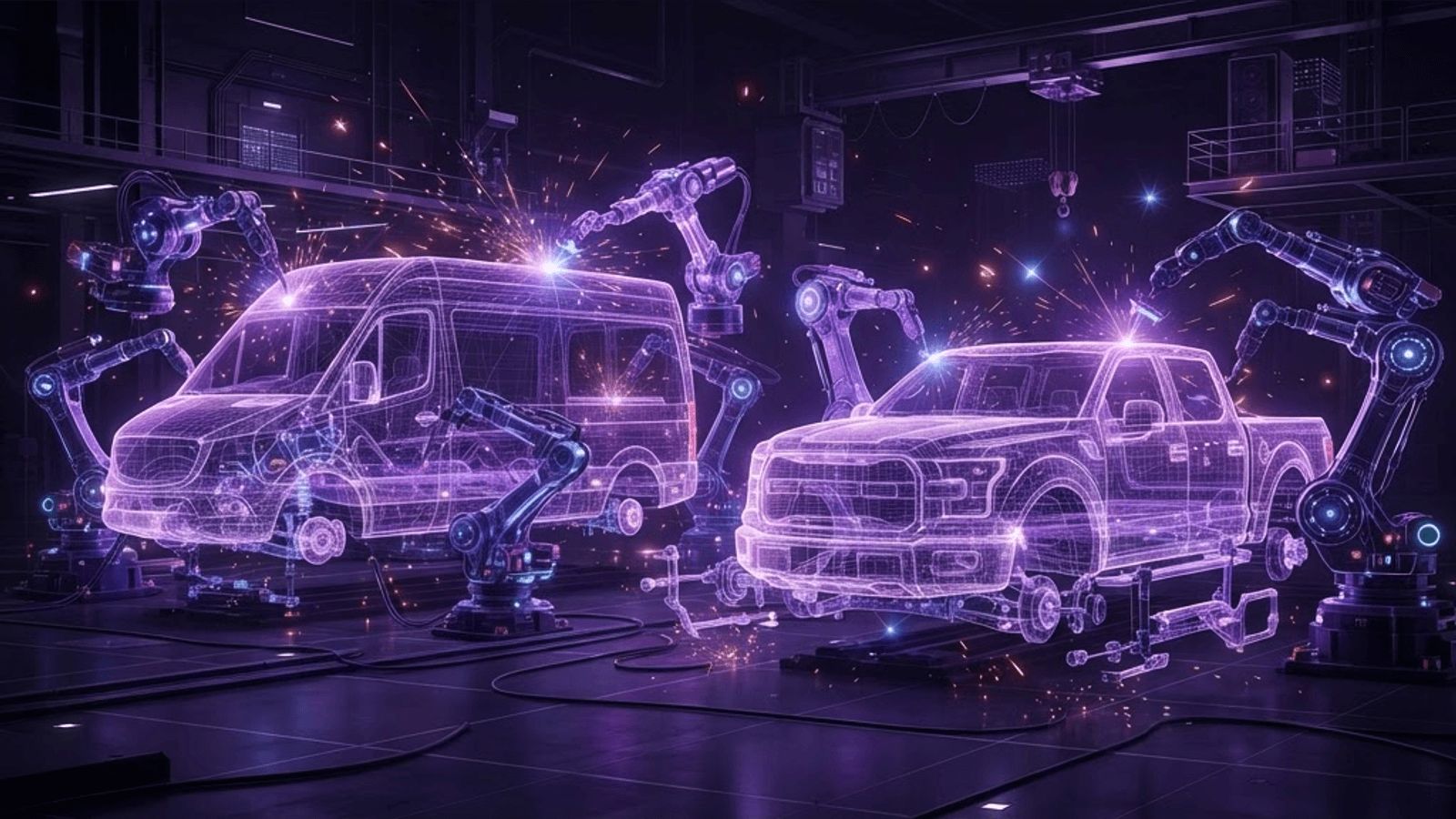
Automotive Manufacturing in a Suburban Economy
The Town of Babylon does not host a vehicle assembly plant, and it never has. What it does host is a substantial and often overlooked automotive manufacturing ecosystem: component fabricators, commercial vehicle upfitters, performance parts producers, trailer builders, and specialty shops that manufacture rather than merely install. Together they serve contractors, fleets, emergency services, enthusiasts, and increasingly electric vehicle owners across Long Island.
This structure reflects regional economics. Suffolk County has thousands of trade businesses that depend on work vehicles, a dense population of commuters, and a strong car culture that supports performance and restoration work. Manufacturing here means small-batch, customized, engineering-intensive production rather than mass output.
What Local Manufacturers Produce
Commercial upfitting is the largest category. Vans and trucks arrive as bare chassis and leave as fully equipped work vehicles with shelving, drawer systems, ladder racks, partitions, power inverters, lighting, and equipment mounts fabricated to a trade's specific workflow. Service bodies, dump inserts, and utility beds are also manufactured locally.
Trailer and towing fabrication supports landscaping, marine, and construction customers, including custom boat trailers built to hull dimensions. Performance and restoration fabrication covers roll cages, exhaust systems, suspension components, sheet metal repair panels, and one-off parts machined for vehicles no longer supported by suppliers.
Component manufacturing rounds out the sector, producing brackets, bushings, hoses, wiring harnesses, and machined parts for both aftermarket and industrial customers. Electric vehicle work has emerged as a growth area, including battery enclosures, charging hardware, and full conversions of classic vehicles to electric drivetrains.
The Leading Automotive Manufacturers Serving Babylon
1. South Shore Commercial Vehicle Upfitters designs and builds complete work vehicle interiors for plumbing, electrical, and HVAC contractors, engineering layouts around tool access and payload distribution.
2. Deer Park Precision Auto Components machines brackets, adapters, pulleys, and custom hardware for aftermarket and industrial applications, offering reverse engineering of discontinued parts.
3. Babylon Trailer Manufacturing Works produces utility, equipment, and custom boat trailers with galvanized and painted finishes suited to salt exposure along the south shore.
4. Great South Bay Marine Vehicle Fabrication specializes in the crossover between marine and automotive work, building launch vehicles, dock equipment carriers, and corrosion-resistant assemblies.
5. Lindenhurst Performance Exhaust and Chassis fabricates mandrel-bent exhaust systems, roll cages, subframe connectors, and suspension mounting solutions for street and track vehicles.
6. Copiague Emergency Vehicle Outfitters equips fire, ambulance, and municipal vehicles with compartments, lighting, siren systems, and equipment mounts built to service requirements.
7. Amityville Electric Vehicle Conversion Lab converts classic and commercial vehicles to electric drivetrains, fabricating battery enclosures, mounting structures, and thermal management systems.
8. Babylon Village Restoration Metalworks hand-forms replacement sheet metal panels, floor sections, and trim for vintage restorations where reproduction parts are unavailable.
9. West Islip Automotive Wiring Systems manufactures custom wiring harnesses for restorations, conversions, and specialty vehicles, with labeled circuits and documented schematics.
10. Long Island Fleet Equipment Manufacturing builds standardized upfit packages for fleet operators, ensuring identical configuration across vehicles to simplify training and maintenance.
Trends Reshaping the Sector
Electrification is the dominant force. Fleet operators evaluating electric vans need upfits that account for battery weight, reduced payload margins, and high-voltage safety, which has forced upfitters to develop new engineering competence. Charging infrastructure fabrication has become a related business line.
Vehicle complexity is another challenge. Modern vehicles integrate advanced driver assistance sensors, and any modification affecting bumpers, mirrors, ride height, or body panels can disturb calibration. Manufacturers who understand these systems avoid creating liability for their customers.
Lightweight materials are gaining ground as payload limits tighten. Aluminum and composite components reduce weight, though they demand different joining techniques and finishing processes than steel.
Lead times for chassis remain a practical constraint. Upfitters plan production schedules around uncertain vehicle delivery, and those who maintain flexible capacity handle the volatility better than those with rigid queues.
How to Choose a Fabricator
Ask to see completed work in your specific category, and speak with customers who have operated the equipment for at least a year. Durability problems surface with use, not at delivery. Confirm welding qualifications, corrosion protection methods, and how electrical work is fused and documented.
Clarify how modifications affect vehicle warranty coverage and whether the fabricator provides weight distribution documentation. For fleets, negotiate repeatability commitments so later vehicles match the first. Get lead times in writing along with the process for handling design changes mid-build.
Workforce, Training, and the Skills Pipeline
Automotive fabrication depends on skilled hands, and the shops that thrive around Babylon invest heavily in developing them. Welding, harness routing, upholstery, composite layup, and diagnostic calibration each require years of practice, and the strongest operations pair apprentices with senior technicians on real production work rather than isolating training from the shop floor. Several businesses partner with regional trade programs and community colleges to bring in candidates who already understand blueprint reading and basic metallurgy.
That pipeline matters directly to buyers. A shop with deep bench strength can absorb a rush order or a mid-program design change without quality slipping, while a business dependent on one or two irreplaceable specialists carries schedule risk. When evaluating a fabricator, ask how many technicians are certified for the specific processes your build requires and how work is documented so that a second technician can pick up a job cleanly. Consistent output across a fleet order is a workforce question as much as an equipment question.
Final Thoughts
Automotive manufacturing in Babylon is specialized, practical, and closely tied to the working economy of Long Island. The companies profiled here build vehicles and components for trades, fleets, emergency services, enthusiasts, and the electric transition. Choosing a fabricator with relevant experience and documented engineering discipline delivers equipment that performs reliably for years.