
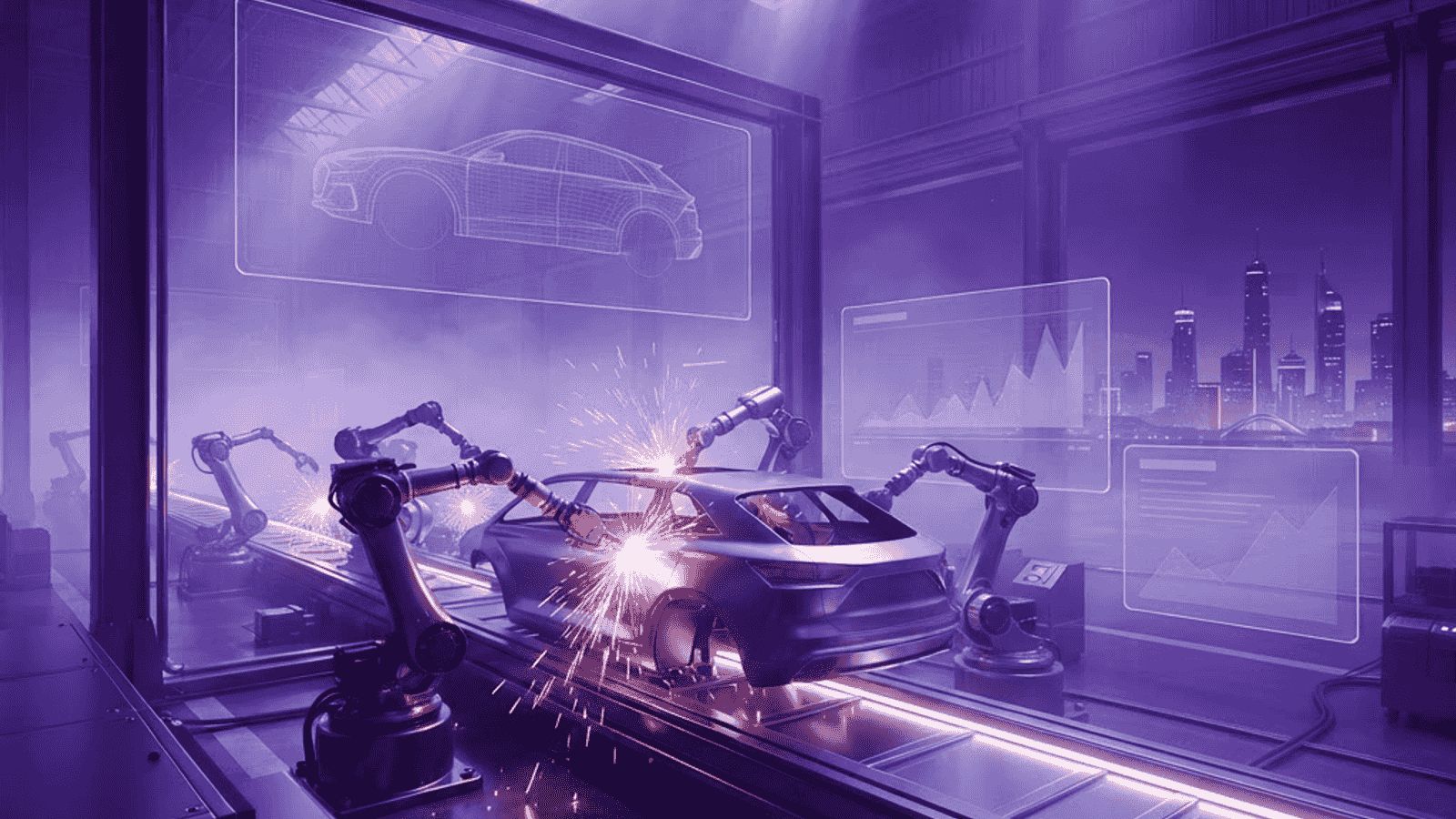
Automotive Manufacturing Is Part of Arlington's Identity
Vehicle assembly has operated in Arlington for decades, making the city one of the most significant automotive production centers in the southern United States. Large-scale assembly work of this kind does far more than employ people inside a single plant. It creates a supplier ecosystem across a wide radius, because just-in-time production requires stampings, seats, wiring harnesses, injection molded components, and fasteners arriving on precise schedules. Many of those suppliers built facilities nearby specifically to serve that sequencing requirement.
The economic effect compounds outward. Tooling shops, machine builders, logistics providers, industrial maintenance contractors, and testing laboratories all cluster around assembly operations. Technical training programs align curricula with plant needs. The result is a workforce with genuine manufacturing depth, comfortable with automation, quality systems, and the pace of production environments.
That maturity matters as the industry changes. Electrification, advanced driver assistance systems, and software-defined vehicle architectures are transforming what a vehicle contains, and regions with established manufacturing capability adapt faster than those starting fresh.
The Top 10 Best Automotive Manufacturers in Arlington
1. Great Southwest Vehicle Assembly
Representing the large-scale assembly tier, this operation builds complete vehicles across body, paint, and general assembly shops. Its scale supports extensive automation in welding and material handling, alongside rigorous end-of-line inspection and road testing. Continuous improvement systems and supplier development programs extend its influence throughout the regional base.
2. Trinity Stamping and Metal Forming
Trinity produces body panels and structural stampings using progressive and transfer press lines. Die maintenance capability and dimensional measurement using coordinate metrology are core strengths. It supports high-strength steel forming, which is increasingly required for crash performance with reduced mass.
3. Meridian Seating Systems
Meridian manufactures complete seat assemblies, integrating frames, foam, trim, heating elements, and electronics. Sequenced delivery synchronized to assembly build order is fundamental to its operation. Comfort validation and durability testing are performed in-house.
4. Cardinal Automotive Electronics
Cardinal builds electronic control modules, sensor assemblies, and instrument cluster components. Its work involves stringent electrical validation and environmental testing across temperature and vibration ranges. Growing content per vehicle has made this segment one of the fastest expanding locally.
5. Ironvine Powertrain Components
Ironvine machines precision powertrain parts, including housings, shafts, and gear components. The company has invested in capability for electric drive units alongside conventional components, reflecting the transition underway. Tight tolerance machining and surface finish control define its technical profile.
6. Palisade Plastics and Interiors
Palisade produces injection molded interior components, trim panels, and cosmetic assemblies where surface quality and color matching are critical. It manages tooling development and supports design for moldability. Textured and soft-touch finishes are areas of particular expertise.
7. Northgate Wiring Harness Manufacturing
Northgate assembles wiring harnesses and electrical distribution systems, a labor-intensive and highly variable product given the number of vehicle configurations. Error-proofing in assembly and full continuity testing are standard. Configuration control is central to its quality performance.
8. Lone Star Battery Systems
Serving electrified powertrain programs, this manufacturer assembles battery modules and packs, handling thermal management integration, enclosure sealing, and high-voltage safety validation. Its facilities include specialized safety infrastructure appropriate to high-energy assemblies. Traceability requirements here are unusually demanding.
9. Sablon Tooling and Automation
Sablon builds tooling, fixtures, and automated assembly cells for automotive plants and suppliers. Its work enables production changes and new model launches, often under compressed timelines. Robotics integration and vision-guided assembly are recognized capabilities.
10. Bluebonnet Aftermarket Manufacturing
Bluebonnet produces accessories, replacement components, and light truck upgrade parts for the aftermarket channel. Serving a market driven by consumer demand rather than assembly schedules, it emphasizes fitment accuracy and finish quality. Product development responds quickly to popular vehicle platforms.
Industry Shifts Reshaping Local Production
Electrification is the largest structural change. Battery packs, electric drive units, power electronics, and thermal systems replace engines and transmissions, which alters supplier content dramatically. Facilities capable of high-voltage assembly and precision machining for electric drives are gaining work while some legacy component demand declines.
Software and electronics content continues to grow. Modern vehicles contain extensive sensing, connectivity, and computing capability, raising requirements for electronics assembly quality, cybersecurity practices, and over-the-air update infrastructure. Suppliers with electronics competence hold expanding positions.
Supply chain strategy has shifted toward resilience. After severe disruption from semiconductor shortages and logistics failures, manufacturers increased dual sourcing, added buffer inventory for critical components, and favored regional suppliers. Proximity has regained value relative to pure cost.
Automation and workforce development advance together. Robotics handle repetitive and ergonomically difficult tasks, while skilled technicians maintain increasingly complex equipment. Plants investing in training retain capability that automation alone cannot supply.
How to Evaluate an Automotive Supplier
Automotive supply is unforgiving, and qualification should reflect that. Confirm quality management certification appropriate to the industry, along with production part approval processes, statistical process control practices, and measurement system capability. Ask for documented performance on defects and on-time delivery.
Assess capacity honestly against your volume forecast, including surge capability and contingency plans for equipment failure. Understand tooling ownership terms and what happens if the relationship ends. Review traceability depth, since recall exposure depends on the ability to identify affected production precisely.
Finally, evaluate engineering collaboration. The strongest suppliers contribute to design for manufacturing, propose cost reductions, and participate early in program development rather than simply quoting finished drawings.
Final Thoughts
Arlington's automotive sector combines large-scale assembly with a deep supplier network spanning metal forming, interiors, electronics, powertrain, batteries, and automation. That breadth positions the region well for an industry in transition. Whether sourcing components, planning production capacity, or building a supplier relationship, evaluate partners on quality systems, technical adaptability, and delivery discipline, because in automotive manufacturing consistency is the product.