
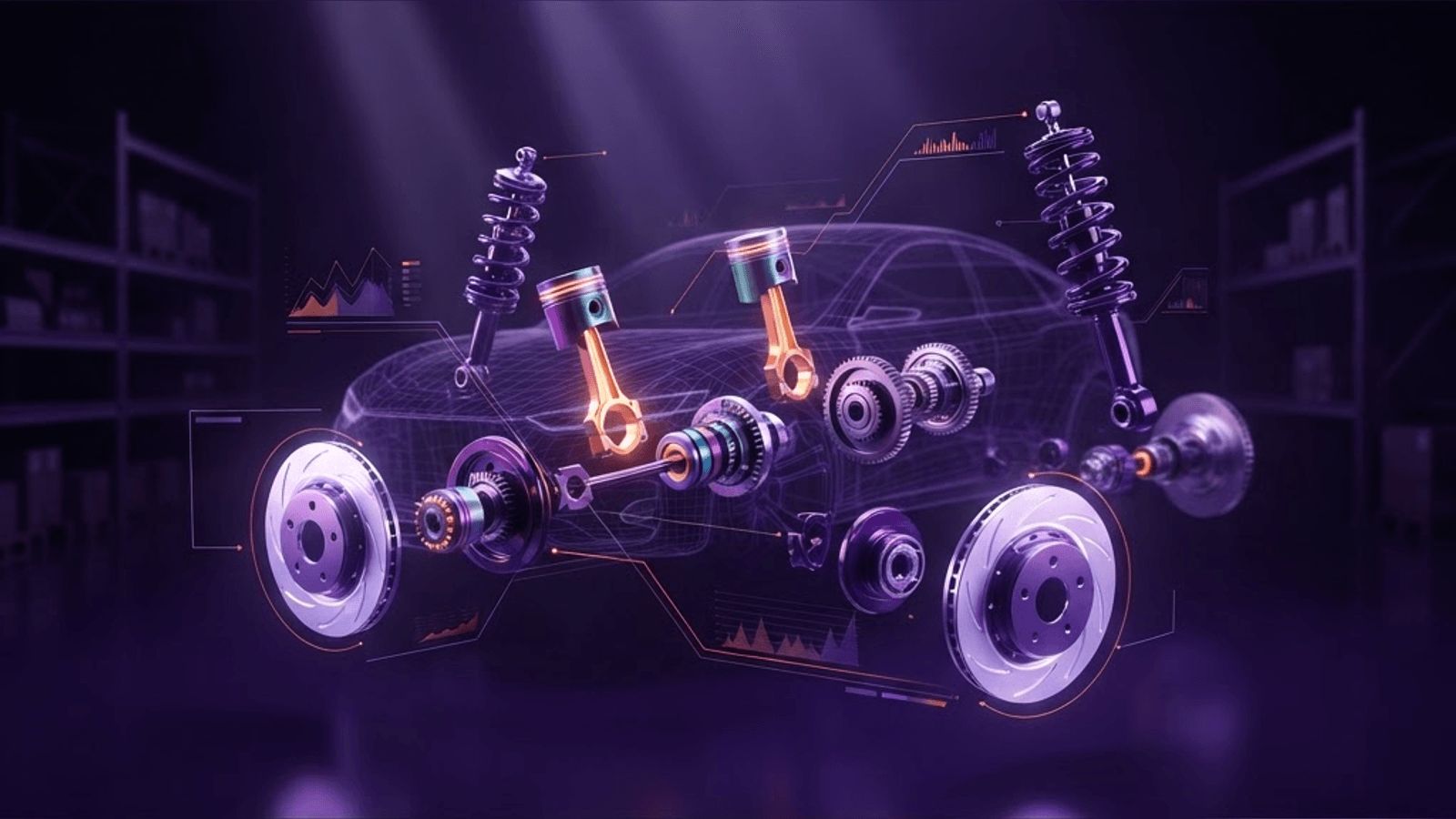
Why Parts Supply Decides Shop Profitability
In automotive repair, the parts supply chain is not a back-office detail. A shop's throughput depends on how quickly the right part arrives, and a bay occupied by a car waiting on a component earns nothing. Worcester's independent repair sector, which is large and long-established, has developed around a wholesale network that delivers multiple times a day rather than once.
The city's vehicle mix creates specific demands. Harsh winters, road salt, and aging vehicles mean heavy demand for brake, suspension, exhaust, and corrosion-related components. A significant commercial fleet presence, from municipal vehicles to delivery and construction trucks, adds heavy-duty and commercial parts requirements. And the region's tendency to keep vehicles longer than the national average sustains demand for parts on older platforms that national retailers often stop carrying.
Evaluating a Parts Wholesaler
Delivery frequency and speed lead the list. Shops measure suppliers in how many daily runs they make and how fast a hot-shot delivery arrives. Cataloging accuracy is a close second, because a wrong part shipped correctly still costs a shop a full labor cycle.
Inventory breadth on older applications matters more in Worcester than in newer markets. A wholesaler who stocks components for fifteen-year-old platforms serves this customer base far better than one carrying only current-model coverage. Return and core handling is the fourth criterion: liberal, low-friction returns are essential when diagnostic uncertainty is part of the trade.
Finally, consider quality tiering. Good wholesalers help a shop choose deliberately among original equipment, premium aftermarket, and economy lines depending on the customer's intended ownership period, rather than defaulting to whatever is cheapest.
Ten Auto Parts Wholesalers Serving Worcester
Commonwealth Auto Parts Distributors is the broad-line wholesaler most independent shops build around, with multiple daily delivery runs across the city and deep coverage on maintenance and repair categories. Counter staff experience is a notable strength.
Quinsigamond Import Parts specializes in European and Asian vehicle components, an important niche given the region's high share of imports. Correct application data on complex European platforms is where they add the most value.
Blackstone Collision Parts Supply serves body shops with sheet metal, bumpers, lighting, glass, and refinish materials. Insurance-compliant part sourcing and photo-verified fitment help shops avoid supplement delays.
Wachusett Heavy Duty Truck Parts covers commercial trucks and trailers with brake systems, drivetrain components, air systems, and DOT-required items. Fleet maintenance managers use them for the scheduled programs that keep vehicles inspection-ready.
Heritage Performance & Motorsports Supply distributes performance components, suspension upgrades, and specialty tooling to enthusiast shops and racing programs. Technical knowledge rather than catalog breadth is their differentiator.
Apex Electrical & Diagnostics Parts concentrates on batteries, starters, alternators, sensors, modules, and diagnostic equipment. As vehicles become more electronically complex, their programming support has become genuinely important to independent shops.
Bay State Undercar Specialists focuses on brakes, exhaust, steering, and suspension, the categories most heavily affected by New England road conditions. Deep stock on corrosion-prone components keeps shops from waiting on special orders.
Union Station Fluids & Chemicals supplies oil, coolant, transmission fluid, shop chemicals, and waste handling services in bulk. Bulk delivery and used-oil pickup on a single schedule reduces administrative work for shop owners.
Greendale Used & Recycled Auto Parts operates a recycling yard with inventory search and warranty-backed used components. For older vehicles where new parts are unavailable or uneconomical, this channel is often the only practical repair path.
Central Mass EV & Hybrid Components rounds out the list, supplying high-voltage service parts, hybrid batteries, and specialized safety tooling. As electrified vehicles age into the independent repair market, this capability is shifting from novelty to necessity.
Trends Reshaping the Parts Business
Vehicle electrification is the largest structural change. Independent shops are beginning to service hybrids and battery electric vehicles out of warranty, requiring different parts, tools, and technician certification. Wholesalers who invest early in that inventory and training are positioning for the next decade.
Advanced driver assistance systems have created a calibration requirement that did not exist a decade ago. A windshield replacement or alignment can now require camera and radar recalibration, and parts suppliers who provide calibration equipment or service partnerships solve a problem many shops cannot solve alone.
Right-to-repair developments in Massachusetts continue to influence data and parts access, which affects what independent shops can service and what wholesalers can supply. Shops benefit from suppliers who track those changes closely.
Finally, digital cataloging and integration with shop management software has become table stakes. Suppliers whose systems push accurate pricing and availability directly into a shop's estimating workflow save measurable time on every repair order.
Practical Advice for Shops
Consolidate enough volume with a primary supplier to earn priority delivery, then maintain two secondary sources for coverage gaps. Track your first-time-fit rate by supplier; the wholesaler who ships the correct part the first time is worth more than one with a marginally lower price and frequent errors.
Be explicit with customers about quality tiers and document the choice on the invoice. It protects the shop and helps customers understand value. Manage cores and returns weekly rather than letting them accumulate, since unreturned cores quietly erode margin. And review your parts pricing matrix at least annually so your markup reflects current acquisition costs.
Final Thoughts
Worcester's auto parts wholesalers span broad-line distribution, import specialization, collision supply, heavy duty, undercar, electrical, recycled parts, and emerging electrification support. That depth reflects a repair market with older vehicles, hard winters, and substantial fleet activity. Choosing suppliers on delivery speed, cataloging accuracy, and coverage of the platforms you actually service is what keeps bays turning and margins intact.