
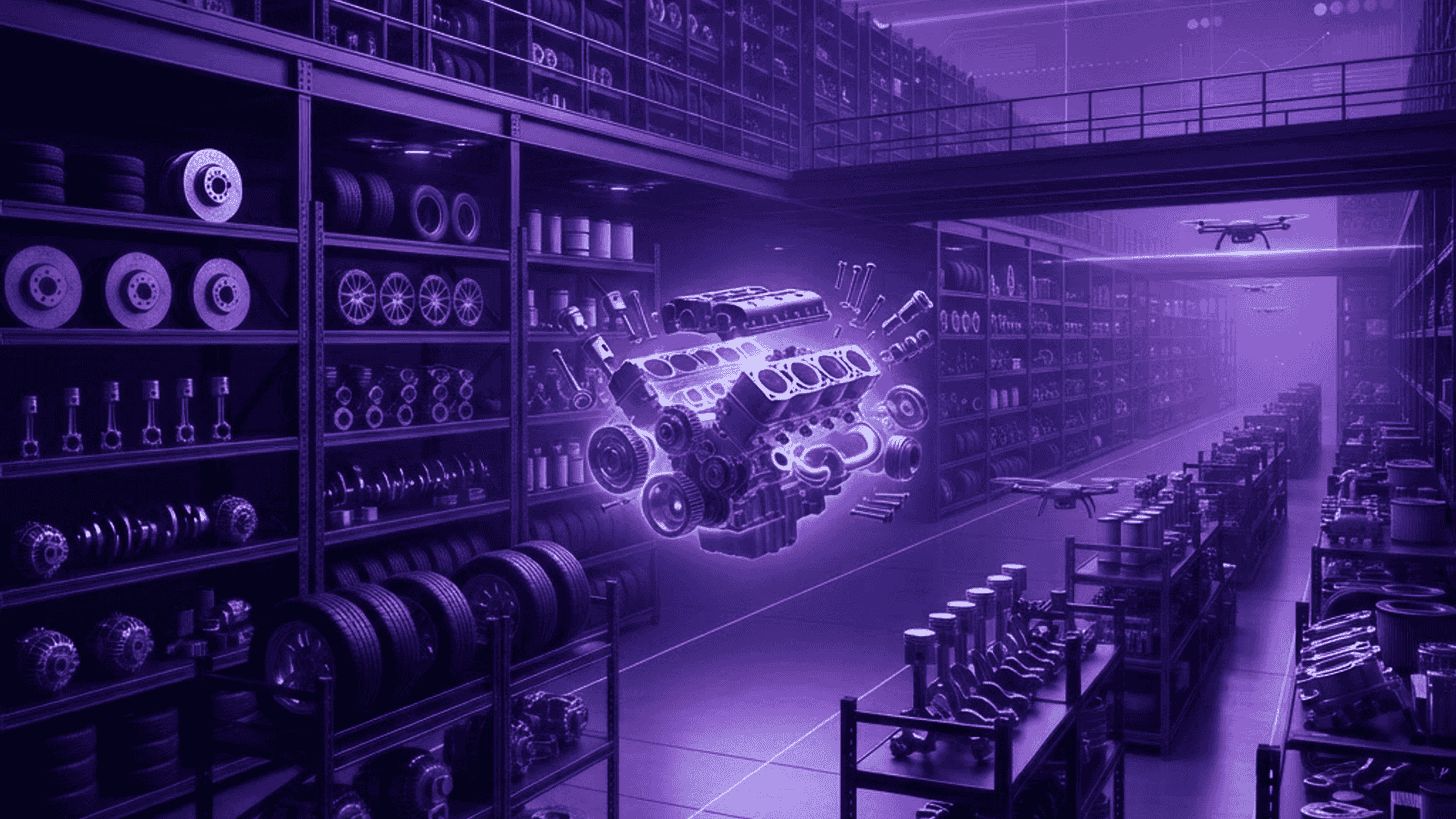
Why Parts Distribution Decides Shop Profitability
An automotive repair business does not make money on parts markup alone. It makes money on billable hours, and billable hours stop the moment a technician is waiting on a component. A shop with four bays and a two-hour average parts delay is effectively running fewer bays than it pays for. That is why experienced service managers evaluate suppliers on delivery frequency and first-time fill rate long before they compare price sheets.
Wichita is well positioned for this. The metro supports a large independent repair sector, several dealership groups, a substantial commercial fleet population tied to agriculture and aviation logistics, and a mature recycling industry. That combination sustains multiple distribution layers, from national program groups with local warehouses to specialist jobbers who stock what nobody else will.
Understanding the Parts Tiers
Original equipment parts come from the vehicle manufacturer's supply chain and carry the tightest fit and finish expectations, usually at the highest price. OE-equivalent parts are produced by the same manufacturers without the automaker's branding, often offering nearly identical quality at lower cost. Aftermarket parts range from premium lines that exceed original specification to economy tiers that should never appear on a safety-critical system.
Remanufactured components occupy a distinct and useful niche. A properly remanufactured alternator, steering rack, or transmission has been disassembled, inspected, and rebuilt with new wear parts, and it typically ships with a meaningful warranty. Recycled or used assemblies make sense for older vehicles and cosmetic body components where new pricing exceeds the value of the repair.
The skill is matching tier to situation. A ten-year-old commuter car with a modest repair budget calls for different choices than a two-year-old vehicle under an extended service contract or a commercial truck whose downtime costs hundreds of dollars an hour.
The Top 10 Auto Parts Wholesalers Serving Wichita
1. Air Capital Auto Parts Distribution
A broad-line distributor covering brakes, steering, suspension, engine management, and maintenance items, Air Capital Auto Parts Distribution competes primarily on delivery frequency. Multiple daily runs across the metro let shops commit to same-day completion with confidence rather than hope.
2. Prairie Fleet Parts and Service
Focused on medium and heavy duty commercial vehicles, Prairie Fleet Parts and Service stocks air brake components, filtration, drivetrain, electrical, and trailer hardware. Fleet managers rely on its willingness to stage critical spares for their specific vehicle mix rather than making them wait on a regional warehouse.
3. Heartland Import Specialists
European and Asian nameplates use different fastener standards, fluids, and diagnostic ecosystems, and Heartland Import Specialists organizes its inventory accordingly. Shops working on those vehicles cite correct-first-time cataloging as the main reason they call here before a general-line supplier.
4. Sunflower Remanufacturing Group
Sunflower Remanufacturing Group supplies rebuilt alternators, starters, calipers, steering components, and drivetrain assemblies with documented testing. Its core exchange program is straightforward, which matters because complicated core accounting quietly erodes shop margins.
5. Cowtown Truck and Off-Road Supply
Serving the region's substantial pickup and off-road market, Cowtown Truck and Off-Road Supply carries lift kits, heavy duty suspension, towing hardware, lighting, and protection accessories. Staff can speak to load ratings and geometry rather than simply reading a fitment table.
6. Great Plains Collision Parts
Collision work depends on panel fit and finish, and Great Plains Collision Parts supplies sheet metal, bumpers, lighting, glass, and refinish materials with attention to certification. Body shops value clear disclosure of part type, which insurers increasingly require on estimates.
7. Wichita Auto Recyclers Network
This operation supplies inspected used assemblies including engines, transmissions, doors, and modules, with interchange data and warranty coverage. For older vehicles and discontinued components, it is often the only economically sensible path to a completed repair.
8. Ark Valley Tire and Wheel Wholesale
Ark Valley Tire and Wheel Wholesale covers passenger, light truck, agricultural, and commercial tires plus wheels and TPMS components. Its delivery cadence and inventory breadth allow tire shops to satisfy walk-in demand without carrying excessive stock themselves.
9. Central Plains Shop Equipment and Tools
Beyond parts, shops need lifts, diagnostic scanners, alignment systems, air tools, and consumables. Central Plains Shop Equipment and Tools handles that capital and consumable side, including installation and calibration support that keeps expensive equipment producing accurate results.
10. Prairie Performance and Motorsport Parts
Rounding out the list, Prairie Performance and Motorsport Parts serves the modification and racing community with forced induction, exhaust, tuning, cooling, and safety equipment. Technical knowledge here prevents costly mismatches between components that individually look correct.
How to Compare Suppliers Honestly
Measure first-time fill rate rather than catalog size. Ask each supplier what percentage of orders ship complete on the first attempt, then verify it against your own records over a month. A supplier who fills ninety-six percent of lines same-day is worth a premium over one at eighty-five percent, because the gap is paid for in idle technician hours.
Scrutinize return and warranty handling. Defective parts are inevitable, and the question is how much administrative friction each supplier adds. Confirm whether labor is covered on warranty failures, how long claims take to credit, and whether electrical components are treated as non-returnable once installed.
Finally, price the whole transaction. Delivery charges, core deposits, restocking fees, and payment terms all shift the effective cost. A part quoted five dollars lower can easily cost more once a core deposit sits unrecovered for two months.
What Is Changing in the Category
Vehicle electrification is gradually reshaping demand, reducing volume in traditional engine components while increasing it in thermal management, high-voltage service, and specialized tooling. Advanced driver assistance systems have already made calibration a routine part of ordinary collision and glass work, which pushes suppliers to bundle equipment, training, and procedure documentation.
Data quality is becoming a competitive weapon. Accurate fitment, VIN-level cataloging, and integration with shop management software prevent wrong-part orders, which remain one of the largest hidden costs in the industry. Suppliers investing in clean data will keep winning share from those relying on generic listings.
Wichita shops that build relationships with a fast general-line supplier plus two or three specialists, and that track fill rate rather than sticker price, will keep their bays productive even when the broader supply chain gets unpredictable.