
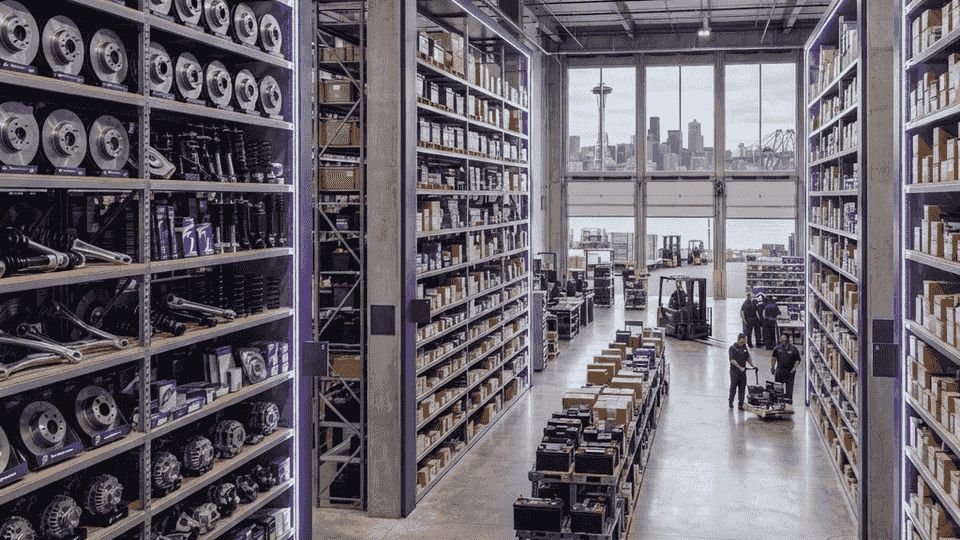
Washington Wholesale and Industry Overview
Washington repair shops, fleets, dealerships, body shops, and parts stores depend on distributors that combine accurate cataloging with rapid delivery. The state's mix of dense Puget Sound traffic, mountain travel, agricultural routes, and wet winters creates demand across braking, suspension, electrical, collision, and maintenance categories. A low price cannot offset incorrect fitment or delayed bays. These ten suppliers are strong starting points for professional buyers evaluating coverage in Washington.
Hybrid and electric vehicles are changing inventory needs around thermal management, braking, diagnostics, and safety procedures. Meanwhile, older vehicles remain common outside major urban centers, requiring deep application coverage. Weather and terrain also make wipers, lighting, batteries, tires, chassis components, and cooling systems important recurring categories.
1. NAPA Auto Parts
NAPA supports professional repair facilities and retailers with broad mechanical, electrical, maintenance, tools, and equipment coverage. Its distribution network and local store presence can be valuable when a Washington shop needs same-day access. Programs for commercial customers also support inventory planning and shop operations.
2. Genuine Parts Company
Genuine Parts Company is the organization behind NAPA's extensive automotive distribution capabilities. Its scale provides access to major replacement categories, private-label options, and supply-chain infrastructure. Larger Washington accounts may value standardized purchasing and broad geographic support.
3. O’Reilly Auto Parts
O’Reilly Auto Parts runs commercial programs serving professional installers alongside its retail business. Wide store coverage, catalog tools, and local delivery can help repair shops reduce vehicle downtime. Product breadth includes hard parts, maintenance items, paint-related supplies, tools, and shop consumables.
4. AutoZone Pro
AutoZone Pro serves commercial repair customers with parts availability, delivery, account tools, and shop-focused services. Its network is useful for common maintenance and replacement needs in populated Washington markets. Buyers should compare local inventory depth and delivery frequency by branch.
5. Advance Professional
Advance Professional supplies commercial automotive customers through a broad parts and service network. The program emphasizes application coverage, shop solutions, and delivery. Washington availability should be checked locally because service territories and banners can differ by market.
6. LKQ Corporation
LKQ is a major source for alternative collision parts, recycled original equipment components, remanufactured products, and specialty automotive categories. Body shops and mechanical facilities can use this range to balance repair quality, availability, and insurer requirements. Precise condition grading and return procedures are especially important for recycled parts.
7. Keystone Automotive Industries
Keystone Automotive Industries, part of LKQ, is recognized for aftermarket collision products and related supplies. Its distribution model supports body shops needing panels, lamps, cooling components, and other repair items. Buyers benefit from confirming certification, fitment, delivery cutoffs, and damage inspection processes.
8. Worldpac
Worldpac specializes in import vehicle parts and supplies professional repair businesses. Deep European and Asian application knowledge can be valuable for Seattle and Bellevue shops serving diverse vehicle populations. Catalog precision, brand choice, and technical resources distinguish the specialist model.
9. Factory Motor Parts
Factory Motor Parts distributes aftermarket automotive products to service centers, fleets, dealerships, and retailers. Key strengths include maintenance categories, batteries, undercar products, and professional account support. Washington buyers can evaluate branch coverage and stocking programs for recurring fleet demand.
10. FleetPride
FleetPride focuses on heavy-duty truck and trailer parts, service, and fleet support. The company is relevant to Washington logistics, construction, agriculture, municipal, and port operators. Its specialized range addresses braking, drivetrain, suspension, electrical, hydraulics, and shop needs beyond passenger vehicles.
Industry Trends to Watch
Parts distributors are investing in VIN-based lookup, connected inventory, predictive replenishment, and delivery visibility. Professional buyers increasingly expect technical data and multiple quality tiers rather than a single generic option. Remanufactured and recycled components can support cost and sustainability goals, but documentation, warranties, and condition standards must be clear.
How to Choose the Right Washington Partner
Measure suppliers by fill rate, catalog accuracy, delivery consistency, core handling, warranty labor policies, and return speed. Review coverage for the vehicle mix actually entering the shop, including imports, light trucks, EVs, or heavy-duty fleets. Spokane and rural operators may prioritize scheduled route reliability, while Puget Sound shops may prioritize several deliveries per day. Use total bay productivity—not invoice price alone—as the final benchmark.
Practical Evaluation Checklist
Before committing, ask two or three shortlisted providers to quote the same representative order so comparisons remain fair. Record product cost, freight, minimum quantities, estimated arrival, payment terms, warranty coverage, and return conditions in one worksheet. Check references from businesses of a similar size and confirm who will handle routine questions or urgent exceptions. Review samples, specification sheets, invoices, and packaging for consistency. Finally, establish measurable expectations for fill rate, quality, response time, and delivery, then review actual performance after the first several orders. This disciplined process turns an appealing catalog into an evidence-based sourcing decision.
Final Perspective
Washington buyers should treat this list as a research starting point rather than a universal ranking. Availability, account eligibility, territories, product lines, and service levels can change. Build a written scorecard, verify current terms directly with each business, and begin with a measured order or pilot program. The strongest long-term relationship will align dependable quality and responsive service with the specific needs of your customers, team, location, and growth plan.