
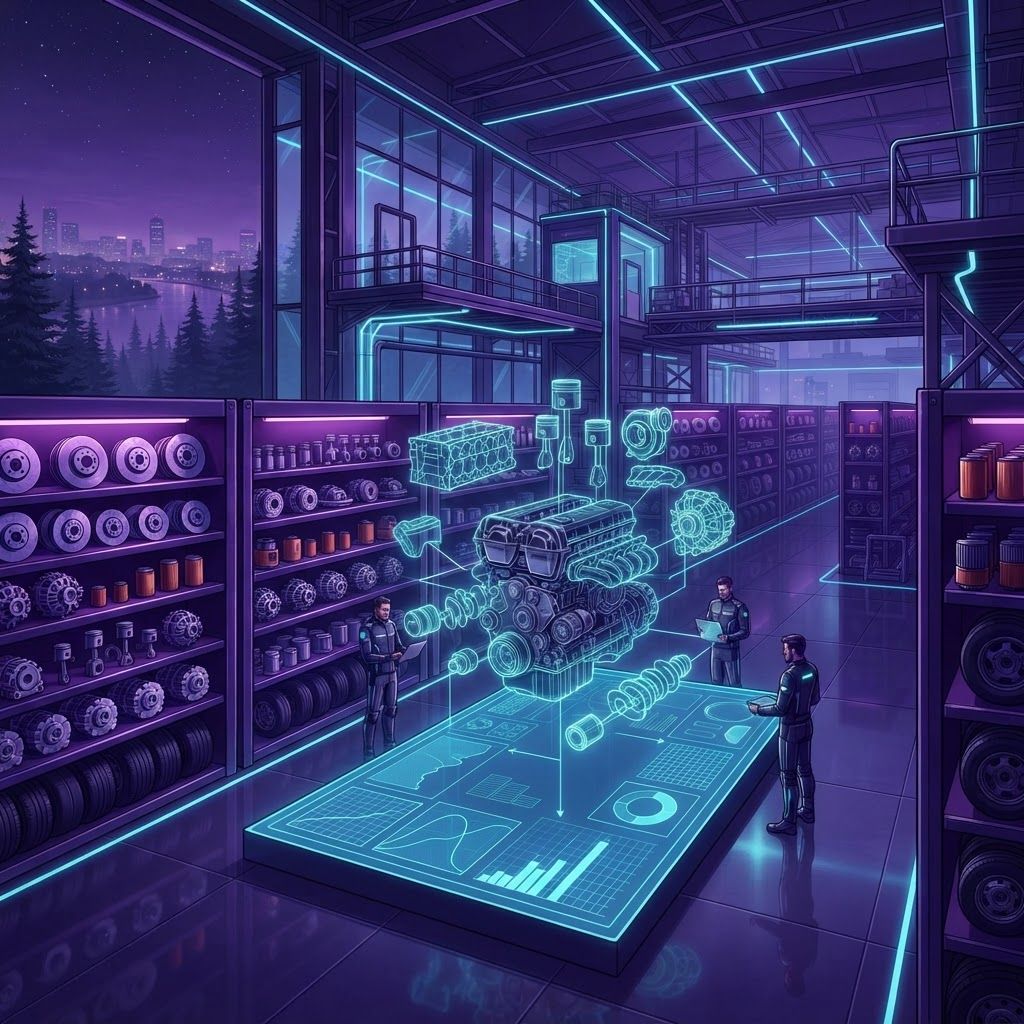
Why Parts Availability Defines Shop Profitability
In the automotive service business, revenue is measured in bay hours. A vehicle waiting on a wrong or missing part is a bay generating nothing, which is why parts distribution quality matters more to shop economics than almost any other supplier relationship. Spokane's wholesale parts network has evolved around this pressure, with multiple daily delivery routes, strong will-call counters and cataloging staff who can identify components from a VIN in minutes.
Regional conditions add specific demands. Winter road treatment accelerates corrosion, mountain grades punish brakes and cooling systems, and long rural driving distances mean higher mileage vehicles remain in service. Distributors here therefore stock deeper undercarriage, suspension, brake and cooling inventory than similar-sized markets in milder climates.
The Ten Best Auto Parts Wholesalers in Spokane
1. Inland Northwest Auto Parts Distribution
A broad-line wholesaler serving independent repair shops with brake, steering, suspension, filtration and engine management components. Multiple delivery runs per day and a well-trained counter team make it a default first call for many shops.
2. Spokane OEM Parts Network
Operating as a consolidated source for dealer-original components, this wholesaler helps independents access genuine parts without calling several dealerships. Accurate fitment and warranty integrity are the primary value, especially on newer vehicles with sensitive calibration requirements.
3. Cascade Heavy Duty and Fleet Parts
Commercial trucks, agricultural machinery and municipal fleets require a different catalog entirely. This supplier covers air brake components, heavy suspension, filtration and drivetrain parts, and supports maintenance programs with scheduled stocking.
4. Riverfront Collision Parts Supply
Body shops work against insurance timelines, so this distributor concentrates on panels, bumpers, lighting, glass hardware and refinish consumables. Careful handling and pre-delivery inspection reduce the damaged-part returns that stall collision repairs.
5. Palouse Performance and Off-Road Wholesale
The region's enthusiasm for trucks and backcountry travel supports genuine demand for lift kits, recovery gear, upgraded cooling, tuning components and durable lighting. This wholesaler serves installers with technical fitment advice rather than catalog guesswork.
6. Northwest Electrical and Battery Distributors
Modern vehicles are electrical systems on wheels. This supplier focuses on batteries, alternators, starters, sensors, wiring and increasingly hybrid and electric vehicle service components, an area where regional expertise is still scarce and valuable.
7. Lilac City Import Parts Traders
Import specialists need application-specific inventory, and this wholesaler concentrates on European and Asian platforms. Its catalog discipline reduces the misfit orders that commonly plague import repair work.
8. Eastern Washington Undercar and Exhaust Supply
Corrosion is a fact of life on Inland Northwest roads. This distributor specializes in exhaust components, brake lines, fuel lines, hangers and fasteners, providing the small hardware that keeps a job moving to completion.
9. Garland Auto Recyclers and Used Parts Wholesale
Recycled components remain essential for older vehicles and cost-conscious repairs. This operation inventories tested assemblies with mileage documentation and short warranties, giving shops a legitimate middle option between new and unavailable.
10. Spokane Valley Tools, Equipment and Shop Supply
Diagnostic scanners, lifts, air tools, fluids, absorbents and consumables all come from a different supply channel than parts. This wholesaler covers that need, including equipment service and calibration support.
Trends in Automotive Parts Distribution
Vehicle electrification is reshaping inventory strategy, with high-voltage service parts, thermal management components and specialized tooling entering catalogs that were unchanged for decades. Advanced driver assistance systems have made calibration a routine part of collision and glass work, creating demand for equipment and training rather than parts alone. Digital cataloging integrated with shop management software is now expected, since manual lookup errors are the largest hidden cost in the channel. Meanwhile, remanufactured components are gaining acceptance as both a cost and sustainability solution.
Choosing a Parts Supplier
Measure first-time fill rate and order accuracy over a full month rather than judging by price sheets. Confirm delivery frequency and cut-off times against your own workflow, and ask how returns on electrical parts are handled, since that policy varies widely and can be expensive. Evaluate warranty administration too: a supplier who processes claims quickly protects your customer relationships as well as your margin.
Most well-run Spokane shops maintain a primary wholesaler for volume categories plus two or three specialists for OEM, collision or heavy duty needs. That structure keeps daily operations simple while ensuring difficult jobs do not stall.
Final Thoughts
Spokane's auto parts wholesale market is competitive and technically capable, which benefits every shop willing to hold suppliers to clear standards. Focus on accuracy, delivery reliability and warranty support rather than headline pricing, and parts supply will quietly become one of the strongest contributors to your shop's throughput.
Fitment Accuracy and Catalog Quality
In auto parts distribution, catalog accuracy is the product. A wrong part costs a repair shop far more than the part's value, consuming bay time, delaying a customer and damaging trust. The best Spokane wholesalers invest heavily in fitment data, verify applications by vehicle identification number where possible, and train counter staff to ask clarifying questions rather than guessing at trim levels and engine variants.
Return policies reflect this reality. Suppliers that accept no-fault returns on correctly ordered parts that simply do not fit acknowledge how much variation exists across model years and production runs, and that flexibility is worth real money to a busy shop.
Regional Vehicle Conditions
Vehicles in the Inland Northwest face specific stresses. Road de-icing chemicals accelerate corrosion on brake and suspension components, cold starts strain batteries and charging systems, and long highway distances across the region put steady mileage on drivetrain parts. Summer heat and mountain grades tax cooling systems considerably.
Wholesalers who stock accordingly, weighting inventory toward brake hardware, batteries, cooling components, suspension parts and filtration, serve local shops far better than those applying national demand averages. Corrosion-resistant hardware and heavier-duty options are genuinely worth carrying here.
Availability, Delivery and Shop Economics
Same-day and multiple-daily delivery runs are the operational backbone of the category. A shop with a vehicle on a lift needs the part now, not tomorrow, and distributors with dense local delivery routes command loyalty that pricing alone cannot buy. Buyers should evaluate suppliers on measured fill rate and delivery reliability rather than list price.
Balancing original equipment and quality aftermarket lines lets shops offer honest choices at different price points. Clear warranty terms, including labor coverage on premium lines, protect both the shop and the vehicle owner and reduce the disputes that consume management time.