
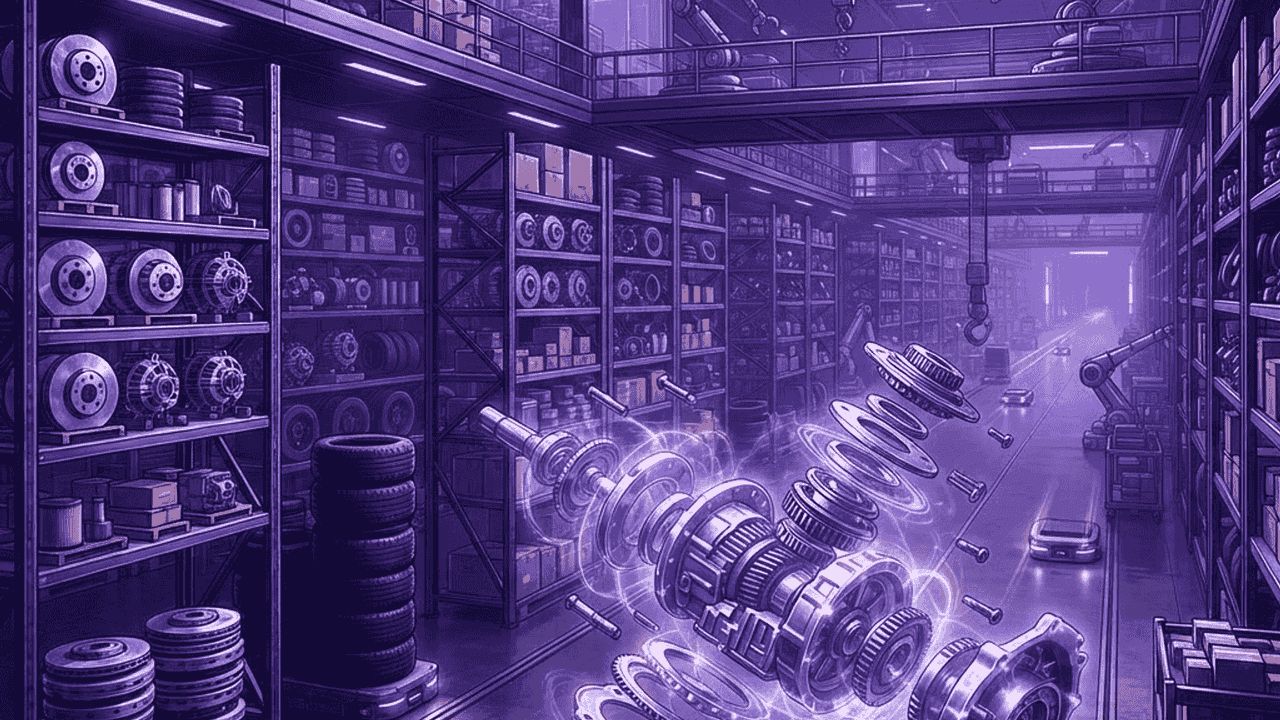
Parts Supply in a City That Runs Hard on Its Vehicles
Vehicles in Hudson County live a difficult life. Stop-and-go traffic, potholed streets, winter salt, tight parallel parking and constant short trips wear out suspension components, brakes, exhaust systems and body panels far faster than highway driving does. Add the region's commercial fleets, from delivery vans and contractor trucks to rideshare vehicles running enormous annual mileage, and the result is exceptionally high parts consumption. That demand supports a dense wholesale network, and the shops that succeed here are the ones with supply relationships good enough to get a part in hand within hours rather than days, because a car occupying a lift while waiting for a part is pure lost revenue.
Understanding Part Quality Tiers
The most important knowledge for any shop or fleet manager is the difference between part tiers, because wholesalers price across all of them and the cheapest quote is rarely comparable. Original equipment parts come from the vehicle manufacturer's channel with matching specifications and warranty. Original equipment supplier parts are made by the same manufacturers that supply the automaker, often identical hardware in different packaging, and typically offer the best value. Quality aftermarket parts from established brands meet or exceed original specifications and frequently improve on known weak points. Economy aftermarket parts vary widely and can be appropriate for older vehicles or low-stress applications but cause comebacks when used on critical systems. Remanufactured parts, common for alternators, starters, calipers and transmissions, range from excellent to poor depending on the remanufacturer's process. Used and recycled parts serve collision and older-vehicle repair economically. Communicating clearly with a wholesaler about which tier you want prevents the majority of parts disputes.
Ten Auto Parts Wholesalers Serving Jersey City
Hudson Auto Parts Distribution is a broad-line wholesaler carrying brake, suspension, steering, engine and electrical components with multiple daily delivery runs to shops across the county.
Liberty OEM Parts Supply focuses on original equipment and original equipment supplier components for import and domestic vehicles, favored by shops doing warranty-sensitive or newer-vehicle work.
Palisade Collision Parts serves body shops with sheet metal, bumpers, lighting, glass and refinish materials, coordinating with estimating systems that collision work depends on.
Newport Fleet Parts Group supplies commercial fleets and truck operators with heavy-duty brake, driveline and electrical components plus preventive maintenance consumables in volume.
Bergen Remanufactured Components specializes in rebuilt alternators, starters, calipers, steering racks and drivetrain assemblies with documented rebuild processes and core exchange programs.
Grove Street Tire & Wheel Wholesale distributes tires, wheels and related hardware, a high-turn category where local inventory depth prevents lost sales during seasonal demand spikes.
Harborside Import Specialists concentrates on European and Asian vehicle parts, an area requiring deeper catalog expertise because variant and build-date differences are frequent and expensive to get wrong.
Marion Street Auto Electrical supplies batteries, sensors, modules, wiring and diagnostic-related components, a segment that has grown substantially as vehicles have become more electronically complex.
Journal Square Recycled Auto Parts operates in the used and recycled channel, supplying tested assemblies and body components for older vehicles and insurance-limited repairs.
Hackensack Shop Supplies & Chemicals completes the list with fluids, lubricants, abrasives, adhesives, shop consumables and equipment that keep repair operations running day to day.
Fill Rate Matters More Than Price
Experienced service managers evaluate suppliers on first-call fill rate above almost anything else. A wholesaler quoting three percent lower who has the part sixty percent of the time is far more expensive in practice than a slightly pricier supplier who has it ninety percent of the time, because every miss means a second call, a delayed repair, a vehicle occupying a bay and often a frustrated customer. Track fill rate deliberately rather than by impression. Also track delivery speed and accuracy, since receiving the wrong part is worse than receiving nothing, as it consumes technician time before the error is discovered.
Return Policies and Core Charges
Returns are unavoidable in this business. Diagnoses change, parts arrive with wrong connectors, and electrical components are frequently ordered on suspicion. Understand before establishing an account whether electrical parts are returnable, what restocking fees apply, how long the return window runs and whether special-order items are excluded. Core charge handling deserves equal attention: confirm how quickly core credits are issued, what condition standards apply and whether unreturned cores are tracked clearly, because unresolved core balances quietly accumulate into significant amounts. On warranty, ask specifically whether labor is covered on a failed part, since parts-only warranties leave the shop absorbing the redo cost.
Trends Reshaping Parts Wholesale
Vehicle electrification is gradually shifting demand away from engine and exhaust components toward high-voltage service equipment, cooling systems, tires and suspension, which wear faster on heavier vehicles. Advanced driver assistance systems have created a calibration requirement after many routine repairs, meaning parts suppliers increasingly need to advise on calibration implications of a windshield or bumper replacement. Cataloging accuracy has become a competitive differentiator as the number of variants per platform has grown. And digital ordering integrated with shop management systems has become expected, allowing technicians to confirm availability without a phone call while looking at the vehicle.
Choosing the Right Suppliers
Most successful shops in Jersey City run two or three primary wholesalers plus specialists. That structure protects fill rate, creates pricing tension and ensures coverage across vehicle mix. Establish written terms on returns, cores and warranty labor before volume grows. Measure fill rate and delivery accuracy monthly. Be explicit about quality tier on every order rather than assuming your supplier remembers. And value the counter staff who catch a wrong order before it ships, since that person saves more money over a year than any discount negotiation.