
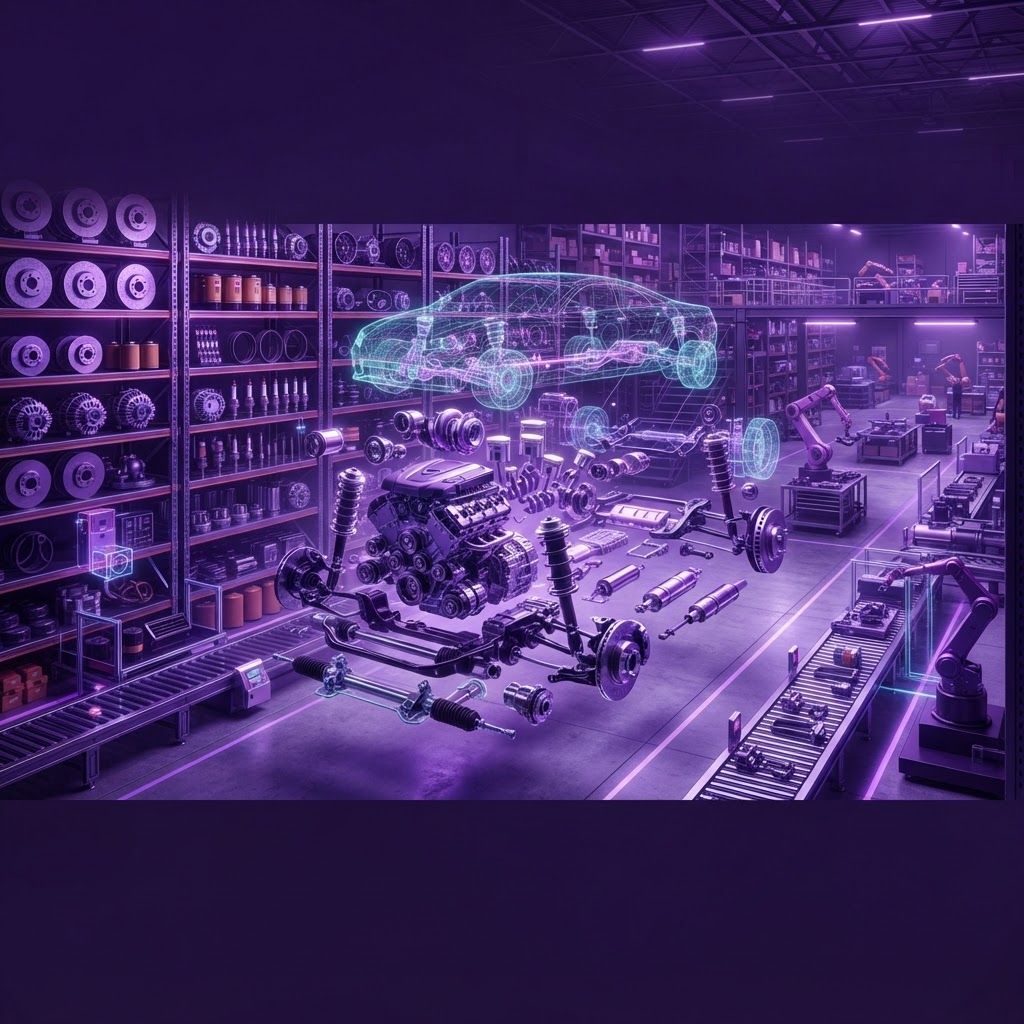
Auto parts distribution is a business measured in minutes. A vehicle on a lift with the wrong part on the counter is lost revenue for the shop and a broken promise to the customer, which is why Huntsville repair shops judge suppliers primarily on delivery speed and first time fill accuracy. The local market is well supplied: national parts chains with commercial programs, dealership wholesale parts departments, heavy duty and fleet distributors, specialty performance suppliers, and salvage yards all operate across Madison County, serving everything from independent garages to municipal fleets to the region's growing automotive manufacturing operations.
Understanding the Parts Supply Landscape
The channels differ in meaningful ways. Aftermarket program distributors and national chains stock broad coverage with multiple quality tiers and run commercial delivery routes. Dealership wholesale departments supply genuine OEM parts with exact fitment and factory warranty. Heavy duty and truck parts distributors serve class 6 through 8 vehicles, trailers, and equipment. Specialty and performance suppliers handle enthusiast, racing, and off road components. Salvage and recycled parts yards provide used assemblies and body panels at large discounts. Paint and body supply distributors cover refinish materials, abrasives, and shop consumables. Tire distributors run their own programs and delivery networks. Finally, tool and equipment dealers supply lifts, diagnostics, and shop equipment.
Professional shops typically maintain accounts with several suppliers at once and route each job to whichever source can deliver the correct part fastest at an acceptable quality tier.
Top 10 Best Auto Parts Wholesalers in Huntsville
1. National Chain Commercial Parts Programs
The large parts retailers operate professional commercial programs with tiered pricing, multiple daily delivery runs, electronic cataloging that integrates with shop management systems, and hub inventory access for less common items. Their strength is breadth and speed. Negotiate your pricing tier honestly against your actual monthly volume and audit invoices periodically.
2. Dealership Wholesale Parts Departments
Franchise dealers sell OEM parts to independent shops at wholesale, often with delivery. For electronics, sensors, body panels, and anything where fitment tolerance is tight, genuine parts eliminate the guesswork and comeback risk. Build a relationship with the wholesale parts manager, because expedited access on a stranded vehicle is worth more than a discount.
3. Independent Jobber Stores and Program Groups
Independent jobbers affiliated with national program groups combine local ownership and counter expertise with access to national inventory networks. Experienced counter staff who know which brand of a given component actually holds up is a real and underrated asset.
4. Heavy Duty and Commercial Truck Parts Distributors
Fleets, contractors, and municipal operations need brake systems, air components, filtration, drivetrain parts, and trailer hardware for medium and heavy duty vehicles. Downtime cost is far higher in this segment, so evaluate suppliers on emergency availability and whether they stock locally versus ordering from a regional warehouse.
5. Salvage Yards and Recycled Parts Suppliers
Recycled parts dramatically reduce repair cost on older vehicles and insurance jobs, especially for body panels, assemblies, engines, and transmissions. The best yards inventory electronically, grade parts consistently, provide warranties, and deliver. Confirm interchange and mileage documentation on drivetrain components.
6. Paint, Body, and Refinish Supply Distributors
Collision shops depend on distributors for paint systems, primers, clears, abrasives, masking, and safety equipment, plus color matching support and technical training. Because refinish is highly systematized by brand, the distributor relationship effectively locks in a process, so evaluate technical support seriously.
7. Tire Wholesalers and Distribution Programs
Tire distributors offer next day delivery, broad brand coverage, and program pricing to dealers and independent shops. Evaluate fill rate on popular sizes and how the supplier handles road hazard and adjustment claims, since claim friction consumes shop labor.
8. Performance and Off Road Parts Suppliers
North Alabama has a strong enthusiast community, and suppliers of suspension, exhaust, tuning, lighting, and off road accessories serve both retail customers and installing shops. Technical knowledge and access to fitment data separate real suppliers from drop shippers.
9. Automotive Tool and Shop Equipment Dealers
Lifts, alignment machines, tire changers, air systems, diagnostic scan tools, and ADAS calibration equipment come through dealers who also handle installation, certification, and service. As vehicles add driver assistance systems, calibration capability has become a genuine competitive requirement for repair shops.
10. Electrical, Battery, and Specialty Component Distributors
Batteries, alternators, starters, wiring, connectors, and increasingly hybrid and EV service components form a growing specialty. As electrified vehicles reach the independent repair market, suppliers who stock high voltage service parts and safety equipment will matter more each year.
How to Choose the Right Parts Supplier
Optimize for first time fill, not list price. A part that arrives correct on the first delivery preserves billable hours, while a cheap wrong part costs a bay for half a day. Track fill rate and delivery time by supplier for a month and the right primary source usually becomes obvious.
Match quality tier to the job. Economy line components can be appropriate on an older vehicle a customer plans to sell, and completely wrong on a daily driver under warranty. Understand each supplier's tiers, brands, and warranty terms, and document what you installed so a comeback is straightforward.
Treat systems and returns as part of the deal. Electronic catalog integration with your shop management software, accurate VIN based lookup, easy core and warranty returns, and clean statements reduce administrative labor substantially. Finally, maintain at least two accounts capable of covering your common work, because delivery routes fail and hub inventory runs out at the worst possible time.
Conclusion
Huntsville shops can reach national chain commercial programs, OEM dealership wholesale, heavy duty specialists, salvage inventory, and refinish distribution within the same day. Choose a primary on first time fill and delivery speed, keep a strong OEM relationship for precision fitment, and always have a backup route for the parts that keep bays moving.