
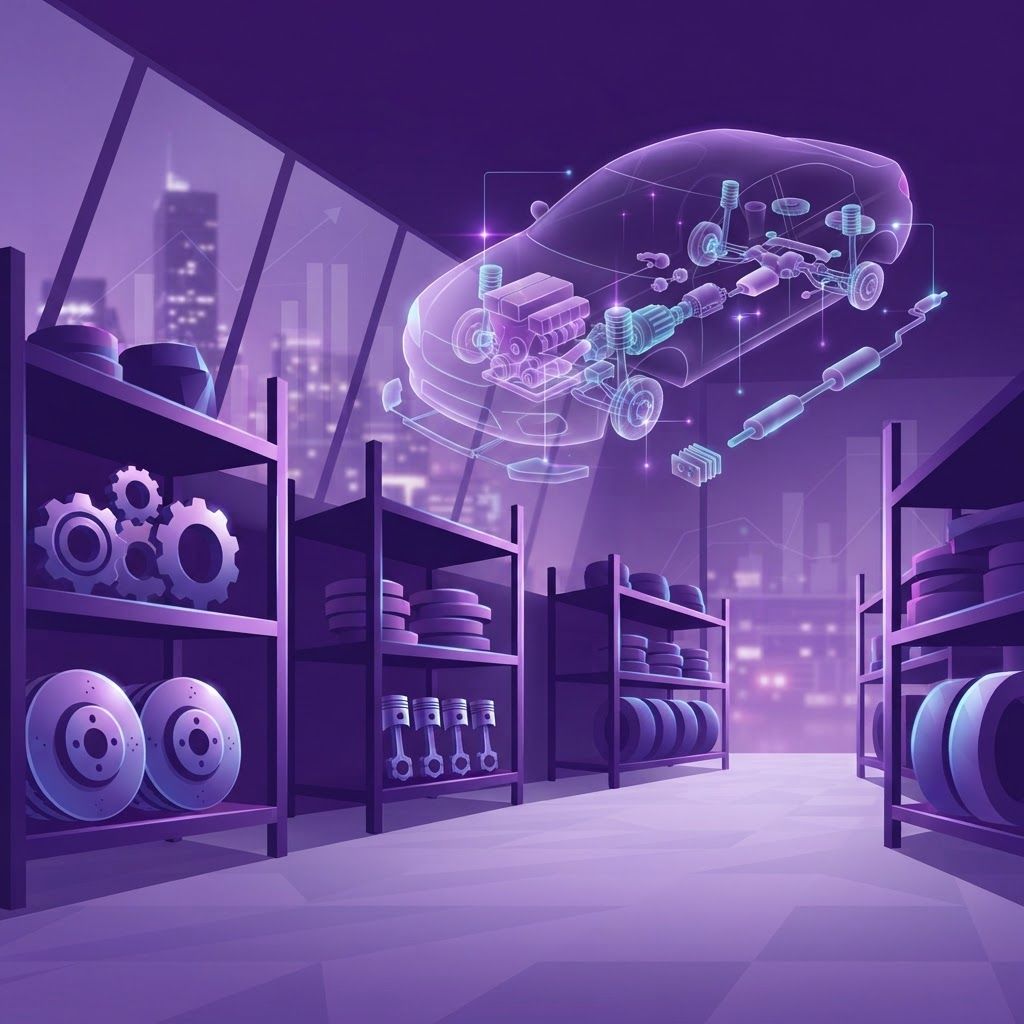
Why Parts Distribution Matters in North Texas
North Texas is a driving region, and Frisco is no exception. Long commutes, extreme summer heat, hail events, and rapid vehicle population growth all create steady demand for maintenance and repair. Behind every independent repair shop, dealership service drive, collision center, and municipal fleet garage in the city sits a parts supply chain measured in hours rather than days.
That urgency defines the business. A vehicle waiting on a part occupies a bay, delays a customer, and ties up capital. The best wholesalers in Frisco compete primarily on availability and delivery speed, then on part quality, warranty administration, and technical support. Price matters, but a cheap part that arrives tomorrow is often more expensive than a correct part that arrives in ninety minutes.
Types of Auto Parts Wholesalers
Full-line jobbers stock a wide range of maintenance and repair parts for most makes, serving independent shops with multiple daily deliveries. OEM dealer parts departments supply original equipment components, which matter for late-model vehicles, electronics, and warranty-sensitive repairs. Collision parts distributors handle sheet metal, bumpers, lighting, and trim, and work closely with insurance estimating standards. Heavy-duty and fleet suppliers serve trucks, trailers, and commercial equipment. Specialty and performance distributors focus on aftermarket upgrades. Finally, recyclers and used parts operations supply tested pre-owned assemblies, often the most practical option for older vehicles.
The Top 10 Auto Parts Wholesalers in Frisco
1. Frisco Auto Parts Wholesale Center. A full-line jobber with multiple daily delivery runs to local shops. Strengths include deep local stock on brakes, filtration, suspension, and ignition components, plus a counter staff capable of correctly identifying parts from a VIN rather than guessing from a year and model.
2. Legacy OEM Parts Distribution. Supplies original equipment components across several vehicle brands, with electronic parts catalogs and VIN-based lookup. For modules, sensors, and body electronics where aftermarket fitment is unreliable, their accuracy prevents repeat repairs.
3. North Texas Collision Parts Supply. Serves body shops with bumpers, fenders, hoods, grilles, lighting, and trim in OEM, certified aftermarket, and recycled grades. Their familiarity with insurer estimating conventions helps shops document part choices and avoid supplement delays.
4. Panther Creek Fleet and Heavy Duty Parts. Focused on commercial trucks, trailers, and work vehicles, including brake systems, air components, lighting, and filtration. Downtime costs fleets real revenue, so their emphasis is on stocking depth for common failure items and rapid dispatch.
5. Stonebriar Import Vehicle Parts. Specializes in European and Asian import components where fitment variation is high and quality tiers matter. Their guidance on which aftermarket brands perform acceptably and which should be avoided saves shops from comebacks.
6. Preston Battery, Electrical and Lighting Supply. Concentrates on batteries, alternators, starters, wiring, and lighting. Texas heat is brutal on batteries, and their testing support and warranty exchange process are structured for the volume this market produces in summer.
7. Collin County Tire and Wheel Wholesale. Distributes tires, wheels, TPMS sensors, and balancing supplies to shops and dealers. Broad size availability and quick fills matter because tire jobs are usually same-day, walk-in work rather than scheduled repairs.
8. Trinity Shop Equipment and Tool Distributors. Supplies lifts, diagnostic scan tools, alignment equipment, air systems, and hand tools, along with installation and calibration support. Modern ADAS calibration requirements have made equipment selection a strategic decision for shops rather than a simple purchase.
9. Frisco Fluids and Chemicals Wholesale. Provides engine oil, transmission fluid, coolant, brake fluid, additives, cleaners, and shop supplies in bulk. Bulk delivery and dispensing equipment reduce per-unit cost and waste for high-volume service operations.
10. Frisco Recycled Auto Parts Exchange. Supplies tested used assemblies such as engines, transmissions, doors, and modules with documented mileage and warranty terms. For older vehicles where new part cost exceeds vehicle value, recycled parts often make a repair economically viable.
How to Evaluate Part Quality
Understand the quality tiers. Original equipment parts match factory specification. Original equipment supplier parts are made by the same manufacturer without brand packaging and often deliver equivalent quality at lower cost. Premium aftermarket brands can meet or exceed OE in specific categories such as brakes and filtration. Economy aftermarket parts vary widely and are best limited to non-critical applications. Recycled OE parts offer factory fitment with the uncertainty of prior use.
Match the tier to the application. Safety-critical systems, electronic modules, and emissions components deserve OE or top-tier equivalents. Cosmetic trim, older vehicles, and low-mileage-remaining applications tolerate value tiers. Track comeback rates by brand and category; a part that fails twice destroys the margin on the original job and damages customer trust far more than the price difference ever saved.
How to Evaluate a Wholesaler
Delivery frequency is the first metric. Ask how many daily runs serve your location, cutoff times, and typical response on a hot-shot request. Then examine inventory accuracy: a system that shows stock which is not actually on the shelf costs a shop more than a system that honestly shows zero.
Look closely at returns and warranty administration. Core charges, restocking fees, electrical part return policies, and labor claim support vary enormously. A supplier who covers diagnostic labor on a defective part is significantly more valuable than one who only replaces the component. Confirm how long warranty claims take to process.
Evaluate cataloging and technical support. Accurate VIN-based lookup, access to fitment notes, and counter staff who understand systems rather than just part numbers reduce wrong-part orders, which are the largest hidden cost in parts purchasing. Finally, review pricing structure, credit terms, and whether volume commitments earn better matrix pricing.
Trends Shaping the Parts Industry
Vehicle complexity is the dominant trend. Advanced driver assistance systems require calibration after seemingly routine repairs, which changes both parts selection and equipment needs. Electrification is growing steadily, shifting demand away from some traditional maintenance categories while creating new ones around thermal management, high-voltage service, and specialized tooling.
Right-to-repair and data access continue to influence what independent shops can service. Parts proliferation is accelerating, with more platforms and variants making inventory decisions harder and raising the value of suppliers with strong local stocking. Supply chain resilience remains a priority after years of disruption, and remanufacturing is growing as both a cost and sustainability strategy.
Practical Purchasing Advice
Order by VIN whenever possible. Verify the part visually against the removed component before installation. Keep a small stock of high-turn maintenance items to reduce delivery dependency. Consolidate spend enough to earn priority service, but maintain a qualified second source for critical categories. Track comebacks and delivery performance by supplier, and review the data quarterly rather than relying on impressions. Document warranty claims immediately with invoices and mileage, because incomplete records are the usual reason claims get denied.
Final Thoughts
Frisco's auto parts wholesalers span full-line jobbers, OEM dealer networks, collision specialists, fleet suppliers, tire distributors, equipment dealers, and recyclers. The shops that operate most profitably choose suppliers based on delivery reliability, catalog accuracy, and warranty support, then apply the right quality tier to each repair. Speed and correctness, not the lowest invoice, are what keep bays turning and customers returning.