
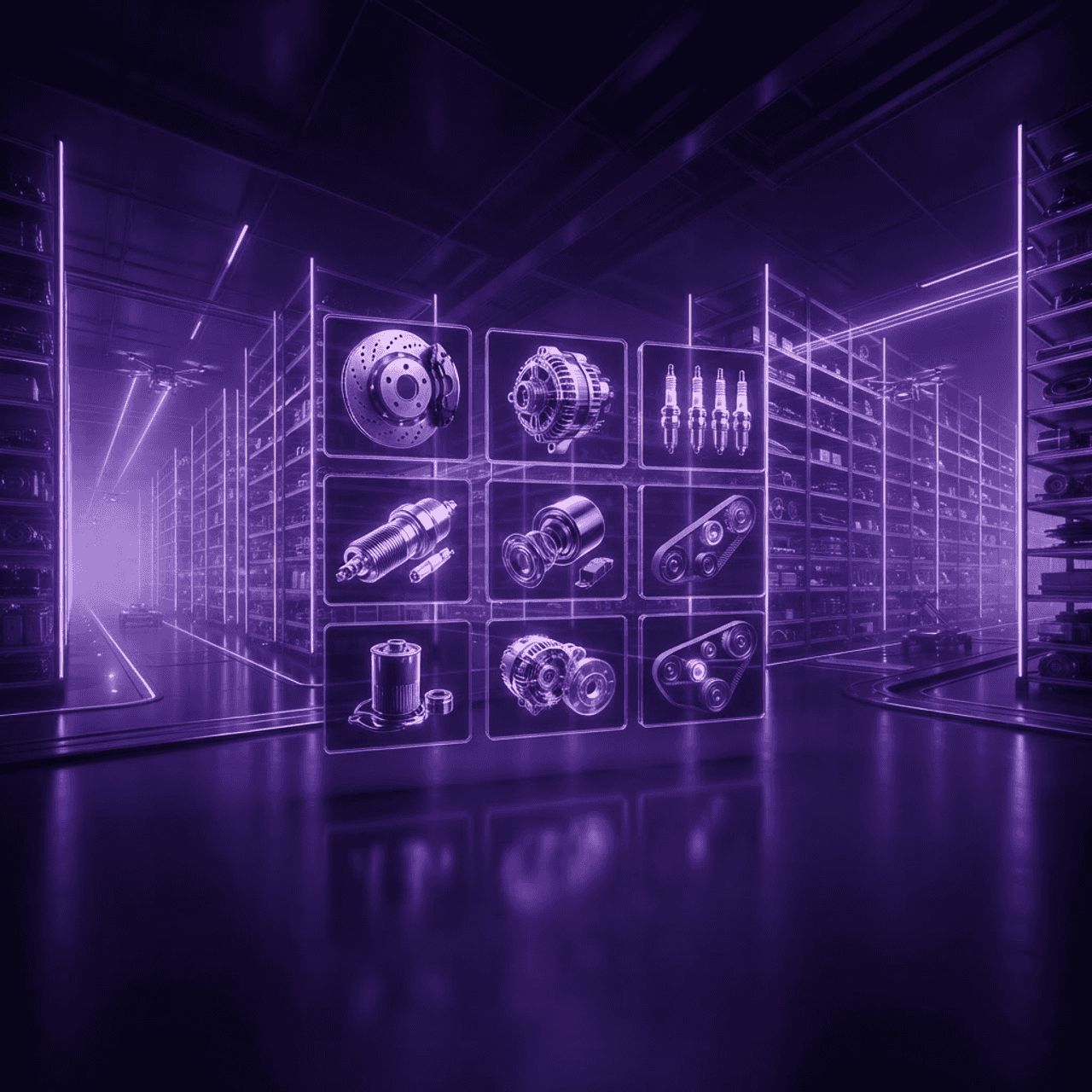
Why Parts Sourcing Matters
The difference between a two-hundred-dollar repair and a six-hundred-dollar one is often the part, not the labor. Fort Wayne's industrial history means the local parts ecosystem is deeper than the city's population would predict, with professional distributors serving repair shops, retail chains serving do-it-yourself customers, salvage operations serving budget and older-vehicle repairs, and specialty suppliers serving performance, diesel, and heavy-duty needs.
Knowing which channel to use for a given part is a practical skill. Buying an alternator from the wrong source costs either money or reliability, and sometimes both.
Ten Auto Parts Sources in Fort Wayne
1. NAPA Auto Parts
NAPA operates in the space between retail and professional supply, with parts quality that skews toward what repair shops actually install and counter staff who typically know their catalog. For components where quality determines longevity, such as water pumps, hub assemblies, and electrical parts, NAPA is a reliable default.
2. O'Reilly Auto Parts
O'Reilly combines broad retail availability with a strong professional program, useful loaner tool programs, and free testing for batteries, alternators, and starters. The tool loaner service alone makes many do-it-yourself repairs feasible without buying specialty tools.
3. AutoZone
AutoZone offers extensive retail locations, a substantial house brand lineup at multiple price tiers, free diagnostic code reading, and a lifetime warranty on many components. The tiered brand strategy is worth understanding, since the cheapest option and the premium option often differ substantially in service life.
4. Advance Auto Parts and Carquest
Advance Auto Parts and its Carquest professional channel serve both retail and commercial customers, with strong online ordering and in-store pickup and frequently aggressive promotional pricing. Comparing prices across the major chains on the same part number regularly reveals differences of thirty percent or more.
5. Dealership parts departments
Original equipment parts from dealership parts counters cost more but guarantee correct fit and specification, which matters critically for sensors, electronic modules, body panels, gaskets on precision assemblies, and anything where aftermarket tolerance variation causes problems. Many dealership parts departments also discount for repeat customers and shops.
6. Professional-only distributors
Distributors serving repair shops exclusively stock deeper inventory and higher-grade parts than retail channels, with same-day delivery to shops. Consumers cannot generally buy here directly, which is one reason a good independent shop's parts markup is often justified by better component quality than a retail customer could source.
7. Salvage yards and auto recyclers
Salvage operations around Allen County provide used original equipment parts at a fraction of new prices, which is often the only economically rational choice for body panels, mirrors, interior trim, seats, wheels, and assemblies on older vehicles. Many yards now maintain searchable computerized inventory and network with other yards regionally, and used original parts frequently outlast cheap aftermarket replacements.
8. Heavy-duty and diesel parts suppliers
Given the region's trucking, agricultural, and industrial activity, suppliers specializing in heavy-duty truck, trailer, and diesel engine components are well represented. Fleet operators, farmers, and diesel pickup owners find both parts and technical knowledge here that general retailers cannot provide.
9. Performance and specialty suppliers
Speed shops and performance retailers supply suspension, exhaust, forced induction, tuning, and drivetrain upgrades, along with the specific knowledge to make combinations work. Fort Wayne's active enthusiast and racing community supports these businesses, and their advice frequently prevents expensive incompatibilities.
10. Online retailers and marketplaces
Online parts retailers offer the lowest prices and the widest selection, particularly for maintenance items, filters, brake components, and parts for uncommon vehicles. The tradeoffs are shipping time, return complexity, and the risk of counterfeit or misrepresented components on open marketplaces. For a planned repair, online works well; for a vehicle down in a driveway, local availability wins.
How to Buy Parts Intelligently
Get the vehicle identification number right. Many components vary by production date, trim, engine, and market, and the VIN resolves ambiguity that year, make, and model alone cannot. Parts counters can look up exact applications with it.
Understand the quality tiers. Original equipment parts come from the manufacturer's supplier, original equipment equivalent parts often come from the same factory without branding, quality aftermarket parts meet or exceed specification, and economy aftermarket parts do not. For safety systems, sensors, and anything labor-intensive to replace, buy the higher tier, since paying twice for labor eliminates any savings.
Compare total cost including core charges and warranty. Rebuilt alternators, starters, and calipers carry core charges refunded when the old unit is returned. Lifetime warranties on wear items such as brake pads have real value for long-term vehicle owners.
Use free services. Battery testing, alternator and starter bench testing, code reading, and tool loaner programs at the major chains eliminate guesswork and reduce the number of parts replaced unnecessarily, which is the most common do-it-yourself mistake.
Buy salvage strategically. Used original equipment is excellent for body, interior, glass, and mechanical assemblies with low failure rates, and poor for wear items, seals, and anything with limited service life. Ask about the donor vehicle's mileage and whether the yard offers any warranty.
Final Thoughts
NAPA, O'Reilly, AutoZone, and Advance Auto Parts cover retail needs with useful free services and tool programs, dealership parts counters are correct for sensors, electronics, and precision fit, salvage yards deliver enormous savings on body and assembly parts, and heavy-duty, diesel, and performance specialists serve needs generalists cannot. Match the part quality tier to the labor cost and safety significance of the job, get the VIN right, and use the free testing services before buying anything.