
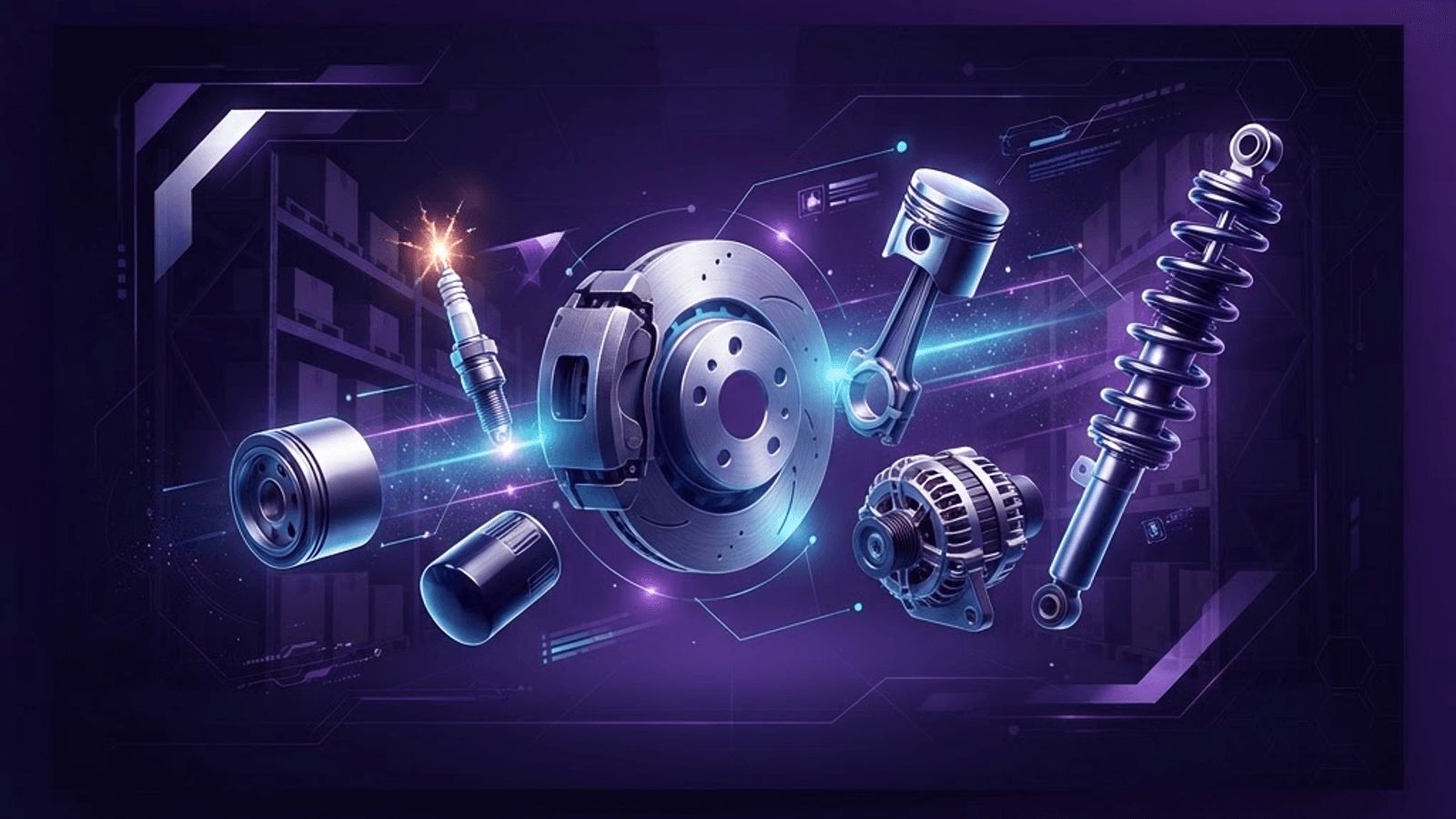
A Deep Parts Market in a Vehicle-Dependent Region
Central Iowa's combination of long commuting distances, harsh winters, agricultural equipment, a substantial diesel truck population, and an active enthusiast and restoration community supports an unusually well-developed auto parts market. The metro carries national retail chains, dealership parts counters, professional distributors serving repair shops, salvage yards with statewide inventory networks, and specialty suppliers for performance, diesel, and classic vehicles.
For consumers, this depth means most common parts are available same day. For professionals and hobbyists, it means unusual components can often be sourced within the state rather than waiting on shipping. Understanding which supplier fits which situation saves both money and time.
Ten Sources for Auto Parts in Central Iowa
1. NAPA Auto Parts maintains a strong presence across the metro and is widely used by professional repair shops. Its inventory depth on less common parts and its reputation for quality on core components make it a reliable default when correctness matters more than lowest price.
2. O'Reilly Auto Parts operates numerous locations throughout the Des Moines area, with strong same-day availability and a well-developed loaner tool program that lets do-it-yourself customers borrow specialty tools rather than buy them. Free battery and alternator testing is genuinely useful during Iowa winters.
3. AutoZone competes closely with comparable coverage, free diagnostic code reading, and a strong warranty program on many parts. For common maintenance items and emergency replacements, its store density means one is usually nearby.
4. Advance Auto Parts rounds out the national retail category with competitive pricing and frequent promotions. Comparing prices across the three national chains before a significant purchase is worthwhile because pricing on identical parts varies more than most customers expect.
5. Dealership parts departments across the metro supply original equipment components. These are the correct choice for electronic modules, sensors calibrated to a specific vehicle, body panels requiring exact fit, and safety-critical components where aftermarket quality varies. Many dealership parts counters will match online pricing if asked, which surprises most customers.
6. Salvage and recycling yards around central Iowa are among the most underused resources available. For body panels, interior trim, mirrors, seats, wheels, and mechanical assemblies on older vehicles, used original parts cost a fraction of new and fit properly. Iowa yards participate in inventory networks that allow searching across many locations at once.
7. Diesel and heavy-duty parts specialists serve the significant population of diesel pickups and agricultural equipment in the region. Injection components, turbochargers, emissions parts, and heavy-duty filtration require suppliers with genuine technical knowledge rather than a catalog lookup.
8. Performance and enthusiast parts retailers support the metro's modification and motorsport community, supplying suspension, exhaust, forced induction, and tuning components. Local suppliers in this space typically offer installation advice that online ordering cannot.
9. Classic and restoration parts suppliers serve Iowa's substantial collector car community. Reproduction sheet metal, trim, weatherstripping, and period-correct components for popular American classics are widely available, and local suppliers often know which reproduction manufacturers produce acceptable quality.
10. Online retailers including RockAuto and manufacturer parts sites offer the widest catalogs and often the lowest prices, at the cost of shipping time and the risk of ordering the wrong component. For planned repairs where the vehicle can wait, online ordering frequently saves substantial money.
Choosing Between Part Types
Four categories of parts exist, and choosing correctly is the largest determinant of both cost and outcome.
Original equipment parts come from the vehicle manufacturer and guarantee correct fit and specification. They cost the most and are the right choice for electronics, safety systems, and anything where fitment tolerance is tight.
Aftermarket parts are made by independent manufacturers and range from superior to the original to considerably worse. Reputable aftermarket brands frequently improve on known original equipment weaknesses, particularly in braking and suspension. The critical discipline is buying recognized brands rather than the cheapest listing.
Remanufactured parts are used components rebuilt to specification, common for alternators, starters, transmissions, and engines. They typically cost substantially less than new with comparable warranty, and for many repairs they represent the best value available.
Used and salvage parts make sense for body components, interior parts, and mechanical assemblies on vehicles where the cost of new parts exceeds the vehicle's value. The risk is unknown remaining life, so they are best suited to components that fail visibly rather than suddenly.
Getting the Right Part the First Time
Most parts returns result from ordering errors that are easy to avoid. Always use the vehicle identification number rather than year, make, and model alone, because mid-year production changes are common and the identification number captures them. Bring the old part to the counter when possible for direct comparison. Note engine size, drivetrain configuration, and trim level, all of which affect fitment. And check whether the part requires programming or calibration after installation, which is increasingly common on modern vehicles and can turn an inexpensive part into an expensive job.
Iowa-Specific Parts Considerations
Road salt drives predictable demand patterns in this market. Brake lines, fuel lines, exhaust components, and suspension hardware corrode faster here than in dry climates, and coated or stainless replacements are worth the premium because they may be the last time you replace that component. Batteries fail disproportionately in deep cold, so buying a battery with a higher cold cranking amperage rating than the minimum specification is sensible in Iowa. Winter tires and wiper blades sell out during the first significant storm each year, which makes buying in early autumn both cheaper and more reliable.
Trends in the Parts Business
Electronic complexity continues to grow, meaning more parts require programming and fewer are true bolt-in replacements. Electric vehicle components are entering the aftermarket slowly, and battery and high-voltage service remains largely dealer-controlled. Supply chains have stabilized after several difficult years, though certain semiconductors and modules still carry extended lead times. And online price transparency has compressed margins throughout the industry, which benefits consumers who compare before buying.
Buying Smart
Match the part category to the job: original equipment for electronics and safety, quality aftermarket for wear items, remanufactured for major assemblies, and salvage for body and trim. Compare prices across at least two suppliers, verify fitment with the vehicle identification number, and confirm warranty terms before purchase. Des Moines has enough supply competition that a customer who does this consistently will spend considerably less over the life of a vehicle.