
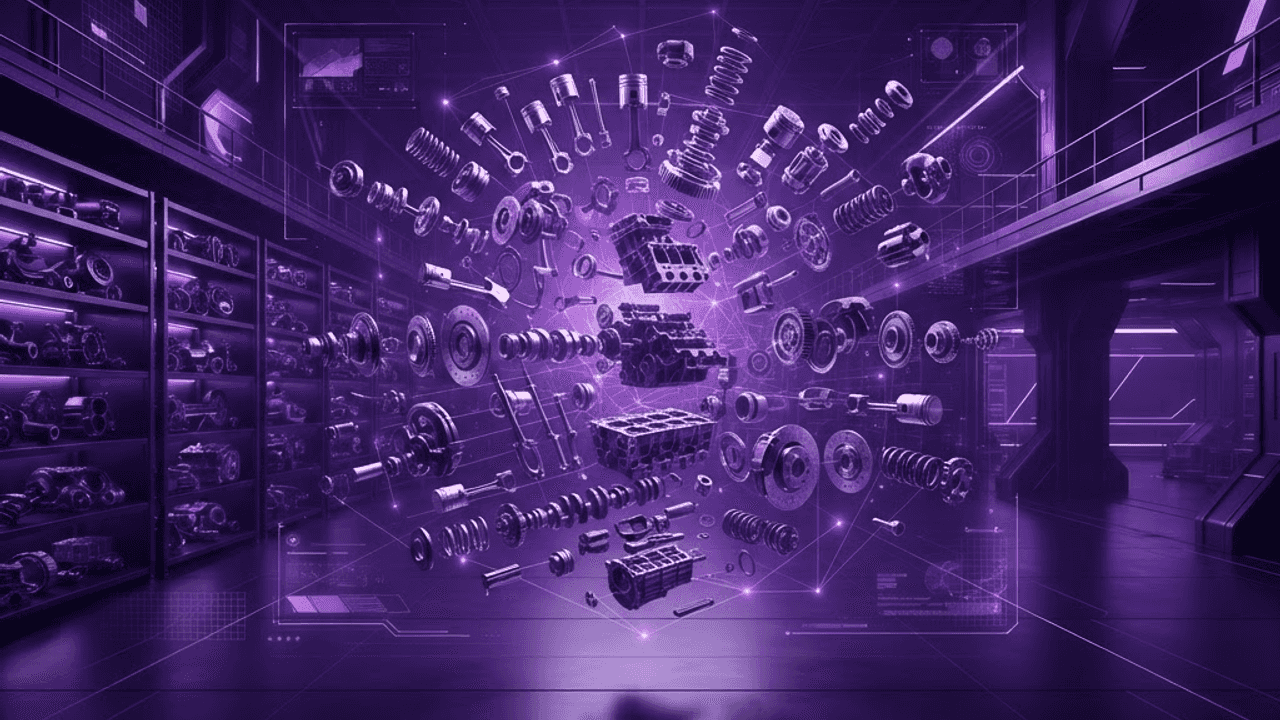
Atlanta's Auto Parts Landscape
Atlanta's position as a major freight and distribution hub in the Southeast gives local drivers and repair professionals unusually good access to automotive parts. Regional warehouses, national retail chains, specialty performance suppliers, salvage yards and dealership parts counters all operate within the metro area, which means same-day availability for a wide range of components. That abundance is an advantage, but it also creates confusion. The same water pump may be available in four quality tiers at four price points, and choosing incorrectly can mean doing the job twice.
Understanding which supplier category fits your situation is the key to buying well. Below are the ten most important types of auto parts sources in Atlanta, what each does best, and how to use them strategically.
1. National Retail Parts Chains
Large retail chains form the most accessible layer of Atlanta's parts market, with locations spread across virtually every neighborhood and suburb. Their strength is immediate availability of common maintenance and repair items: batteries, brake pads and rotors, filters, belts, sensors, fluids, wipers and ignition components. Most offer free services that add real value, including battery and alternator testing, diagnostic trouble code scanning and tool loan programs for jobs requiring specialty equipment. For urgent, common repairs, these stores are usually the fastest path to getting a vehicle back on the road.
2. Professional-Grade Distributors
Distributors that primarily serve repair shops rather than walk-in consumers stock higher-tier components and deeper catalog coverage. These suppliers are where independent Atlanta shops source parts multiple times per day, and many operate delivery fleets with hourly runs across the metro area. The quality advantage is meaningful: professional lines often include original equipment or original-equipment-equivalent components with better metallurgy, longer warranties and tighter tolerances than economy retail alternatives.
3. Dealership Parts Departments
For genuine original equipment components, dealership parts counters remain the definitive source. This matters most for body panels, trim and clips, electronic modules, wiring harnesses, sensors tied to specific software calibrations, and any part where fitment must be exact. Dealership parts cost more, but for complex electronics and safety-related components, the certainty of correct fitment and manufacturer warranty coverage justifies the premium. Many Atlanta dealership parts departments also offer wholesale pricing to repair shops and knowledgeable lookup by vehicle identification number, which eliminates guesswork on mid-year production changes.
4. Salvage Yards and Used Parts Suppliers
Atlanta's salvage and recycling network is extensive and provides substantial savings on components that do not wear out in normal service. Doors, fenders, hoods, mirrors, seats, interior trim, wheels, headlight assemblies and engine accessories are all common used-part purchases. Modern yards maintain computerized inventory searchable by year, make, model and part number, and many participate in regional networks that can locate a part at another facility within a day. Used parts are the most cost-effective route for older vehicles where new original equipment pricing exceeds the vehicle's value.
5. Performance and Aftermarket Specialists
Atlanta has a strong performance culture, supported by suppliers specializing in forced induction, exhaust systems, suspension upgrades, tuning hardware, brake upgrades and drivetrain components. The best of these businesses provide more than product, they offer application knowledge about which combinations of parts work together and which create reliability problems. For anyone building a modified street car, track vehicle or towing setup, this consultative expertise prevents expensive mismatched purchases.
6. Heavy-Duty and Commercial Truck Parts Suppliers
Given Atlanta's logistics economy, suppliers serving commercial trucks and diesel equipment are an important segment. These businesses stock air brake components, heavy-duty suspension parts, emissions system components, turbochargers, injectors, clutches and driveline parts for medium and heavy trucks. Fleet managers value them for account pricing, parts availability tracking and the ability to reduce vehicle downtime, which is the dominant cost factor in commercial operations.
7. Import and European Parts Specialists
Suppliers focused on European and Asian imports maintain inventory that general retailers rarely carry. This includes brand-specific cooling system components, timing kits, control arms with correct bushing durometer, ignition coils, and electrical connectors. Because these specialists understand the difference between original-equipment-supplier brands and lower-cost imitations, they help owners avoid the common trap of buying a visually identical part that fails within months.
8. Body Shop and Collision Parts Suppliers
Collision parts distribution is its own discipline. Suppliers in this category handle bumper covers, radiator supports, quarter panels, headlamp assemblies, glass and the adhesives, fasteners and refinishing materials needed to complete a repair. Atlanta body shops rely on suppliers who can distinguish between certified aftermarket, reconditioned and original equipment parts, since insurance approvals and manufacturer repair procedures often dictate which category may be used.
9. Tire and Wheel Suppliers
Tires deserve their own category because they are the single most consequential wear item on any vehicle, and Atlanta's mix of high-speed interstate driving, summer heat and heavy rain makes tire selection genuinely important. Dedicated tire and wheel suppliers offer broader size availability, better tread compound guidance for wet-weather performance, road hazard protection programs and services including mounting, balancing, tire pressure monitoring sensor service and alignment referrals.
10. Online and Mail-Order Parts Suppliers
Online suppliers offer the widest catalog breadth and often the lowest prices, particularly for maintenance items purchased in advance of need. Their limitation is time. When a vehicle is immobilized, waiting two days is rarely acceptable. The practical strategy used by experienced Atlanta owners is to buy planned maintenance parts online at a discount while relying on local suppliers for anything urgent or where returning a mis-ordered part quickly matters.
How to Buy the Right Part the First Time
The most common and expensive mistake in parts buying is ordering by year, make and model alone. Mid-year production changes, trim-level variations, different engine or transmission codes and regional emissions configurations all affect fitment. Whenever possible, order using the vehicle identification number or match the part number stamped on the component you are replacing.
Pay attention to quality tiers rather than price alone. Economy parts can be reasonable for a vehicle you plan to sell soon, but for components requiring significant labor to install, such as water pumps, timing components, wheel bearings or anything behind an engine cover, paying for a premium part is almost always cheaper than repeating the job. Always confirm the warranty terms and whether they cover labor, and keep receipts, since many warranties require proof of purchase and installation date.
Trends in the Atlanta Parts Market
Several shifts are reshaping local parts sourcing. Electric and hybrid vehicle adoption is creating demand for high-voltage components, specialized cooling parts and battery service hardware. Advanced driver-assistance systems mean more sensors, cameras and radar units in inventory, many of which require calibration after installation. Digital cataloging with vehicle identification number lookup has dramatically reduced fitment errors, and same-day metro delivery from professional distributors has become the standard expectation for repair shops rather than a premium service.
Final Thoughts
The best auto parts supplier in Atlanta depends entirely on the job in front of you. Retail chains win on convenience and immediate availability, professional distributors on quality and shop-grade selection, dealerships on exact original equipment fitment, salvage yards on value for non-wear components, and specialists on expertise for performance, import, collision and commercial applications. Build relationships with two or three suppliers across these categories, always verify fitment with a vehicle identification number, and invest in quality for labor-intensive repairs. Doing so will save both money and repeated work over the life of your vehicle.