
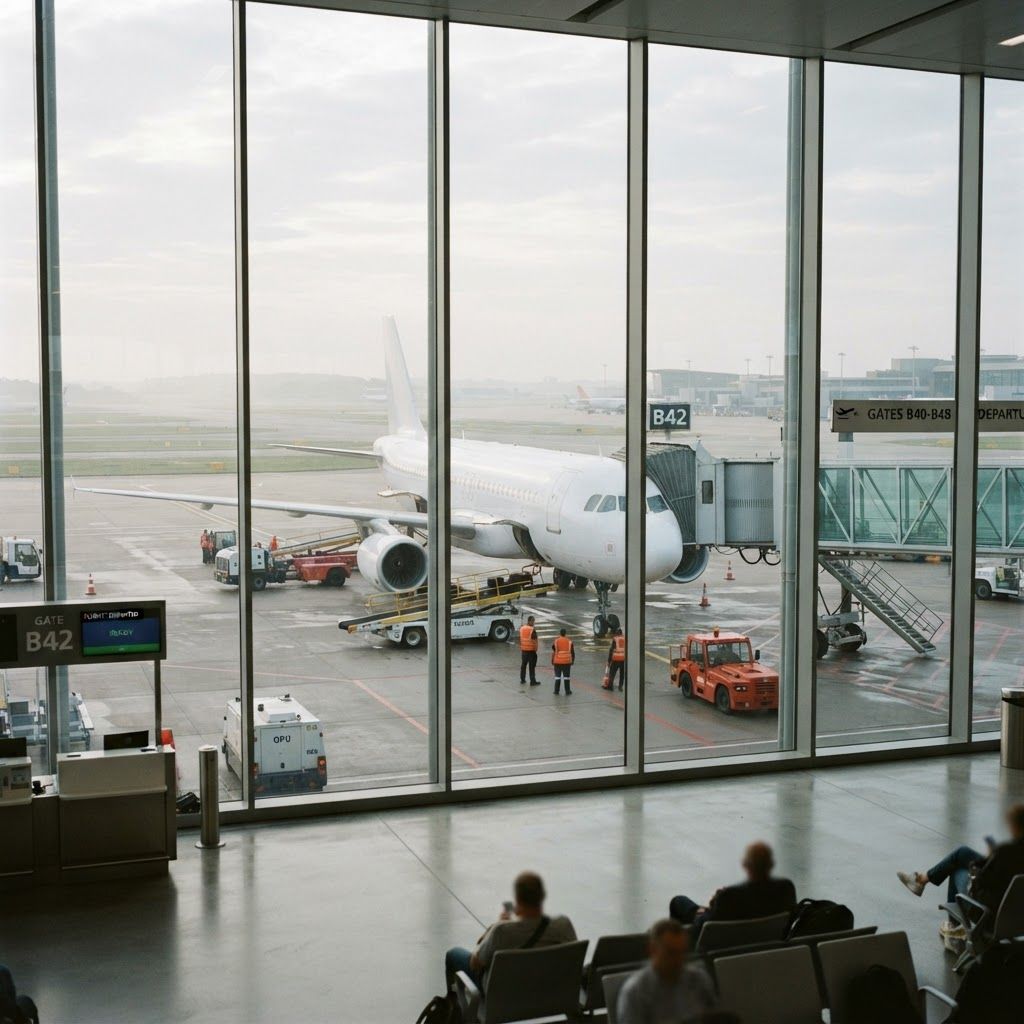
St. Louis Lambert International Airport occupies an interesting position in American aviation. It was once a major hub, and the terminal infrastructure still reflects that scale, but today it functions primarily as a strong origin-and-destination airport serving a metro of roughly two and a half million people. For travelers, this is largely good news. Competition among carriers is real, low-cost airlines have a meaningful presence, security lines are manageable compared with congested hub airports, and parking and access are genuinely convenient. The trade-off is fewer nonstop options to smaller cities and limited international service, which means most long-haul trips route through a connecting hub.
How to Compare Airlines at STL
Route network determines whether you fly nonstop or connect, and it is the single biggest factor in travel time and reliability. Frequency matters nearly as much, because a carrier with four daily departures to a city can rebook you the same day when something goes wrong, while a single daily flight cannot. On-time performance and cancellation rates vary consistently by airline and should inform bookings on time-sensitive trips. Fare structure differs sharply: legacy carriers include a checked bag on some fare classes and offer generous elite programs, while ultra-low-cost carriers unbundle nearly everything. Finally, loyalty program value depends on whether the airline actually serves the destinations you fly repeatedly.
The 10 Best Airlines at St. Louis Lambert International
1. Southwest Airlines
Southwest is the largest carrier at STL by a wide margin, operating an extensive network of nonstop routes across the country. Its two free checked bags, no change fees, and high frequency to major markets make it the default choice for many St. Louis travelers, and the depth of its schedule provides real recovery options during disruptions.
2. Delta Air Lines
Delta offers reliable service from St. Louis to its major hubs, connecting travelers to a strong domestic and international network. It consistently ranks among the best large US carriers for operational reliability, and its premium cabins and airport experience are well regarded.
3. American Airlines
American provides frequent connections through its hubs, giving St. Louis travelers broad access to domestic, Latin American, and transatlantic destinations. Its schedule depth to Dallas and Chicago is particularly useful for business travelers.
4. United Airlines
United connects STL to its hub system with strong access to international routes, especially across the Pacific and Atlantic. Travelers heading to Asia or Europe frequently find United's connections the most efficient option.
5. Alaska Airlines
Alaska serves the West Coast from St. Louis with a well-regarded service culture and a loyalty program that many frequent flyers consider among the most valuable. For travelers heading to Seattle and the Pacific Northwest, it is often the best combination of comfort and price.
6. Frontier Airlines
Frontier operates ultra-low-cost service to a rotating set of leisure destinations. Base fares can be extremely low, but the model requires paying separately for seats, carry-on and checked bags, and changes, so total cost comparison is essential.
7. Allegiant Air
Allegiant focuses on leisure routes, often to destinations underserved by larger carriers, typically with limited weekly frequency. It is excellent value for vacation travel where schedule flexibility exists and inconvenient when it does not.
8. Spirit Airlines
Spirit provides low base fares on select routes with an unbundled product. Travelers who pack light and book seats strategically can achieve very low total costs, while those needing bags and assigned seating often find legacy carriers competitive once fees are added.
9. Air Canada
Air Canada's service linking St. Louis to Toronto provides the metro's most useful international connection point, opening access to a global network and offering an alternative routing for transatlantic travel.
10. Breeze Airways
Breeze has expanded point-to-point service to markets that traditionally required connections, and its growth at midsize airports has been a genuine benefit for St. Louis travelers seeking nonstop options on leisure routes.
Practical Tips for Flying Out of STL
Lambert's two-terminal layout matters, so confirm which terminal your airline uses before arriving, as they are not connected airside and moving between them takes time. Security wait times are generally shorter than at large hubs, but early morning departure banks create predictable peaks. Parking is comparatively inexpensive and close, and the MetroLink light rail connects the airport directly to downtown and the central corridor, which is one of the better transit-to-airport links in the Midwest. For winter travel, book the earliest flight of the day when possible, since delays compound throughout the day. And on trips where arriving on time genuinely matters, choose the carrier with the most daily frequencies to that city rather than the lowest fare.
Trends in St. Louis Air Service
Low-cost and ultra-low-cost carriers have expanded their share of the market, increasing leisure destination options while pushing legacy carriers to compete on price. Nonstop leisure routes have grown, particularly to Florida, the Southwest, and Mountain West. International service remains limited relative to the metro's size, and the region continues to advocate for additional transatlantic options. Meanwhile, airport modernization planning has focused on consolidating and improving terminal facilities, which should gradually improve the passenger experience over the coming years.
Final Thoughts
For most St. Louis travelers, Southwest offers the best combination of network depth and included value, while Delta, American, and United are the right choices for international itineraries and premium travel. Low-cost carriers deliver real savings on leisure trips if you compare total cost honestly, including bags and seats. Choose the airline based on frequency to your destination first, because schedule depth is what protects you when things go wrong.