
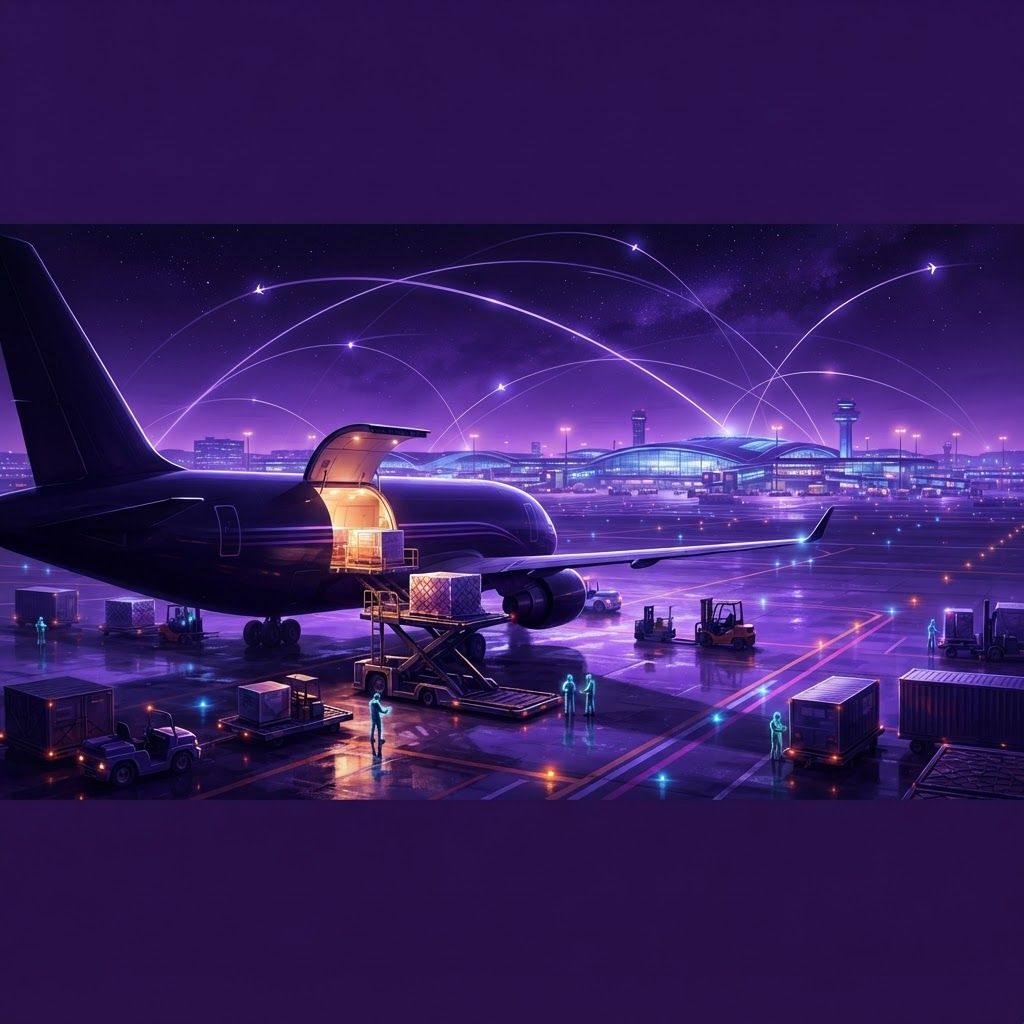
Air Cargo in a Regional Market
Air freight occupies a specific niche in the shipping hierarchy. It is by a wide margin the most expensive mode per pound, and by a wide margin the fastest. That combination means it is rarely the default choice and frequently the correct one, particularly for shipments where the cost of delay exceeds the cost of transport.
In Chattanooga, air cargo demand comes predominantly from four sources. Automotive and industrial manufacturers need emergency production parts to prevent line-down situations. Healthcare organizations move pharmaceuticals, medical devices and laboratory specimens under time and temperature constraints. High-value technology and aerospace components require speed and security. And e-commerce sellers use air networks to meet expedited delivery commitments.
How Air Cargo Actually Moves
Most air freight travels in one of two ways. Belly cargo rides in the cargo holds of passenger aircraft, which is efficient but constrained by the size of regional aircraft serving smaller airports. Dedicated freighter aircraft carry cargo exclusively and operate on their own network schedules, which is what the integrated express carriers use for overnight service.
From a regional airport, the practical reality is that much air cargo begins or ends its journey by truck. Shipments are trucked to a major hub airport where freighter capacity is concentrated, flown, then trucked again at destination. This ground feeder network is invisible to most shippers but determines actual cutoff times and transit reliability.
Understanding this matters for planning. A shipment tendered in Chattanooga at four in the afternoon may need to reach an Atlanta or Memphis hub by a specific hour, and the truck drive is what sets the deadline.
Air Cargo Providers Serving the Region
FedEx Express operates the most extensive overnight and time-definite air network available to the market, with domestic and international express services and strong regional pickup coverage.
UPS Air Cargo provides comparable express air capability with next-day and second-day options plus heavy air freight services for palletized shipments.
DHL Aviation brings particular strength in international express, with global network coverage and customs expertise that suits exporters and importers.
Delta Cargo offers belly capacity on the airline's passenger network, which is useful for shipments that can move on scheduled flights to major destinations.
American Airlines Cargo similarly provides commercial airline cargo capacity, including specialized handling programs for pharmaceuticals, live animals and high-value goods.
United Cargo completes the passenger-airline group, offering network access and temperature-controlled products for sensitive shipments.
Chattanooga Air Freight Services represents the local forwarding segment, arranging air capacity, ground feeder trucking and documentation on behalf of regional shippers.
Expeditors International operates as a global freight forwarder with air, ocean and customs services, serving manufacturers with complex international flows.
Kuehne and Nagel provides similar global forwarding capability with strong air freight and specialized industry verticals including aerospace and healthcare.
Tennessee Valley Air Charter Cargo rounds out the list with on-demand charter capability, which is the option of last resort for critical shipments that cannot fit any scheduled service window.
When Air Freight Is Justified
The decision framework is economic rather than logistical. Calculate the cost of delay: idle production line hours, expired inventory, lost sales, contractual penalties or patient impact. Compare that to the premium over ground transport. If delay cost exceeds the premium, air freight is the rational choice regardless of how expensive it looks in isolation.
Common justified cases include production-critical parts, perishable or temperature-sensitive goods with short shelf life, high-value items where inventory carrying cost during long transit is significant, emergency medical supplies, and initial product launches where speed to market carries strategic value.
Common unjustified cases include routine replenishment that could have been planned earlier, low-value goods where the freight cost approaches the product cost, and shipments moved by air simply because no one checked the ground transit time against the actual need date.
Preparing an Air Shipment
Air cargo has stricter requirements than ground freight. Packaging must withstand handling and pressure changes. Dimensional weight pricing applies aggressively, so packaging efficiency directly drives cost. Documentation must be accurate, including the air waybill, commercial invoice and any dangerous goods declarations.
Dangerous goods deserve particular attention. Lithium batteries, aerosols, flammable liquids and many common industrial materials are regulated in air transport, and improper declaration carries serious penalties. Shippers moving these materials regularly should ensure staff hold current dangerous goods certification.
Security screening requirements add time. Shippers participating in known shipper programs move through screening faster, and for companies with regular air volume, enrolling is worthwhile.
Cost Structure
Air freight pricing combines a rate per kilogram, subject to dimensional weight calculation, with fuel and security surcharges, terminal handling fees, and ground feeder trucking charges at both ends. Customs clearance, duties and taxes apply to international shipments. Charter pricing is quoted per flight and scales with aircraft size and distance.
Because so many components stack, comparing quotes requires looking at all-in landed cost rather than the headline rate. A lower per-kilogram rate with higher handling and drayage charges frequently costs more in total.
Industry Trends
E-commerce growth has structurally increased air cargo demand, particularly for cross-border parcels. Pharmaceutical logistics has become a specialized discipline, with validated temperature-controlled containers and continuous monitoring now standard for many products.
Sustainability pressure is real in air freight because emissions per ton-mile are the highest of any mode. Carriers are investing in sustainable aviation fuel and fleet renewal, and some shippers now apply internal carbon pricing that shifts marginal shipments back to ground.
Digital booking platforms have brought air freight closer to the instant-quote experience common in parcel, reducing the traditional reliance on phone and email quoting.
Practical Recommendations
Establish a relationship with a forwarder before you need one, because emergency shipments negotiated from scratch under time pressure cost the most. Know your cutoff times including the ground leg. Package for dimensional efficiency. Maintain dangerous goods compliance. And audit your air freight usage quarterly to confirm that shipments moving by air genuinely needed to.