
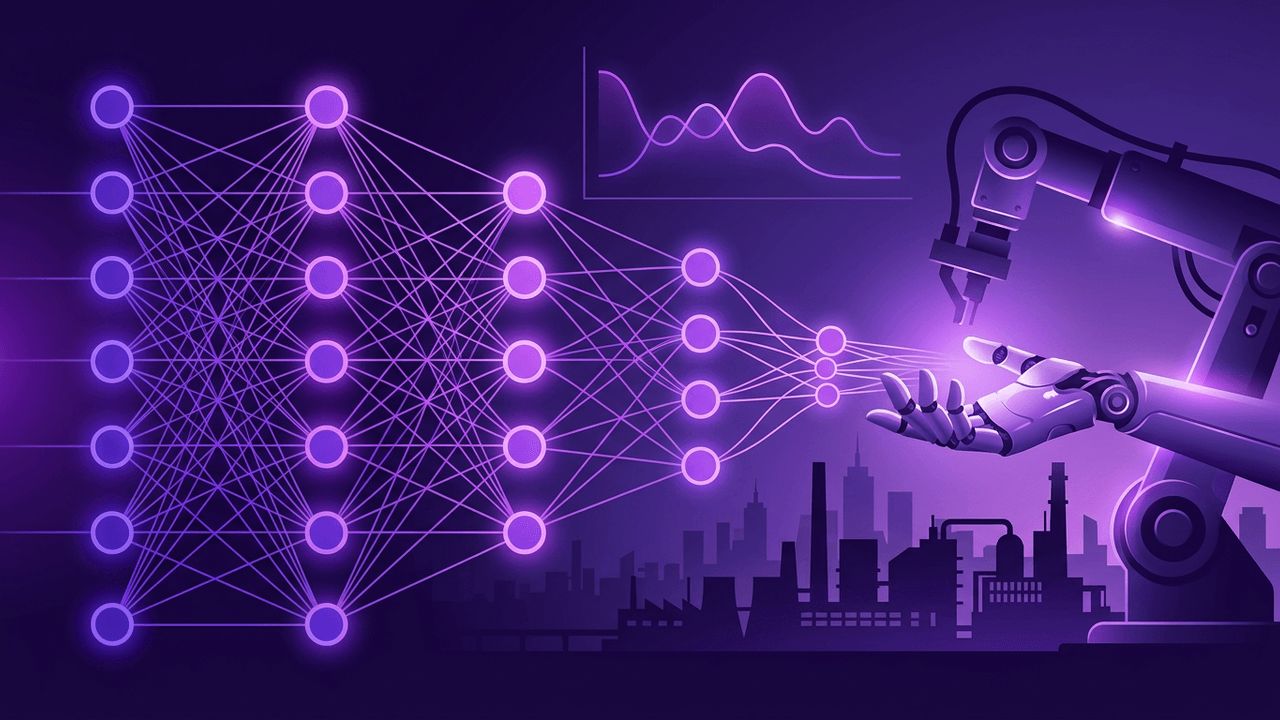
Machine Learning in an Industrial City
Machine learning is a branch of artificial intelligence that enables computers to learn patterns from data and make predictions without being explicitly programmed for every scenario. In Sterling Heights, where precision manufacturing, defense production, and automotive engineering dominate the economy, machine learning is proving especially valuable. It can predict when equipment will fail, detect microscopic defects, forecast demand, and optimize energy use across entire plants.
Unlike general AI tools, industrial machine learning requires deep integration with sensors, machines, and production data. The companies below specialize in platforms and solutions that turn data into measurable operational improvements, making them highly relevant to Sterling Heights businesses.
What Makes an Effective Machine Learning Partner
Strong machine learning partners help organizations move from pilot projects to full-scale production. They offer tools for data preparation, model development, deployment, and monitoring, often called MLOps. They should also understand industrial environments, where data may come from legacy machines and decisions must be reliable and explainable.
The Top 10 AI and Machine Learning Companies Serving Sterling Heights
1. Rockwell Automation
Rockwell Automation is a leader in industrial automation and digital transformation. Its analytics and machine learning tools help manufacturers monitor equipment, predict maintenance needs, and optimize production performance.
2. Siemens
Siemens combines industrial automation hardware with software and AI capabilities. Its industrial AI solutions support predictive maintenance, quality optimization, and digital twins used throughout automotive and manufacturing operations.
3. Cognex
Cognex is a leader in machine vision, using deep learning to inspect parts, read codes, and guide robots. Its systems are widely used on assembly lines to identify defects that are difficult for traditional inspection methods to detect.
4. Landing AI
Landing AI focuses on visual AI for manufacturing and other industries. Its platform makes it easier for engineers to build computer vision models for defect detection with relatively small datasets.
5. Sight Machine
Sight Machine provides a manufacturing data platform that transforms raw machine data into a model of the production process. Manufacturers use it to identify the root causes of quality issues and improve throughput.
6. Uptake
Uptake specializes in predictive analytics for heavy equipment and industrial assets. Its machine learning models help organizations reduce downtime and extend the life of critical machinery.
7. C3 AI
C3 AI offers enterprise AI applications for predictive maintenance, supply chain optimization, and defense readiness. Its experience with large industrial and government organizations is relevant to Sterling Heights' defense sector.
8. DataRobot
DataRobot provides an AI platform that streamlines model building, deployment, and governance. It helps organizations with limited data science resources build and manage reliable machine learning models.
9. H2O.ai
H2O.ai offers open-source and enterprise machine learning platforms used for forecasting, risk analysis, and generative AI. Its automated machine learning features help teams develop models efficiently.
10. Amazon Web Services
Through services such as Amazon SageMaker, Amazon Web Services provides scalable infrastructure for building, training, and deploying machine learning models. It supports organizations of every size with flexible computing resources.
Machine Learning Trends in Manufacturing
Predictive maintenance remains one of the most valuable industrial use cases, helping plants avoid costly unplanned downtime. Computer vision continues to advance, enabling automated inspection of welds, paint finishes, and machined parts. Edge AI, which runs models directly on factory equipment, is reducing latency and keeping sensitive data on site. Generative AI is also being explored for engineering design, maintenance documentation, and technician assistance.
Workforce development is a crucial part of successful adoption. Sterling Heights companies are investing in training programs so engineers, technicians, and operators can interpret model outputs and collaborate effectively with intelligent systems.
From Pilot to Production on the Plant Floor
Many manufacturers launch promising machine learning pilots that never scale. The organizations that succeed treat machine learning as an operational capability rather than a one-time project. They connect models to existing workflows so predictions trigger real actions, such as scheduling maintenance or pulling a suspect part for inspection. They monitor model accuracy over time, because changes in materials, tooling, or suppliers can cause performance to drift. They also involve operators and quality engineers early, building trust and capturing valuable process knowledge. For Sterling Heights plants running multiple shifts and product lines, this disciplined approach turns machine learning into a dependable tool for continuous improvement.
Frequently Asked Questions
What is the difference between AI and machine learning?
Artificial intelligence is the broad field of creating systems that perform tasks requiring human-like intelligence. Machine learning is a subset of AI focused on learning patterns from data to make predictions or decisions.
How much data is needed for machine learning?
Requirements vary by use case. Some visual inspection models can work with relatively small, well-labeled datasets, while forecasting and predictive maintenance models often benefit from longer histories of data.
How can manufacturers measure machine learning ROI?
Common measures include reduced downtime, fewer defects, lower scrap rates, improved throughput, reduced energy use, and faster engineering cycles compared with baseline performance.
Conclusion
Machine learning offers Sterling Heights manufacturers and businesses a powerful path to higher quality and efficiency. The companies above provide proven platforms and expertise for real-world industrial AI. Start with a clearly defined problem, build a strong data foundation, and scale what works to unlock lasting competitive advantages.