
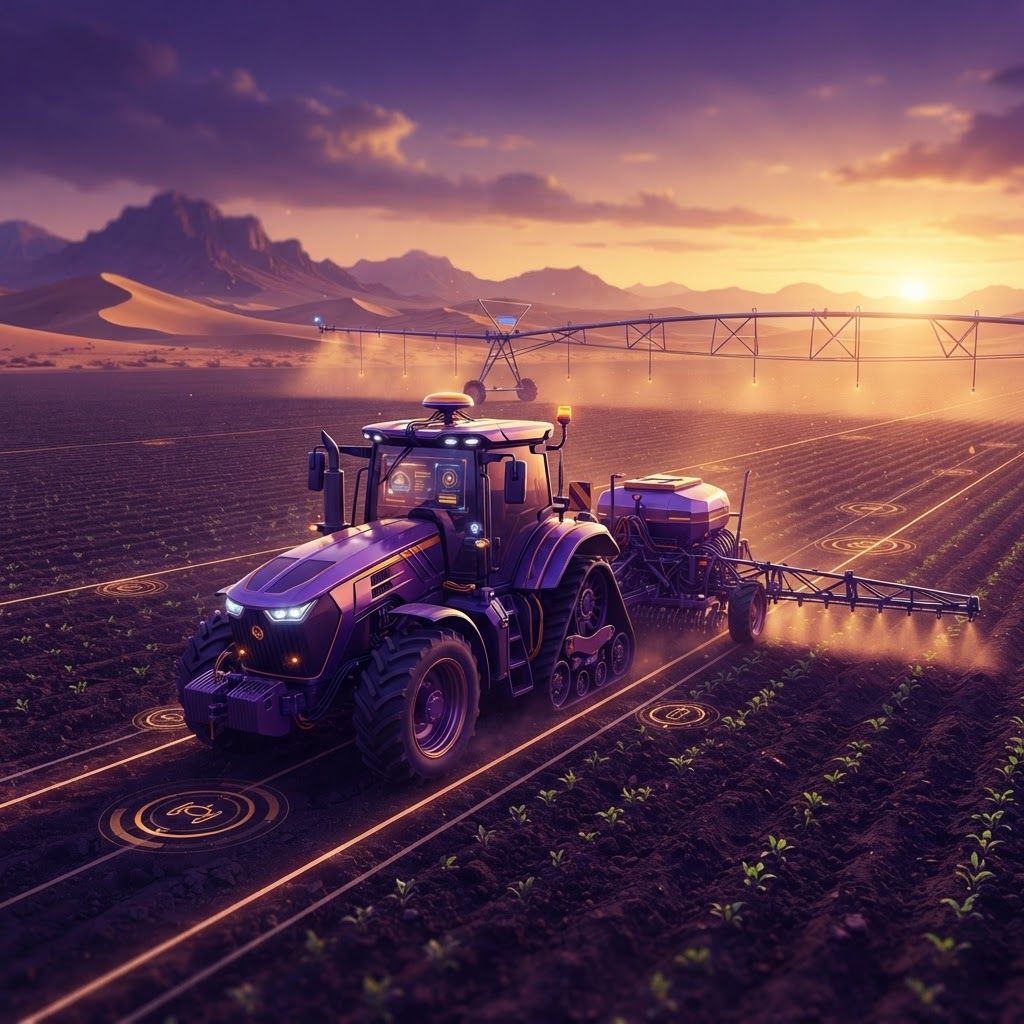
Why Equipment Choice Matters More in the Desert
Agricultural machinery faces a harsher operating environment in central Arizona than in almost any other farming region in the United States. Ambient temperatures that exceed one hundred and ten degrees stress hydraulic systems, cooling packages and electronics. Fine alkaline dust infiltrates air filters and bearings. Intense ultraviolet exposure degrades seals, hoses and cab interiors faster than in temperate climates.
Growers around Tempe therefore evaluate equipment differently. Cooling capacity, filtration quality, dust sealing and dealer service response carry more weight here than raw horsepower figures. A machine that performs flawlessly in the Midwest may struggle through an Arizona July, and experienced operators know to ask specific questions about high ambient temperature ratings before purchasing.
The Equipment Categories That Define Desert Farming
Tractors remain the backbone, spanning compact utility models for orchards and specialty operations up to high horsepower units for field crop work. Tillage and land preparation equipment is particularly important in Arizona because precise field leveling directly determines irrigation efficiency.
Irrigation equipment deserves its own category. Center pivots, linear systems, drip tape installation machinery and laser leveling equipment collectively represent some of the most consequential capital investment a desert grower makes. Harvest equipment, planting and seeding machinery, sprayers and material handling round out the picture.
Leading Agricultural Equipment Brands Serving the Tempe Area
John Deere remains the most widely recognized name in the category, and its strength in Arizona comes from the combination of durable machinery and a mature precision agriculture platform covering guidance, variable rate application and machine data management.
Case IH competes closely, with a strong reputation in tillage and high horsepower tractors, and an advanced automation portfolio that appeals to larger field crop operations.
New Holland Agriculture offers a broad lineup with particular strength in hay and forage equipment, which matters considerably in a state where alfalfa production supports a large dairy sector.
Kubota dominates the compact and utility tractor segment, favored by specialty growers, orchards, nurseries and the smaller urban farms that have become more common around Tempe.
Massey Ferguson provides dependable mid-range tractors with straightforward serviceability, a meaningful advantage for operations that handle much of their own maintenance.
Valley Irrigation is a leading name in mechanized irrigation, supplying center pivot and linear systems with remote monitoring and control that allow growers to manage water application precisely from anywhere.
Lindsay Corporation, through its Zimmatic systems, competes in the same category with strong emphasis on water efficiency technology and integration with soil moisture data.
Netafim specializes in drip and micro irrigation, and its products are central to the shift toward subsurface irrigation that has substantially reduced water consumption on Arizona farms.
Trimble Agriculture supplies guidance, laser leveling and precision positioning technology used across brands, and its land leveling systems are particularly valuable in a region where field grade determines irrigation uniformity.
AGCO and its family of equipment lines round out the market with application equipment, grain handling and precision technology offerings that serve diversified operations.
Technology Trends in Agricultural Machinery
Autonomous and semi-autonomous operation is advancing steadily. Guidance systems have already eliminated most overlap in field passes, and driverless tillage and spraying are moving from demonstration into limited commercial use, which addresses the persistent agricultural labor shortage.
Electrification is beginning in the compact segment. Battery electric utility tractors offer quiet operation and zero local emissions, valuable for greenhouse work, urban farms and livestock buildings, though heat management in Arizona conditions requires careful specification.
Data integration is arguably the most consequential change. Machines now generate detailed records of every pass, and platforms that consolidate yield, soil, moisture and application data enable genuinely evidence-based agronomic decisions. The practical barrier is interoperability, and growers increasingly favor brands that support open data standards.
Sensor-driven application is also maturing. Systems that identify individual weeds and apply herbicide only where needed can dramatically reduce chemical use, which lowers cost and environmental impact simultaneously.
Buying Considerations for Arizona Growers
Dealer support should weigh heavily in the decision. During a narrow harvest window, the difference between a dealer with local parts inventory and mobile technicians and one without can determine whether a crop is captured or lost. Ask specifically about average response times during peak season.
Evaluate total cost of ownership rather than purchase price. Fuel efficiency, expected component life, resale value and service intervals often matter more over a decade than the initial negotiation. Used and certified pre-owned equipment can represent excellent value, particularly for operations with modest annual hours.
Consider heat-specific specifications explicitly, including radiator and cooler capacity, cab air conditioning performance, hydraulic oil cooling and filtration ratings. Request references from other Arizona operators rather than relying on general product literature.
Finally, evaluate irrigation equipment with the same rigor as tractors. Water is the limiting resource in desert agriculture, and improvements in application uniformity often deliver a stronger return than additional horsepower ever will.
Final Thoughts
Agricultural equipment serving growers around Tempe spans global manufacturers, irrigation specialists and precision technology providers, and the regional market is well served by dealers who understand desert conditions. The operations that invest thoughtfully, prioritizing water efficiency technology, heat-rated machinery and responsive service support, consistently outperform those chasing the lowest acquisition cost. In an environment as demanding as the Sonoran Desert, equipment selection is not a procurement detail but a core agronomic decision.