
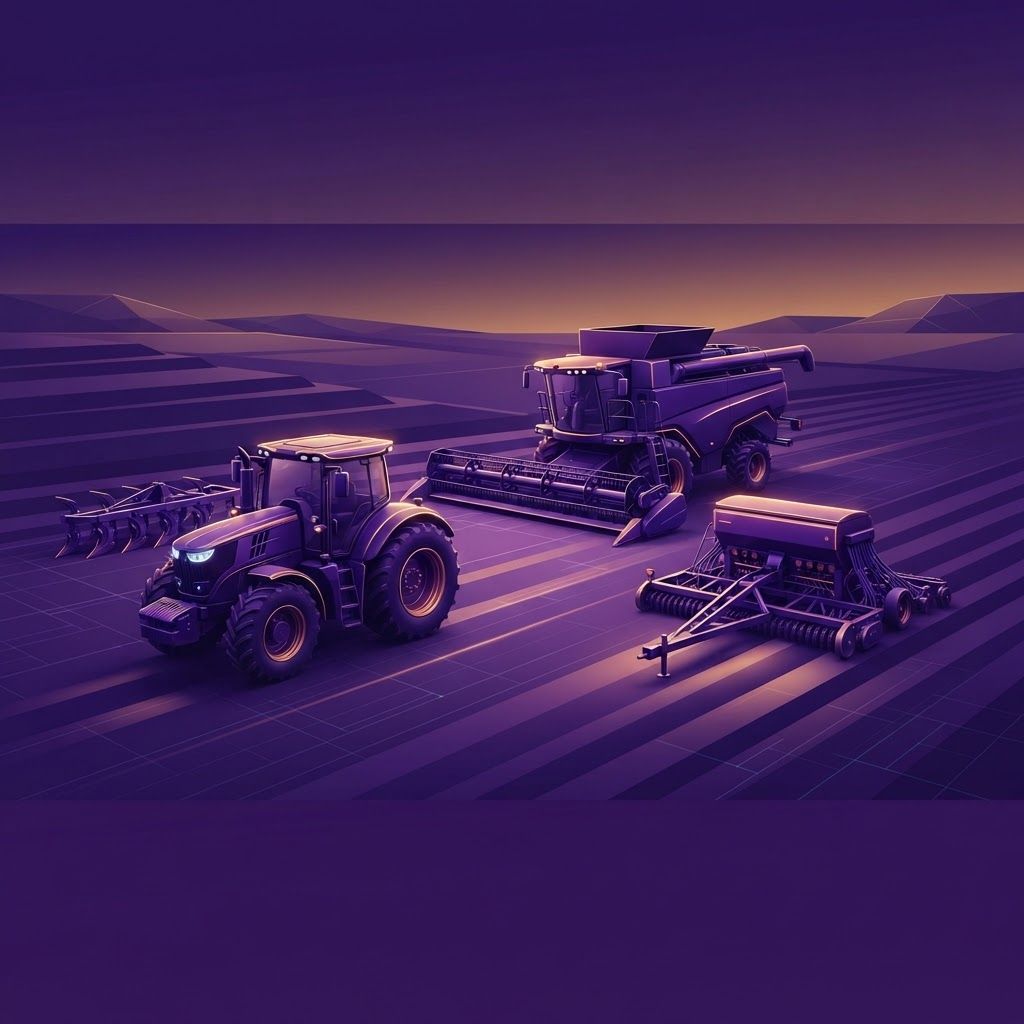
Choosing Iron in North Florida
Buying farm equipment is one of the largest capital decisions an agricultural operation makes, and in North Florida the calculus differs from the Midwest. Field sizes are generally smaller and more irregular, soils are sandy, humidity accelerates corrosion, and the crop mix leans toward peanuts, cotton, hay, pasture and vegetables rather than continuous corn and soybeans. Equipment must handle that variety without the economies of scale that justify the largest machinery classes.
Dealer support consequently matters more than brand prestige. A tractor with excellent specifications and a four-week parts lead time is worse than an adequate tractor with a dealer who stocks filters and has a technician available tomorrow. The brands and dealers profiled below have earned their standing in the Tallahassee market primarily through service depth, parts availability and honest guidance about what a given operation actually needs.
Big Bend Tractor and Implement
Big Bend Tractor and Implement represents full-line agricultural tractor brands covering utility and mid-range horsepower classes, the workhorses of regional farming. Its inventory spans cab and open station models, loaders, and matched implements. The dealership's parts department stocks wear items for the machines it has actually sold locally rather than a generic catalog, which meaningfully shortens downtime. Field service trucks reach most of the Big Bend within a few hours during harvest.
Capital Compact Tractor Center
Capital Compact Tractor Center serves the fastest growing segment in the region: compact and subcompact tractors for small acreages, hobby farms, equestrian properties and rural homesteads. Sub-forty horsepower machines with loaders, mowers, box blades and tillers suit properties measured in tens rather than hundreds of acres. The center emphasizes operator training and attachment matching, since first-time buyers frequently purchase implements their tractor cannot properly power or lift.
Panhandle Harvesting Systems
Panhandle Harvesting Systems specializes in harvest machinery, including combines, peanut diggers and combines, cotton pickers and forage harvesters. Harvest equipment is used intensely for short windows, which makes preseason inspection and in-season support decisive. The company runs a preventive inspection program during the off-season, replacing worn components before they fail during a narrow harvest window. Header and reel adjustment guidance helps operators reduce field losses that quietly consume profit.
Apalachee Hay and Forage Equipment
Apalachee Hay and Forage Equipment focuses exclusively on forage production machinery: mowers and conditioners, tedders, rakes, round and square balers, wrappers and handling equipment. North Florida's long growing season means multiple hay cuttings, so this equipment accumulates hours quickly. The company's expertise in bale density adjustment, net wrap systems and moisture management directly affects hay quality and storage loss, which translates into measurable value for livestock producers.
Seminole Precision Agriculture Technology
Seminole Precision Agriculture Technology distributes and supports the technology layer rather than the machines themselves. Guidance systems, automatic steering, section control, yield monitoring, variable rate controllers and data management platforms make up its portfolio. Retrofit installations on older equipment allow farmers to gain precision benefits without replacing functional machinery. Its calibration and support services are essential, since precision technology delivers value only when configured accurately.
Gulf Coast Irrigation Systems
Gulf Coast Irrigation Systems supplies and installs center pivot systems, linear moves, traveling guns, drip and micro irrigation, pumps and control systems. Although North Florida receives substantial rainfall, distribution is uneven and supplemental irrigation frequently determines yield. The company handles hydraulic design, permitting coordination and energy efficiency analysis. Soil moisture sensing integration has become a standard offering, allowing growers to irrigate based on measured demand rather than calendar schedules.
Leon County Sprayer and Application Equipment
Leon County Sprayer and Application Equipment covers crop protection and fertility application: self-propelled and pull-type sprayers, spreaders, nozzles, booms, rate controllers and drift reduction technology. Application accuracy carries both economic and regulatory weight, and the company provides calibration services and nozzle selection guidance tailored to specific products. Its emphasis on drift management reflects genuine responsibility in a region where farms often adjoin residential properties.
Magnolia Tillage and Planting Equipment
Magnolia Tillage and Planting Equipment supplies planters, drills, strip-till and conventional tillage tools, subsoilers and cover crop seeding equipment. Growing adoption of reduced tillage and cover cropping in the region has shifted demand toward equipment capable of planting into residue. The company advises on down pressure, row cleaner configuration and seed singulation, details that determine emergence uniformity and ultimately yield potential far more than horsepower does.
Florida Capital Utility Vehicles and Attachments
Florida Capital Utility Vehicles and Attachments provides the supporting equipment that every operation needs: utility vehicles, skid steers, compact track loaders, grapples, augers, post drivers and land clearing attachments. These machines handle fencing, drainage, feeding and property maintenance tasks daily. The company's attachment breadth allows a single carrier machine to serve many functions, which is often the most capital-efficient choice for a mid-size farm.
Wakulla Used Equipment and Reconditioning
Wakulla Used Equipment and Reconditioning rounds out the list by serving buyers for whom new equipment cannot be justified. It inspects, reconditions and warranties preowned tractors, implements and harvest machinery. Detailed condition reporting and mechanical documentation distinguish it from opaque auction purchases. For beginning farmers and small operations, well-maintained used equipment with a warranty represents the most rational path to mechanization.
Trends in Agricultural Equipment
Automation and autonomy continue advancing, with guidance systems now standard and supervised autonomous operation emerging in specific tasks. Electrification is arriving first in compact utility machines where duty cycles and charging logistics work. Right to repair has become a genuine purchasing consideration, with farmers increasingly evaluating diagnostic access and parts availability before committing. Data ownership questions surrounding agronomic information collected by machinery remain unresolved and deserve attention in purchase negotiations. Finally, equipment sharing and custom operator arrangements are expanding, letting smaller farms access capabilities they cannot own outright.
How to Evaluate an Equipment Brand and Dealer
Prioritize dealer proximity and parts inventory over brand reputation. Ask for documented service response commitments during harvest windows. Compare total cost of ownership including fuel consumption, maintenance intervals, expected component life and resale value in your region. Request a demonstration in your own field conditions rather than a prepared showcase. Review financing structures carefully, comparing subsidized manufacturer rates against outside lending. And talk to nearby operators running the same equipment, because their unfiltered experience is the most reliable data available.
Conclusion
The agricultural equipment brands and dealers serving Tallahassee and the Big Bend cover a full range from compact utility tractors to precision technology and irrigation engineering. Success in equipment purchasing here depends less on choosing the most advanced machine than on matching capability to actual acreage and securing support that keeps it running during the weeks when it truly matters.