
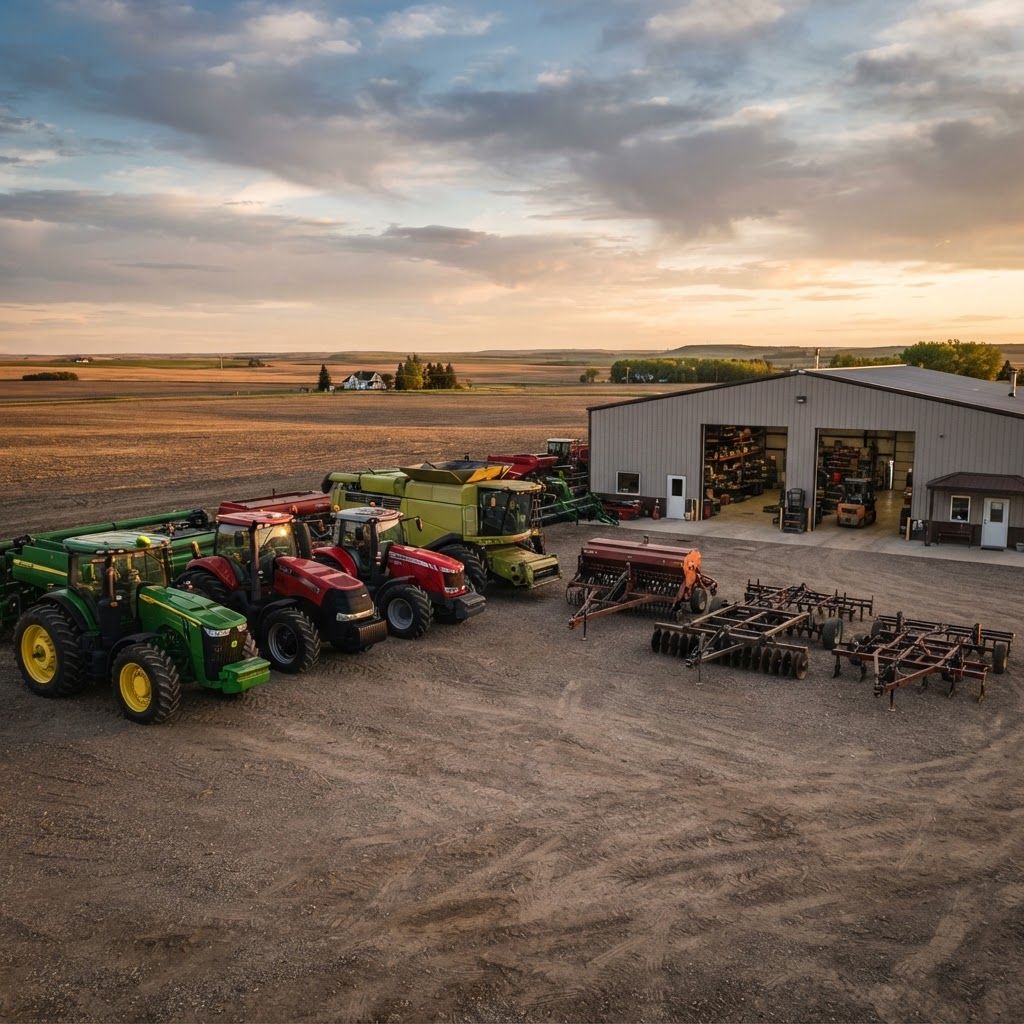
Farm Equipment in the Heart of the Corn Belt
Equipment decisions are among the largest capital commitments a farm makes, and they are rarely reversible in the short term. A combine or high-horsepower tractor represents years of cash flow, so brand selection is really a decision about reliability, resale value, dealer service and technology compatibility over a decade or more.
Farmers in the St. Louis region are fortunate in this respect. Because the surrounding counties represent serious production agriculture, nearly every major manufacturer maintains dealer representation nearby, with parts inventory and field service technicians close enough to matter during harvest. That dealer density is arguably more important than brand preference, since the best machine in the world is useless if it sits waiting for a part in October.
How These Brands Were Evaluated
Brands were assessed on build quality and durability, dealer and service network strength in the region, parts availability, precision agriculture technology and data compatibility, resale value retention, and suitability across different farm sizes and operation types.
1. John Deere
John Deere remains the benchmark in the region, with the strongest dealer network, deepest parts availability and the most mature precision agriculture ecosystem. Its integrated approach — machine, guidance, data platform and agronomic tools working together — is a genuine advantage for operations committed to data-driven management. Resale value retention is consistently the best in the industry, which materially lowers effective ownership cost. The tradeoff is premium pricing and a relatively closed technology environment.
2. Case IH
Case IH is the most common alternative among serious row crop operations, particularly known for its axial-flow combines and Steiger articulated tractors. Grain quality and sample cleanliness from its combine design have a strong following among farmers who market grain on quality. Its precision platform is capable and somewhat more open to third-party integration, which appeals to operations running mixed equipment fleets. Regional dealer support is solid.
3. New Holland
New Holland offers strong value in the mid-range, with a particularly good reputation in hay and forage equipment, balers and mid-horsepower tractors. Livestock and mixed operations frequently build around it. Comfortable operator environments and straightforward serviceability are recurring points of praise, and pricing typically undercuts the two market leaders on comparable specifications.
4. Kubota
Kubota dominates the compact and utility segment, serving small farms, specialty crop growers, orchards and acreage owners. Reliability of its diesel engines is exceptional, and the machines are sized appropriately for operations where full-size equipment is impractical. The brand has moved steadily upward into larger tractors and now competes credibly in mid-horsepower ranges. Implement compatibility and resale demand are both strong.
5. Kinze
Kinze specializes in planters and grain carts, and it is chosen specifically for planting accuracy rather than as part of a full-line commitment. Seed singulation, depth consistency and down-force control determine yield potential more than almost any other field operation, and Kinze's row unit engineering has a devoted following. Its equipment integrates with multiple guidance and monitoring platforms, which suits operations unwilling to be locked into one ecosystem.
6. Great Plains
Great Plains is respected for tillage, seeding and no-till drills, particularly among growers adopting conservation practices. Its drills handle heavy residue well, which is essential in continuous no-till systems and cover crop rotations. Build robustness is a recurring theme in owner feedback, and the equipment tends to be straightforward to maintain without specialized diagnostics.
7. Hagie
Hagie built its reputation on high-clearance self-propelled sprayers, enabling late-season application in tall corn that other machines cannot enter. For operations managing fungicide timing or late nitrogen applications, that capability directly affects yield outcomes. Boom stability, application accuracy and visibility from the cab are the technical strengths, and the narrow specialization means the engineering is genuinely focused.
8. Massey Ferguson
Massey Ferguson delivers dependable, mechanically approachable tractors across a wide horsepower range, often at attractive price points. It appeals particularly to operations that value serviceability and lower complexity over maximum technology integration. Hay equipment and mid-size tractors are its strongest categories in this region, and parts availability through the dealer network is reliable.
9. Vermeer
Vermeer is the reference brand in hay equipment, especially round balers, along with agricultural and environmental machinery. Bale density, consistency and net wrap reliability are what livestock and hay-selling operations judge, and Vermeer performs strongly on all three. Durability under heavy seasonal use and straightforward field maintenance keep resale demand healthy.
10. Claas
Claas brings European engineering to forage harvesting and combines, with a particularly strong reputation in self-propelled forage harvesters used by dairy and large livestock operations. Chop quality, processing consistency and throughput are its technical strengths. Dealer coverage is thinner than the market leaders, so buyers should verify local service support carefully, but operations that need its capabilities generally find no equivalent substitute.
Trends in Agricultural Equipment
Autonomy is advancing from guidance assistance toward genuinely driverless field operations, initially in tillage and application where risk is lower. Electrification is emerging in compact and utility equipment while remaining impractical for high-horsepower field work. Data interoperability has become a real purchasing consideration as farmers resist being locked into single-brand ecosystems. Right-to-repair pressure continues to influence diagnostic access and independent service options. Meanwhile, high equipment costs have expanded interest in used machinery, machine sharing, custom operators and lease structures that preserve capital.
How to Choose Farm Equipment
Start with dealer service capability, not brand loyalty. Ask about parts inventory depth, technician headcount, harvest-season response commitments and loaner availability. Then match equipment scale honestly to your acreage and timeliness requirements, since oversized equipment destroys returns as effectively as undersized equipment destroys timeliness. Verify data compatibility with systems you already run. Finally, calculate total cost of ownership including depreciation, expected repairs, fuel efficiency and resale rather than comparing purchase prices, and seriously evaluate quality used equipment where technology requirements permit.
Final Thoughts
The equipment brands available around St. Louis cover every operation type from a few acres of vegetables to thousands of acres of row crops. The best purchase is the one your dealer can keep running during the two weeks of the year when downtime is unaffordable. Choose service first, technology second, and price third.