
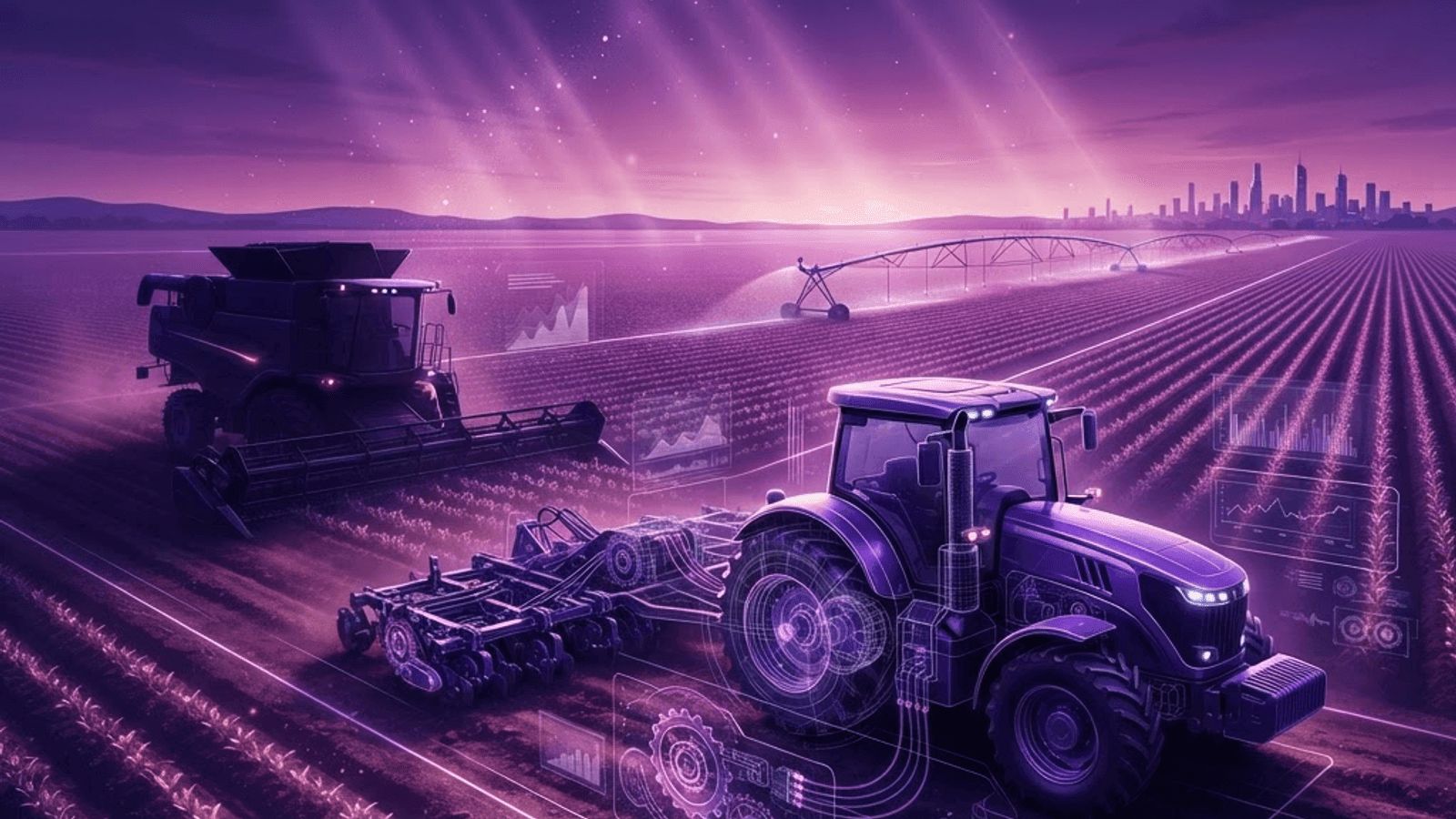
Equipment Decides What a Farm Can Actually Do
On most farms, the equipment fleet is the second largest capital commitment after land, and it determines the practical limits of the operation. How many acres can be worked in a planting window. Whether a crop can be harvested before quality declines. How precisely inputs can be placed. How much labor a given task requires. Choosing well matters for years.
Around Paradise, equipment selection is shaped by specific conditions: intense heat that stresses hydraulics and cooling systems, abrasive soils that accelerate wear on ground-engaging components, water scarcity that makes irrigation equipment central rather than supplementary, and a labor market that rewards automation. The brands that perform well here are those engineered for durability and supported by strong local parts and service networks.
How to Evaluate Agricultural Equipment
Local dealer support is the first and most important criterion, ahead of the machine itself. A technically superior machine with no nearby parts inventory and no trained technicians will cost you more in downtime than it ever saves in performance. Ask specifically about parts stocking levels and average service response.
Right-sizing is the second. Oversized equipment wastes fuel, compacts soil and ties up capital. Undersized equipment extends operating windows past the point where timing affects yield. Match horsepower and capacity to your actual acreage and crop plan, not to aspiration.
Technology compatibility matters increasingly. Guidance systems, variable rate control, telematics and data platforms should work with what you already own, and open standards protect you from being locked into one manufacturer.
Finally, evaluate residual value and serviceability. Brands with strong resale markets lower your real cost of ownership, and machines designed for straightforward field maintenance reduce dependence on specialist visits.
The Ten Leading Agricultural Equipment Brands Available in Paradise
1. Harvest Tractor Works. A full-line tractor manufacturer with strong local dealer presence, known for durable drivetrains, effective cooling in high-temperature operation and widely available parts across a broad horsepower range.
2. Meridian Irrigation Systems. Meridian specializes in drip, micro-sprinkler and pivot irrigation with pressure-compensating emitters and filtration engineered for the water quality conditions common in the region.
3. Summit Tillage Implements. Summit produces discs, rippers, cultivators and seedbed equipment with hardened wear components designed specifically for abrasive soils, which materially extends service intervals.
4. Vertex Precision Ag Technology. Vertex supplies guidance systems, variable rate controllers, yield monitors and farm data platforms, with an emphasis on interoperability across mixed equipment fleets.
5. Northgate Harvesting Equipment. Northgate builds harvesters and handling equipment for vegetables, tree crops and forage, with gentle-handling designs that reduce bruising and post-harvest loss.
6. Aurora Greenhouse Systems. Aurora manufactures climate control, fertigation, benching and automation equipment for controlled environment growers, a rapidly expanding segment around Paradise.
7. Volt Electric Farm Machinery. Volt produces battery-electric utility vehicles, compact tractors and orchard equipment, offering lower operating cost, reduced noise and simplified maintenance for operations with suitable duty cycles.
8. Beacon Sprayers & Application Equipment. Beacon focuses on precision application with boom section control, drift reduction nozzles and rate controllers that reduce chemical use while improving coverage accuracy.
9. Riverstone Soil Health Equipment. Riverstone builds no-till drills, roller crimpers, compost spreaders and cover crop seeders for growers adopting regenerative practices without abandoning mechanization.
10. Ironline Grain & Storage Systems. Ironline supplies bins, dryers, augers and handling systems with aeration control and monitoring that protect crop quality through storage.
Trends in Agricultural Equipment
Autonomy is progressing faster than many expected. Driverless tractors and robotic weeding platforms are moving from pilot projects into commercial use, addressing labor shortages that have constrained production in the region.
Electrification is advancing in compact and specialty equipment where duty cycles and charging logistics work well, while larger field machinery remains predominantly diesel for now.
Data integration is the quiet revolution. Machines that record what was applied where, at what rate and under what conditions enable agronomic decisions that were previously guesswork, provided the data is accessible rather than locked in proprietary systems.
Repairability has also become a live issue, with growers pushing for access to diagnostic tools and documentation so that routine repairs do not require a dealer visit.
Making the Right Purchase
Demo equipment in your own fields, in your own soil, with your own crop. Manufacturer demonstration sites are optimized in ways your farm is not, and a single day of realistic testing reveals more than any specification sheet.
Consider used and shared ownership seriously. Well-maintained used equipment from a supported brand often delivers better return than new equipment at the edge of affordability, and cooperative ownership of low-utilization implements is common and practical among neighboring operations.
Negotiate service and training alongside the purchase. Operator training in particular pays back quickly through reduced damage, better fuel efficiency and more accurate field work.
Final Thoughts
Agricultural equipment available in Paradise covers tractors, irrigation, tillage, precision technology, harvesting, controlled environment systems, electric machinery, application equipment, regenerative tools and storage. Prioritize dealer support and right-sizing over specification comparisons, demand real-world demonstrations and invest in the data capability that turns equipment into agronomic insight.