
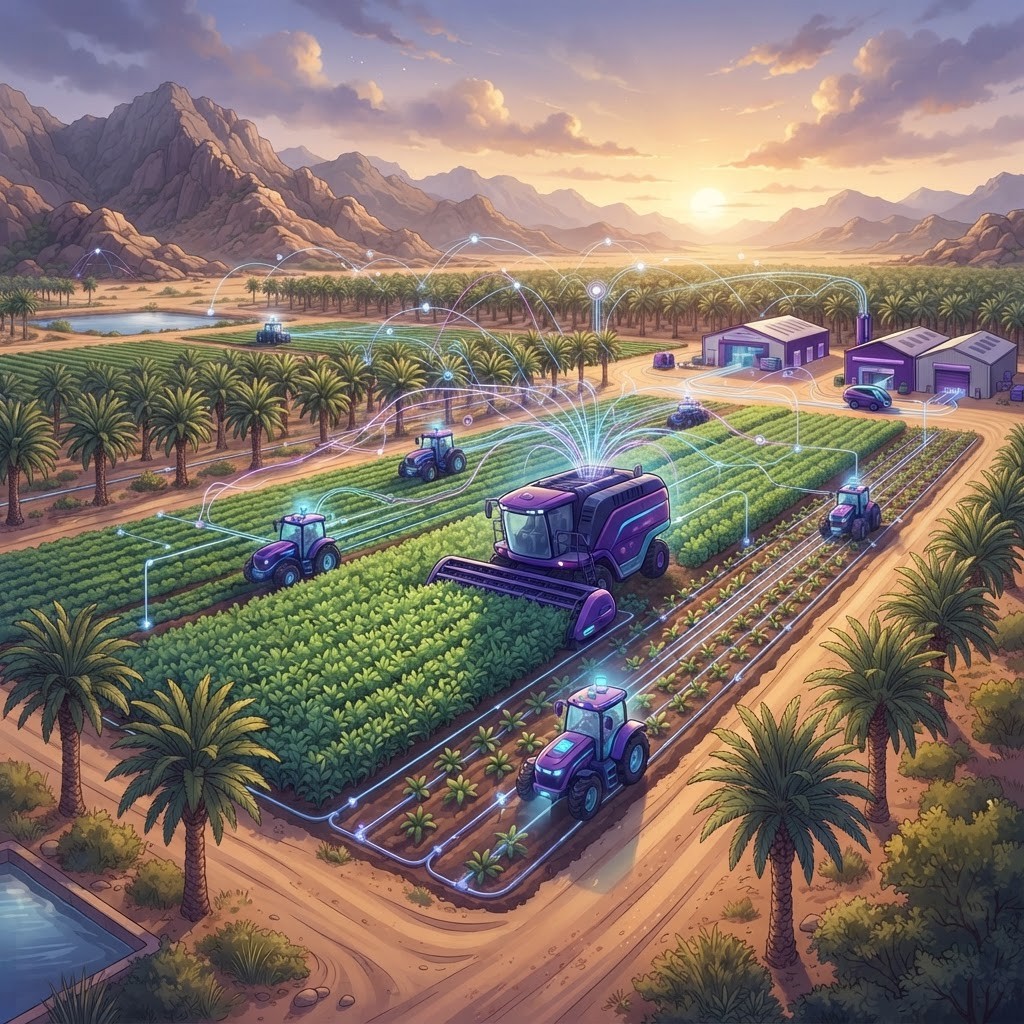
Modern Farming in Oman
Agriculture holds deep cultural and economic significance in Oman, from the ancient falaj irrigation systems of the interior to the date plantations of the Batinah coast and the fertile highlands of Dhofar. As the Sultanate pursues food security and rural development under Oman Vision 2040, mechanisation has become a key driver of efficiency. Modern tractors, irrigation systems, harvesters, and precision tools are helping farmers overcome challenges posed by arid conditions and limited arable land.
The brands supplying this equipment combine durability, after-sales support, and technology suited to Oman's demanding climate. Below are ten of the most trusted agricultural equipment brands available in the country.
1. John Deere
A global leader in agricultural machinery, John Deere is widely respected in Oman for its powerful tractors, harvesters, and precision-farming technology. Its strong dealer network and reliable after-sales service make it a top choice for both large estates and smaller farms.
2. Massey Ferguson
Known for rugged, versatile tractors, Massey Ferguson has a loyal following among Omani farmers. Its machines are valued for fuel efficiency, ease of maintenance, and suitability for a wide range of crops and terrains.
3. New Holland
New Holland offers a comprehensive lineup of tractors, balers, and harvesting equipment. Its focus on comfort, productivity, and innovative technology has made it a popular brand for modern commercial farming operations.
4. Kubota
Renowned for compact tractors and reliable engines, Kubota is ideal for the diverse farming needs found across Oman. The brand's dependable performance and low running costs appeal to date growers, vegetable farmers, and landscapers alike.
5. Case IH
Case IH is a strong performer in the high-horsepower segment, providing advanced tractors and harvesting solutions. Its equipment is favoured by larger agricultural enterprises seeking productivity and long-term durability.
6. Netafim
In a country where water is precious, Netafim stands out as a global pioneer in drip irrigation. Its precision water-delivery systems help Omani farmers conserve water while maximising crop yields, making it indispensable in arid regions.
7. Claas
Claas specialises in advanced harvesting machinery, including combine harvesters and forage equipment. Its engineering excellence and efficiency make it a preferred brand for farms focused on grain and fodder production.
8. Mahindra
Mahindra tractors offer excellent value, combining affordability with robust performance. The brand is popular among small and medium-sized farms across Oman that need dependable machinery without a premium price tag.
9. Rain Bird
Rain Bird is a leading name in irrigation technology, offering sprinklers, controllers, and water-management systems. Its solutions support efficient landscaping and farming, helping users optimise every drop of water.
10. Honda Power Products
For smaller-scale needs, Honda provides reliable water pumps, tillers, and generators. Its equipment is widely used by smallholders and market gardeners who value dependability and easy servicing.
Key Trends Shaping the Sector
Precision agriculture, water-efficient irrigation, and smart machinery are transforming Omani farming. GPS-guided tractors, sensor-based irrigation, and data-driven management are increasingly common on progressive farms. Meanwhile, the demand for equipment that can withstand heat, dust, and saline soils continues to shape brand selection.
How to Choose the Right Equipment
Farmers should evaluate machinery based on horsepower requirements, crop type, terrain, water availability, and after-sales support. A strong local dealer network for spare parts and servicing is often as important as the brand itself, ensuring minimal downtime during critical seasons.
Conclusion
The right agricultural equipment can dramatically improve productivity, sustainability, and profitability. The ten brands featured here represent the best of global engineering adapted to Oman's unique conditions, empowering farmers to grow more with fewer resources and secure the nation's agricultural future.