
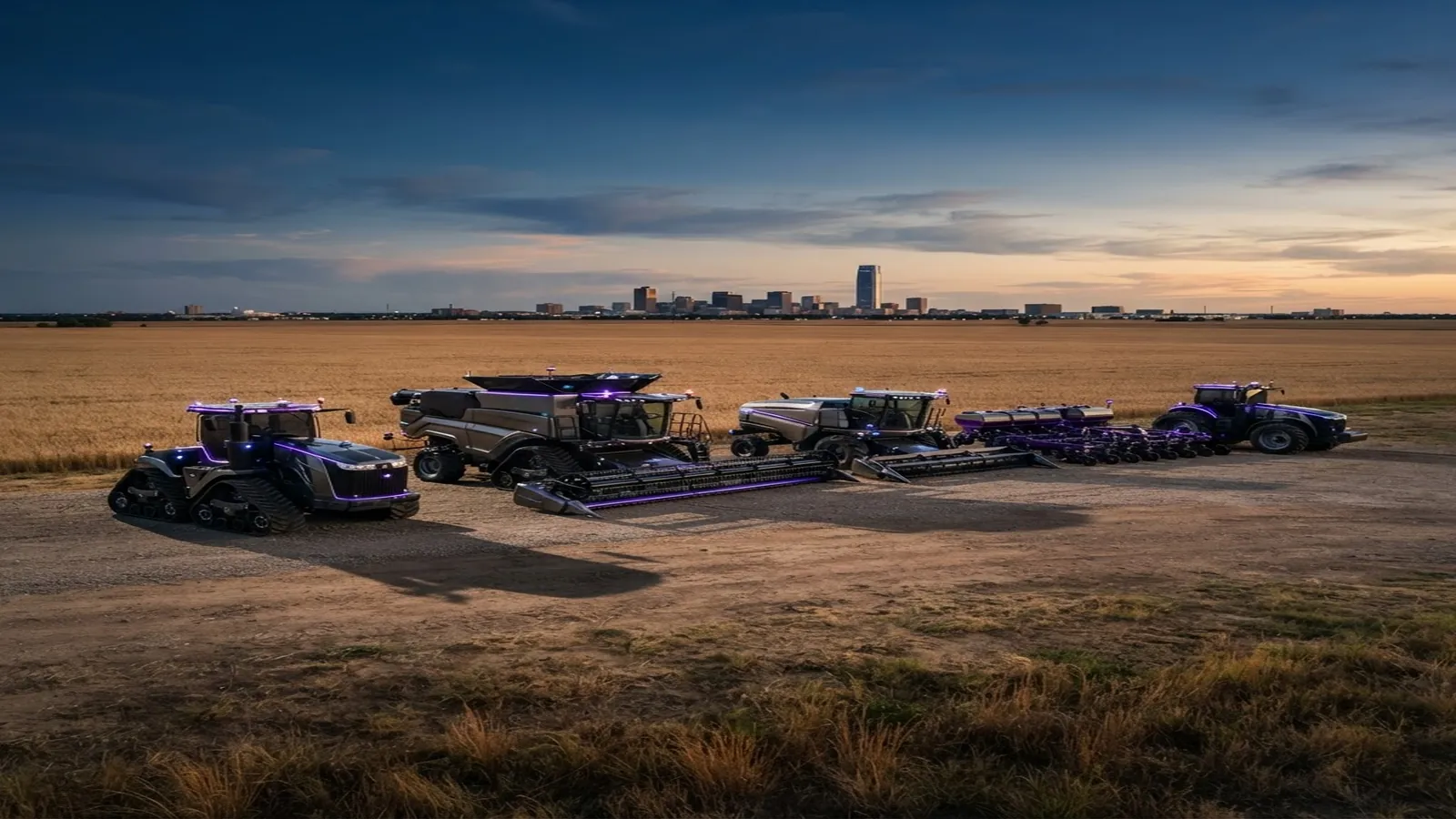
Selecting Farm Equipment for Central Oklahoma
Central Oklahoma operations face heat, wind, variable rainfall, heavy fieldwork, and narrow seasonal windows. Equipment selection should reflect acreage, crops, livestock needs, transport distances, operator skill, and dealer support. Purchase price matters, but uptime, parts access, fuel use, resale value, and precision compatibility often determine lifetime cost. These brands have strong recognition and dealer support in Oklahoma or the surrounding region.
1. John Deere
John Deere offers tractors, combines, hay tools, sprayers, planting equipment, compact machines, and integrated precision systems. Its broad dealer network and connected technology are major strengths. Oklahoma City-area producers often value parts availability and resale demand, while larger operations may benefit from fleet data and guidance capabilities.
2. Case IH
Case IH is well known for high-horsepower tractors, Axial-Flow combines, planters, tillage tools, and application equipment. Its machinery is designed for productivity and agronomic performance. Buyers should compare local service response, telematics, operator comfort, and compatibility with existing implements.
3. New Holland Agriculture
New Holland has particular strength in hay and forage equipment, alongside tractors, combines, skid steers, and material-handling products. That range fits Oklahoma cattle and mixed-farm operations. Bale quality, crop flow, dealer expertise, and ready access to wear parts are central considerations.
4. Kubota
Kubota is a popular choice for compact and utility tractors, hay tools, mowers, construction equipment, and property maintenance. Its maneuverability and accessible size range suit smaller farms, horse properties, municipalities, and diversified acreages near the metro. Buyers should match hydraulic capacity and machine weight to planned implements.
5. Massey Ferguson
Massey Ferguson offers tractors, hay equipment, and harvesting products with a reputation for straightforward utility. The brand can be attractive to producers seeking capable machinery without unnecessary complexity. Dealer quality, warranty support, and model-specific parts stocking should guide the local decision.
6. CLAAS
CLAAS is recognized globally for forage harvesters, combines, balers, and high-capacity harvesting technology. Custom harvesters and larger operations may appreciate throughput and advanced crop-handling systems. Specialized equipment makes trained service and parts planning especially important.
7. Vermeer
Vermeer has Oklahoma roots and a strong reputation in hay and forage equipment, including round balers, rakes, mowers, and feed-handling tools. Its products align closely with the state's cattle economy. Durability, dealer familiarity, and practical innovations make it a frequent consideration for ranching operations.
8. Great Plains
Great Plains manufactures planting, seeding, tillage, and nutrient-application equipment suited to broad-acre agriculture. Producers evaluating reduced tillage, cover crops, or precise seed placement may find the brand particularly relevant. Field conditions, residue levels, opener design, and calibration support should shape model selection.
9. Bobcat
Bobcat compact loaders, tractors, utility vehicles, and attachments support material handling, feeding, grading, cleanup, and property maintenance. The versatility of a quick-attach machine is valuable on farms where one power unit performs many daily jobs. Lift capacity, stability, visibility, and attachment availability deserve close comparison.
10. Mahindra
Mahindra focuses strongly on compact and utility tractors for land management, livestock chores, and smaller-scale agriculture. Its simple, robust positioning appeals to many acreage owners. Buyers should evaluate ergonomics, loader performance, warranty details, financing, and the strength of the servicing dealer.
Dealer Support Is Part of the Machine
A premium machine can become a poor investment if parts or technicians are unavailable during harvest. Visit the dealership, speak with service management, and ask about mobile repair, seasonal hours, loaner policies, diagnostic tools, and common-parts inventory. Check whether training is included for precision features and whether software subscriptions create ongoing costs.
Equipment Trends to Watch
Guidance, section control, telematics, variable-rate application, camera systems, and predictive maintenance continue moving into midrange equipment. Farms are also evaluating autonomy, electric utility machines, and implements that support soil conservation. Oklahoma City buyers should focus on technology that solves a measurable problem rather than features that add complexity. A careful total-cost analysis, demonstration under realistic conditions, and strong local dealer relationship provide the best foundation for a durable purchase.